
 Afryka
 Azja
Azja Europa
 Ameryka Południowa
 Australia i Oceania
 Antarktyda
 Ocean Spokojny
 Ocean Atlantycki
 Ocean Indyjski
 Ocean Arktyczny
 Morze Śródziemne
 Morze Czerwone
 Morze Karaibskie
 Morze Koralowe
 Morze Południowochińskie
 Morze Filipińskie
 Morze Andamańskie
 Morze Północne
 Morze Timor i Morze Arafura
 Zatoka Bengalska
 Zatoka Kalifornijska
Brown widow
 Ugryzienia
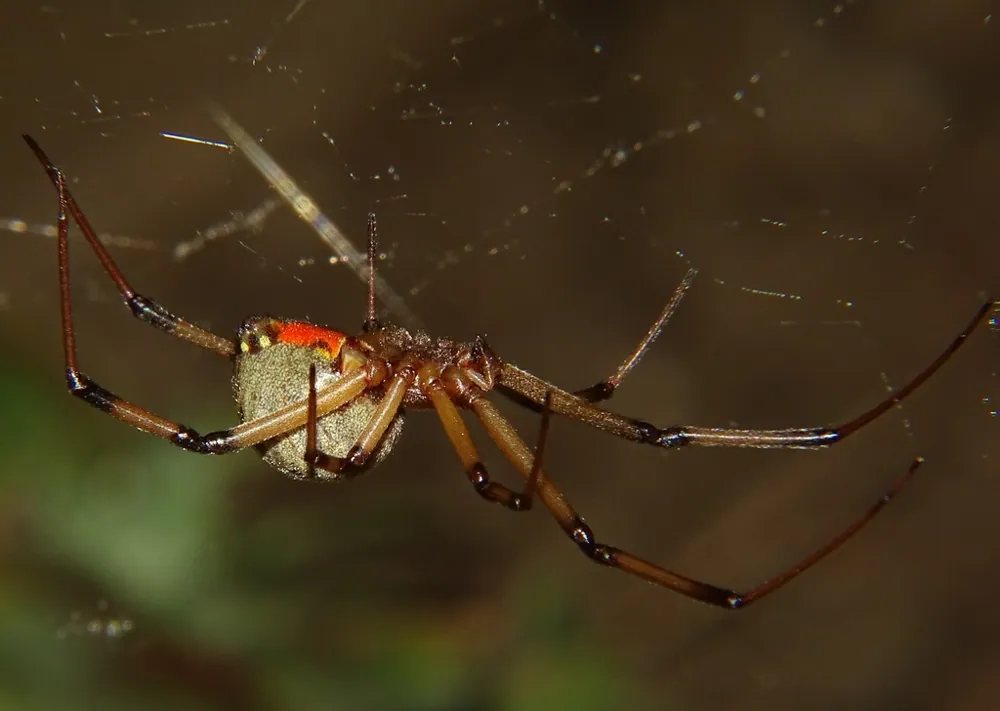
The brown widow is a spider in the widow family, a close cousin of the black widow. It lives in many parts of the world, often around houses and buildings. Its bite is painful but usually not dangerous.1
 Jak je rozpoznać
- Black and white geometric pattern on the top of the abdomen1
- Usually a bright orange or yellowish hourglass marking on the underside of the abdomen1
- Body colour ranges from tan and dark brown to black, with shades of grey also possible1
- Stripes on the legs1
- Egg sacs are spiky, like a sandspur, and sometimes described as tufted, fluffy or spiky1
Często mylone z: The black widow is slightly larger and darker, and has a red hourglass on the underside. The brown widow is lighter, has an orange or yellow hourglass, and has a black and white pattern on top of the abdomen that the black widow does not have. In southern Africa, the brown widow's relative L. rhodesiensis, native to Zimbabwe, is also called a brown button spider.1
Siła jadu
Jad wydostaje się przez kły lub zęby, gdy zwierzę gryzie.
Jak działa jego jad?
Like all widow spiders, the brown widow has a neurotoxic venom, which attacks the nerves. It causes latrodectism, a set of very unpleasant symptoms. The effects are usually confined to the bite area and the tissue around it.1
Jak bardzo jest niebezpieczne dla ludzi?
Zagrożenie dla ludzi: BolesneMoże naprawdę boleć, ale prawie nigdy nie jest groźne.Brown widow bites are usually not very dangerous, and are much less dangerous than black widow bites. The spider cannot deliver as much venom as a black widow, so its bites are considered minor. They are painful.1
 Jeśli ugryzie
- Umyj miejsce ugryzienia i przyłóż okład z lodu na ból. Szukaj pomocy medycznej, jeśli ból jest silny, rozszerza się albo poszkodowany źle się czuje.
Zawsze najpierw dzwoń na numer alarmowy (112, 000, 911). To ogólne wskazówki pierwszej pomocy, a nie porada medyczna. Podstawy pierwszej pomocy
 Uważaj na siebie
- Nigdy nie dotykaj, nie łap ani nie drażnij dzikiego zwierzęcia, nawet małego, i nawet jeśli wygląda, jakby spało albo było martwe.
- Zostaw mu miejsce. Jeśli je spotkasz, zachowaj spokój, powoli się wycofaj i pozwól mu odejść.
- Jeśli cię ugryzie: zachowaj spokój, nie ruszaj się, zadzwoń na numer alarmowy (112, 000, 911) albo jak najszybciej dotrzyj do szpitala. Zapamiętaj, jak wyglądało, zdjęcie pomaga.
Nie poluje na ciebie. Używa jadu, żeby złapać jedzenie albo się bronić, i dużo bardziej woli się schować. Więcej o bezpieczeństwie
Jakie jest duże?
Jakie jest długie?
 mniej więcej długości spinacza
Brown widow: jak duże jest w porównaniu z TOBĄ?
Zwykła matematyka w twojej przeglądarce. Nic nie jest zapisywane ani nigdzie wysyłane.
Jak szybkie jest?


Fakty
In Southern California, researchers suggest the brown widow may be pushing black widows out of the area by competing and fighting for territory.1
Its egg sacs are so spiky that they are easy to tell apart from those of most other spiders.1
A female can make up to 20 egg sacs over her lifetime, with 120 to 150 eggs in each.1
Brown widows are preyed upon by wasps, including blue mud-dauber wasps and digger wasps.1
Pogromca mitów
Mit: The brown widow is as dangerous as the black widow.
Prawda: Brown widow bites are usually not very dangerous and are much less dangerous than black widow bites.1
Dla znawców jadu
- Nazwa naukowa
- Latrodectus geometricus
- Grupa
- Pająki
- Rodzina
- Theridiidae2
- Kolejność
- Araneae
- Kontynenty
- Afryka
- Młode
- Eggs hatch in about 20 days. Each female lays about 120 to 150 eggs per sac and can make up to 20 sacs in her lifetime.1
- Jak sobie radzi na wolności
- Least Concern (South African National Biodiversity Institute)1
- Zagrożenie dla ludzi
- 2 / 5: Bolesne3
Skąd pochodzą fakty
- Latrodectus geometricus (Wikipedia (CC BY-SA 4.0))
- Latrodectus geometricus (iNaturalist): nazwy i klasyfikacja.
- Venom Wiki: poziom zagrożenia, typowy rozmiar i szacowana prędkość to nasze własne oceny. Zobacz, jak je ustalamy: Jak oceniamy zagrożenie.
Każdy fakt na tej stronie ma numer, który wskazuje jego źródło. Jeśli coś pomyliliśmy, przepraszamy, jesteśmy fanami zwierząt, a nie czasopismem naukowym. Napisz do nas na [email protected], a poprawimy to.
 Skorpion jest głodny! Venom Wiki to projekt jednej osoby: darmowy, bez reklam i bez śledzenia. Mały napiwek pomaga utrzymać go w sieci.Nakarm skorpiona
 Mediterranean black widow
 Six-eyed sand spider
 Noble false widow
 Darwin's bark spider
 Wasp spider
 Black button spider
 Black mamba
 Deathstalker
 Egyptian cobra
 Puff adder
 Boomslang
 Fat-tailed scorpion