
 Afryka
 Azja
Azja Europa
 Ameryka Południowa
 Australia i Oceania
 Antarktyda
 Ocean Spokojny
 Ocean Atlantycki
 Ocean Indyjski
 Ocean Arktyczny
 Morze Śródziemne
 Morze Czerwone
 Morze Karaibskie
 Morze Koralowe
 Morze Południowochińskie
 Morze Filipińskie
 Morze Andamańskie
 Morze Północne
 Morze Timor i Morze Arafura
 Zatoka Bengalska
 Zatoka Kalifornijska
Climbing mantella
 Trucizna w skórze
The climbing mantella is a small, brightly coloured frog that lives in the lowland rainforests of northeast Madagascar. It is a poison frog, so its skin holds chemicals that can harm predators. It is special because it is one of the few frogs whose parents care for their tadpoles by feeding them eggs.1



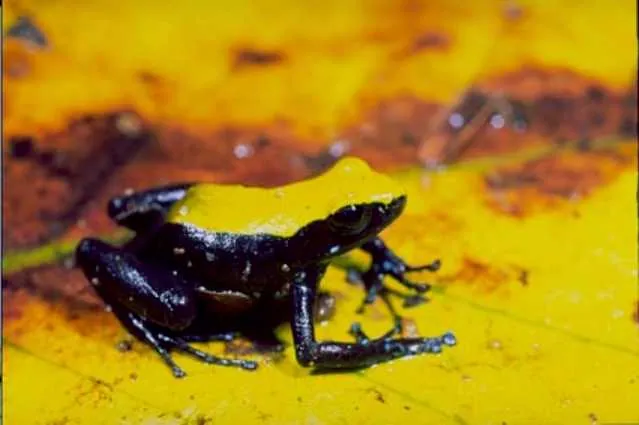
 Jak je rozpoznać
- Adults are 24–30 mm long and weigh 1.2–2.0 g1
- Front of the back is bright yellow or pale green1
- Arms, legs, belly and rear are black, with blue spots on the limbs1
- Eyes are completely black1
- Has discs at the tips of its fingers and toes, and the toes are webbed1
Często mylone z: M. betsileo, M. viridis and M. expectata look similar but are differently coloured. They often have blue spots on the throat rather than the limbs, and they have a faint line along the upper lip, which the climbing mantella lacks.1
Siła trucizny
Jego skóra jest trująca. Niebezpiecznie jest jej dotykać, lizać ją albo ją jeść.
Jak działa jego trucizna?
This frog is poisonous rather than venomous. Its skin glands contain lipophilic alkaloids, the chemicals that make up its poison, which it gets from the arthropods it eats. Researchers have found 41 different potent alkaloids in its skin. Captive frogs lose their toxicity over time.1
Jak bardzo jest niebezpieczne dla ludzi?
Zagrożenie dla ludzi: ŁagodneJak użądlenie pszczoły albo słabiej. W zasadzie nieszkodliwe dla ludzi.Co robi, gdy się boi?
Its bright colours warn predators that its skin is toxic.1
 Jeśli ktoś je dotknął lub zjadł
- Jeśli ktoś go dotknął: dokładnie umyj ręce i nie dotykaj oczu ani ust. Jeśli dziecko lub zwierzę domowe je polizało albo zjadło: zadzwoń do ośrodka toksykologicznego albo na numer alarmowy.
Zawsze najpierw dzwoń na numer alarmowy (112, 000, 911). To ogólne wskazówki pierwszej pomocy, a nie porada medyczna. Podstawy pierwszej pomocy
 Uważaj na siebie
- Nigdy nie dotykaj, nie łap ani nie drażnij dzikiego zwierzęcia, nawet małego, i nawet jeśli wygląda, jakby spało albo było martwe.
- Zostaw mu miejsce. Jeśli je spotkasz, zachowaj spokój, powoli się wycofaj i pozwól mu odejść.
- Po dotknięciu lub zjedzeniu: nie trzyj oczu ani ust, umyj ręce i szukaj pomocy medycznej.
Nie poluje na ciebie. Jego trucizna jest tylko po to, żeby nikt go nie zjadł. Więcej o bezpieczeństwie
Jakie jest duże?
Jakie jest długie?
Ile waży?
 mniej więcej długości spinacza
 tak lekkie, że nie poczujesz go na dłoni
 100 metrów w 100 s (najszybszy człowiek potrzebuje 9,6)
Climbing mantella: jak duże jest w porównaniu z TOBĄ?
Zwykła matematyka w twojej przeglądarce. Nic nie jest zapisywane ani nigdzie wysyłane.
Jak szybkie jest?


Fakty
Its tadpoles eat only the eggs of their own species, and the parents feed them unfertilized eggs.1
Males defend territories of about 2 square metres and fight by wrestling, chasing and leaping, sometimes for over 1.5 hours.1
Female frogs choose a mate based on the quality of the male's well, not on his call.1
The climbing mantella is the only member of the Mantella genus that breeds in water-filled wells in trees, tree holes or broken bamboo stalks.1
Its chemical defence has developed in a similar way to that of the dart frogs of Dendrobatidae, although the two families are only distantly related.1
Dla znawców jadu
- Nazwa naukowa
- Mantella laevigata
- Grupa
- Drzewołazy, ropuchy i traszki
- Rodzina
- Mantellidae2
- Kolejność
- Anura
- Kontynenty
- Afryka
- Młode
- Usually lays only one large egg, 3–3.5 mm across, at the side of a water-filled well or above the water line. The parents feed tadpoles unfertilized eggs.1
- Jak sobie radzi na wolności
- Least Concern (IUCN Red List, 2016), though its population is suspected to be decreasing1
- Zagrożenie dla ludzi
- 1 / 5: Łagodne3
Skąd pochodzą fakty
- Climbing mantella (Wikipedia (CC BY-SA 4.0))
- Mantella laevigata (iNaturalist): nazwy i klasyfikacja.
- Venom Wiki: poziom zagrożenia, typowy rozmiar i szacowana prędkość to nasze własne oceny. Zobacz, jak je ustalamy: Jak oceniamy zagrożenie.
Każdy fakt na tej stronie ma numer, który wskazuje jego źródło. Jeśli coś pomyliliśmy, przepraszamy, jesteśmy fanami zwierząt, a nie czasopismem naukowym. Napisz do nas na [email protected], a poprawimy to.
 Skorpion jest głodny! Venom Wiki to projekt jednej osoby: darmowy, bez reklam i bez śledzenia. Mały napiwek pomaga utrzymać go w sieci.Nakarm skorpiona
Więcej z tej samej grupy: Drzewołazy, ropuchy i traszki
 Golden mantellaDrzewołazy, ropuchy i traszkiNieszkodliwe
 Iberian ribbed newtDrzewołazy, ropuchy i traszkiNieszkodliwe
 Tomato frogDrzewołazy, ropuchy i traszkiNieszkodliwe
 African common toadDrzewołazy, ropuchy i traszkiTylko boliNie dotykaj
 Baron's mantellaDrzewołazy, ropuchy i traszkiNieszkodliwe
 Blue-legged mantellaDrzewołazy, ropuchy i traszkiNieszkodliwe
 Mamba czarna
 Skorpion żółty
 Kobra egipska
 Żmija sykliwa
 Boomslang
 Fat-tailed scorpion