
 Afryka
 Azja
Azja Europa
 Ameryka Południowa
 Australia i Oceania
 Antarktyda
 Ocean Spokojny
 Ocean Atlantycki
 Ocean Indyjski
 Ocean Arktyczny
 Morze Śródziemne
 Morze Czerwone
 Morze Karaibskie
 Morze Koralowe
 Morze Południowochińskie
 Morze Filipińskie
 Morze Andamańskie
 Morze Północne
 Morze Timor i Morze Arafura
 Zatoka Bengalska
 Zatoka Kalifornijska
Cobalt blue tarantula
 Ugryzienia
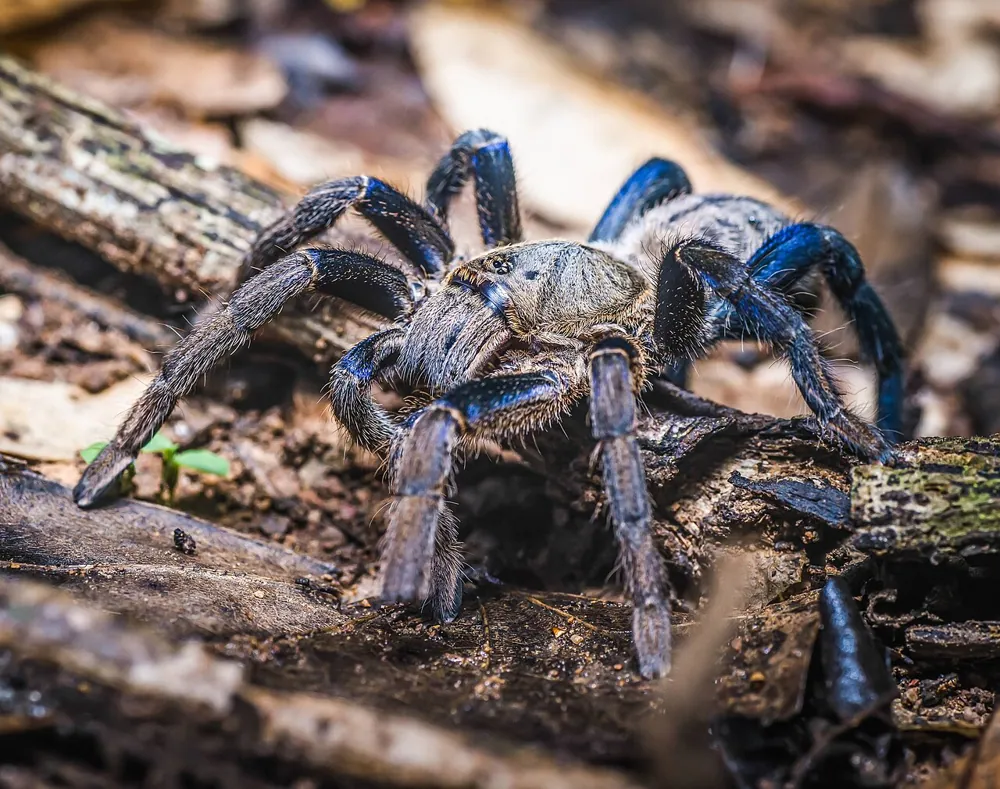
The cobalt blue tarantula is a medium-sized spider with bright blue legs. It lives in tropical rainforests in Myanmar and Thailand, mostly underground. It is popular in the pet trade, so people sometimes meet it in homes.1
 Jak je rozpoznać
- Medium-sized, with a leg span of around 13 cm.1
- Iridescent blue legs.1
- Light grey body, which may have darker grey chevron markings on the abdomen.1
- Adult males turn light tan or bronze and look longer-legged after their final moult. They also gain mating hooks and a palpal bulb on the pedipalps.1
- Females look the same as males until the males' final moult, and they grow larger than males.1
Siła jadu
Jad wydostaje się przez kły lub zęby, gdy zwierzę gryzie.
Jak działa jego jad?
Its venom is not enough to kill a human, but bites can be extremely painful. In a 2001 case from Japan, two people bitten by a pet reported severe pain and inflammation, which faded after several hours. One person had stiffness for a few weeks. Bites can also cause severe muscle cramps.1
Jak bardzo jest niebezpieczne dla ludzi?
Zagrożenie dla ludzi: BolesneMoże naprawdę boleć, ale prawie nigdy nie jest groźne.The venom is not enough to kill a person, but bites are very painful and can cause inflammation and severe muscle cramps. The species is described as having potent venom, so bites should still be taken seriously.1
Co robi, gdy się boi?
It is described as a fast and defensive tarantula.1
 Jeśli ugryzie
- Umyj miejsce ugryzienia i je schłódź. Szukaj pomocy medycznej, jeśli ból jest silny albo poszkodowany źle się czuje.
Zawsze najpierw dzwoń na numer alarmowy (112, 000, 911). To ogólne wskazówki pierwszej pomocy, a nie porada medyczna. Podstawy pierwszej pomocy
 Uważaj na siebie
- Nigdy nie dotykaj, nie łap ani nie drażnij dzikiego zwierzęcia, nawet małego, i nawet jeśli wygląda, jakby spało albo było martwe.
- Zostaw mu miejsce. Jeśli je spotkasz, zachowaj spokój, powoli się wycofaj i pozwól mu odejść.
- Jeśli cię ugryzie: zachowaj spokój, nie ruszaj się, zadzwoń na numer alarmowy (112, 000, 911) albo jak najszybciej dotrzyj do szpitala. Zapamiętaj, jak wyglądało, zdjęcie pomaga.
Nie poluje na ciebie. Używa jadu, żeby złapać jedzenie albo się bronić, i dużo bardziej woli się schować. Więcej o bezpieczeństwie
Jakie jest duże?
Jakie jest długie?
 długie jak 4 klocków ułożonych w rzędzie
 100 metrów w 220 s (najszybszy człowiek potrzebuje 9,6)
Cobalt blue tarantula: jak duże jest w porównaniu z TOBĄ?
Zwykła matematyka w twojej przeglądarce. Nic nie jest zapisywane ani nigdzie wysyłane.
Jak szybkie jest?


Fakty
Its blue colour comes from iridescent legs, which shimmer in light.1
Adult males change colour after their final moult, turning light tan or bronze.1
Despite its potent venom, it is a mainstay of the pet trade.1
It is a fossorial species, meaning it spends nearly all its time in deep burrows that it digs itself.1
Females grow larger than males and live for years longer.1
Pogromca mitów
Mit: Tarantula venom is deadly to people.
Prawda: The venom of this tarantula is not enough to kill a human, but its bites can be extremely painful.1
Skąd pochodzą fakty
- Cobalt blue tarantula (Wikipedia (CC BY-SA 4.0))
- Cyriopagopus lividus (iNaturalist): nazwy i klasyfikacja.
- Venom Wiki: poziom zagrożenia, typowy rozmiar i szacowana prędkość to nasze własne oceny. Zobacz, jak je ustalamy: Jak oceniamy zagrożenie.
Każdy fakt na tej stronie ma numer, który wskazuje jego źródło. Jeśli coś pomyliliśmy, przepraszamy, jesteśmy fanami zwierząt, a nie czasopismem naukowym. Napisz do nas na [email protected], a poprawimy to.
 Skorpion jest głodny! Venom Wiki to projekt jednej osoby: darmowy, bez reklam i bez śledzenia. Mały napiwek pomaga utrzymać go w sieci.Nakarm skorpiona
Więcej z tej samej grupy: Ptaszniki i atraksy
 Gooty sapphire tarantulaPtaszniki i atraksyWymaga lekarza
 Indian ornamental tarantulaPtaszniki i atraksyWymaga lekarza
 Chinese bird spiderPtaszniki i atraksyWymaga lekarza
 Chinese black earth tiger tarantulaPtaszniki i atraksyWymaga lekarza
 Fringed ornamental tarantulaPtaszniki i atraksyWymaga lekarza
 Japanese funnel-web spiderPtaszniki i atraksyWymaga lekarza
 Skorpion żółty
 Kobra indyjska
 Efa piaskowa
 Kobra królewska
 Żmija sykliwa
 Żmija Russella