
 Afryka
 Azja
Azja Europa
 Ameryka Południowa
 Australia i Oceania
 Antarktyda
 Ocean Spokojny
 Ocean Atlantycki
 Ocean Indyjski
 Ocean Arktyczny
 Morze Śródziemne
 Morze Czerwone
 Morze Karaibskie
 Morze Koralowe
 Morze Południowochińskie
 Morze Filipińskie
 Morze Andamańskie
 Morze Północne
 Morze Timor i Morze Arafura
 Zatoka Bengalska
 Zatoka Kalifornijska
Many-banded krait
 Ugryzienia
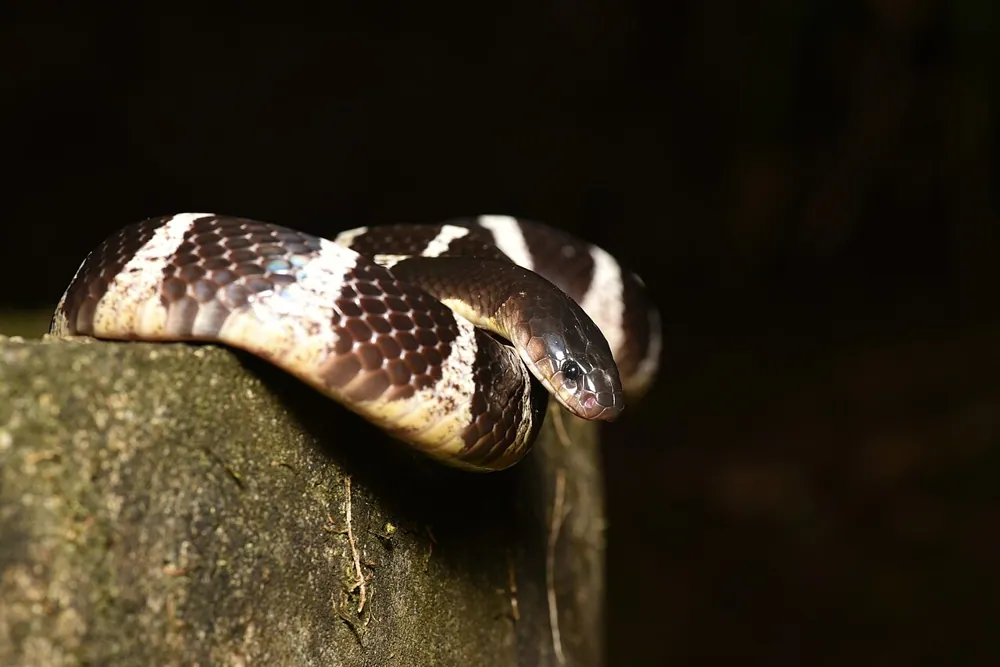
The many-banded krait is an extremely venomous snake found in central and southern China and much of Southeast Asia. It is black or bluish-black with many white bands across its body. It matters because its bite can be fatal, and it is one of the most venomous land snakes in the world.1



 Jak je rozpoznać
- The body is black to dark bluish-black.1
- It has about 21 to 30 white or creamy white cross bands along its upper body.1
- The short, pointed tail is black with 7 to 11 white cross bands.1
- The head is mostly black, broad and oval, and slightly flat.1
- Young snakes often have whitish blotches on the underside of the head.1
Często mylone z: The Malayan krait (Bungarus candidus) is easily confused with this species. A 2017 genetic study found that many museum specimens labelled as many-banded kraits in China were actually Malayan kraits.1
Siła jadu
Jad wydostaje się przez kły lub zęby, gdy zwierzę gryzie.
Jak działa jego jad?
Its venom contains neurotoxins, which attack the nerves and the connections between nerves and muscles. Local effects are usually mild, with slight itching and numbness rather than serious swelling or pain. Symptoms usually start one to six hours after a bite and can include drooping eyelids, double vision, weakness, tongue paralysis, loss of voice and difficulty breathing.1
Jak bardzo jest niebezpieczne dla ludzi?
Zagrożenie dla ludzi: Śmiertelnie groźneJedno z najniebezpieczniejszych zwierząt na świecie.Estimated death rates from untreated bites vary between studies, from 25–35% to 70–100%. In a serious bite, breathing can stop and lead to death. In 2001, a juvenile bit the herpetologist Joe Slowinski in Myanmar and he died 29 hours later.1
Co robi, gdy się boi?
It is generally timid and placid, but it is more defensive at night and thrashes about when handled.1
 Jeśli ugryzie
- Trzymaj poszkodowanego w bezruchu i spokoju, zdejmij pierścionki i to, co ciasne, i jak najszybciej dotrzyj do szpitala: leczeniem jest surowica przeciwjadowa.
Zawsze najpierw dzwoń na numer alarmowy (112, 000, 911). To ogólne wskazówki pierwszej pomocy, a nie porada medyczna. Podstawy pierwszej pomocy
 Uważaj na siebie
- Nigdy nie dotykaj, nie łap ani nie drażnij dzikiego zwierzęcia, nawet małego, i nawet jeśli wygląda, jakby spało albo było martwe.
- Zostaw mu miejsce. Jeśli je spotkasz, zachowaj spokój, powoli się wycofaj i pozwól mu odejść.
- Jeśli cię ugryzie: zachowaj spokój, nie ruszaj się, zadzwoń na numer alarmowy (112, 000, 911) albo jak najszybciej dotrzyj do szpitala. Zapamiętaj, jak wyglądało, zdjęcie pomaga.
Nie poluje na ciebie. Używa jadu, żeby złapać jedzenie albo się bronić, i dużo bardziej woli się schować. Więcej o bezpieczeństwie
Jakie jest duże?
Jakie jest długie?
 długie jak 4 kotów domowych od nosa do ogona
 długie jak 10 bananów ułożonych jeden za drugim
 100 metrów w 49 s (najszybszy człowiek potrzebuje 9,6)
Many-banded krait: jak duże jest w porównaniu z TOBĄ?
Zwykła matematyka w twojej przeglądarce. Nic nie jest zapisywane ani nigdzie wysyłane.
Jak szybkie jest?


Fakty
Its venom is among the most potent of any land snake, based on lab tests on mice dating back to 1943.1
In 2001, a juvenile bite in Myanmar killed Joe Slowinski, which drew worldwide attention to the species.1
The snake that bit Slowinski was first thought to be this species, but it was later classified as a different species.1
It is active from April and retreats into hibernation in November.1
Pogromca mitów
Mit: American soldiers in the Vietnam War called it the "two-step snake", believing its venom could kill a person within two steps.
Prawda: Its symptoms usually start one to six hours after a bite, and death can take much longer. The two-step belief is wrong, and a bite still needs urgent medical care.1
Dla znawców jadu
- Nazwa naukowa
- Bungarus multicinctus
- Grupa
- Kobry, mamby i bungary
- Rodzina
- Elapidae2
- Kolejność
- Squamata
- Kontynenty
- Azja
- Młode
- It lays eggs. Females usually lay 3 to 15 eggs, and up to 20 are possible. The eggs hatch about six weeks later, and the young are about 25 cm long.1
- Długość życia
- około 13,7 lat1
- Zagrożenie dla ludzi
- 5 / 5: Śmiertelnie groźne3
Skąd pochodzą fakty
- Many-banded krait (Wikipedia (CC BY-SA 4.0))
- Bungarus multicinctus (iNaturalist): nazwy i klasyfikacja.
- Venom Wiki: poziom zagrożenia, typowy rozmiar i szacowana prędkość to nasze własne oceny. Zobacz, jak je ustalamy: Jak oceniamy zagrożenie.
Każdy fakt na tej stronie ma numer, który wskazuje jego źródło. Jeśli coś pomyliliśmy, przepraszamy, jesteśmy fanami zwierząt, a nie czasopismem naukowym. Napisz do nas na [email protected], a poprawimy to.
 Skorpion jest głodny! Venom Wiki to projekt jednej osoby: darmowy, bez reklam i bez śledzenia. Mały napiwek pomaga utrzymać go w sieci.Nakarm skorpiona
Więcej z tej samej grupy: Kobry, mamby i bungary
 Kobra indyjskaKobry, mamby i bungaryŚmiertelnie groźne
 Kobra królewskaKobry, mamby i bungaryŚmiertelnie groźne
 Caspian cobraKobry, mamby i bungaryŚmiertelnie groźne
 Common kraitKobry, mamby i bungaryŚmiertelnie groźne
 Malayan kraitKobry, mamby i bungaryŚmiertelnie groźne
 Monocled cobraKobry, mamby i bungaryŚmiertelnie groźne
 Skorpion żółty
 Efa piaskowa
 Żmija sykliwa
 Żmija Russella
 Asian giant hornet
 Komodo dragon