
 Afryka
 Azja
Azja Europa
 Ameryka Południowa
 Australia i Oceania
 Antarktyda
 Ocean Spokojny
 Ocean Atlantycki
 Ocean Indyjski
 Ocean Arktyczny
 Morze Śródziemne
 Morze Czerwone
 Morze Karaibskie
 Morze Koralowe
 Morze Południowochińskie
 Morze Filipińskie
 Morze Andamańskie
 Morze Północne
 Morze Timor i Morze Arafura
 Zatoka Bengalska
 Zatoka Kalifornijska
Tiny clinging box jellyfish
 Parzące czułki
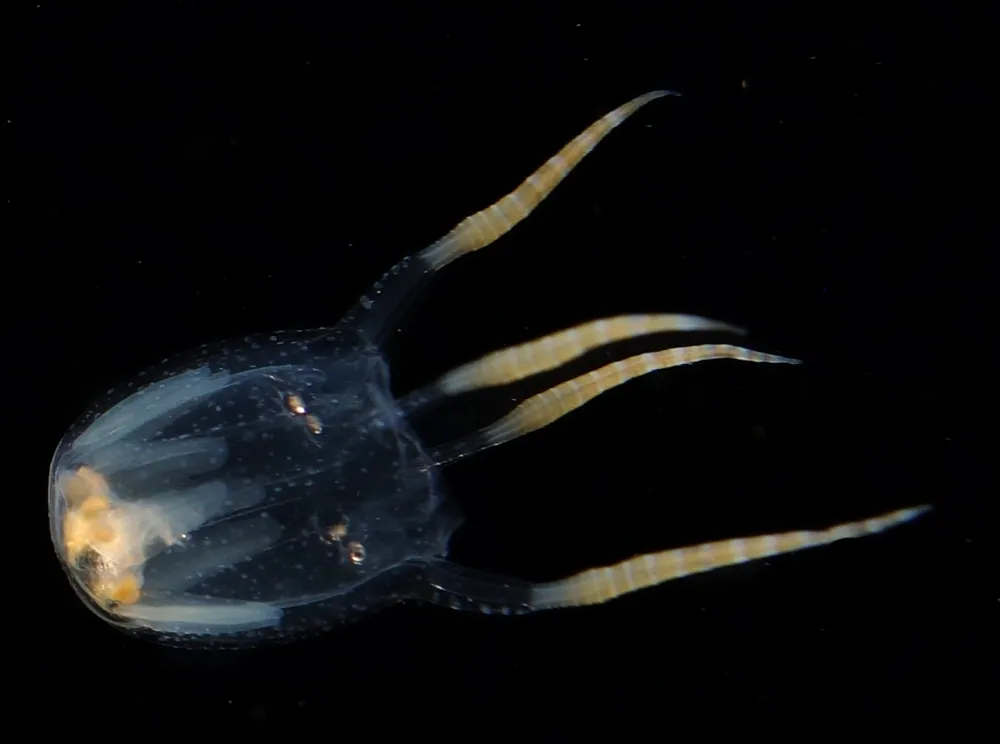
Copula sivickisi is a tiny box jellyfish, about 1 cm across, that lives in shallow warm seas. It is the only species in its genus and is active only at night. It is unusual among box jellyfish because it has a mating ritual and fertilises its eggs inside the body.1



 Jak je rozpoznać
- The bell is boxy in shape, unlike the umbrella shape of true jellyfish.1
- It has four slender tentacles hanging from the rim, each banded with orange.1
- The eight gonads (reproductive organs) can be seen through the transparent bell. In males they are orange, and in females they are white-speckled.1
- Mature females have orange-brown markings around the edge of the bell.1
- It is most active at night and hides during the day, folding its tentacles inside the bell and flattening itself.1
Siła jadu
Tysiące maleńkich komórek parzydełkowych wystrzeliwuje, gdy coś ich dotknie.
Jak bardzo jest niebezpieczne dla ludzi?
Zagrożenie dla ludzi: ŁagodneJak użądlenie pszczoły albo słabiej. W zasadzie nieszkodliwe dla ludzi.Co robi, gdy się boi?
When disturbed by day it hides, folding its tentacles inside the bell and flattening itself against the seabed.1
 Jeśli użądli
- Wyjdź z wody i zdejmij pozostałe czułki (w rękawiczkach albo przez materiał).
- Przy tropikalnych kostkowcach: polewaj miejsca poparzenia octem przez co najmniej 30 sekund, wezwij pomoc i przygotuj się do RKO. Przy żeglarzach portugalskich i większości innych: spłucz wodą morską, a potem przyłóż gorącą wodę na ból.
Zawsze najpierw dzwoń na numer alarmowy (112, 000, 911). To ogólne wskazówki pierwszej pomocy, a nie porada medyczna. Podstawy pierwszej pomocy
 Uważaj na siebie
- Nigdy nie dotykaj, nie łap ani nie drażnij dzikiego zwierzęcia, nawet małego, i nawet jeśli wygląda, jakby spało albo było martwe.
- Zostaw mu miejsce. Jeśli je spotkasz, zachowaj spokój, powoli się wycofaj i pozwól mu odejść.
- Jeśli cię użądli: zachowaj spokój, nie ruszaj się, zadzwoń na numer alarmowy (112, 000, 911) albo jak najszybciej dotrzyj do szpitala. Zapamiętaj, jak wyglądało, zdjęcie pomaga.
Nie poluje na ciebie. Używa jadu, żeby złapać jedzenie albo się bronić, i dużo bardziej woli się schować. Więcej o bezpieczeństwie
Gdzie na świecie?
Jakie jest duże?
Jakie jest długie?
 tak małe, że zmieści się na twoim paznokciu
Tiny clinging box jellyfish: jak duże jest w porównaniu z TOBĄ?
Zwykła matematyka w twojej przeglądarce. Nic nie jest zapisywane ani nigdzie wysyłane.
Jak szybkie jest?


Fakty
It has twenty-four eyes, grouped on four stalked structures called rhopalia on the rim of the bell.1
Unlike most box jellyfish, it has an elaborate mating ritual. A male grabs a female by one tentacle and pulls her around while they entwine.1
A female has been seen mating with several males, up to eight times in a two-hour period.1
It is attracted to light, and it chooses a spot on the seabed soon after dawn, spending a few minutes selecting a good location before settling there.1
Its average maximum swimming speed is 4.9 cm per second, which is faster than the currents near the surface of the shallow waters where it lives.1
The male passes a red bundle of sperm (a spermatophore) to one of the female's tentacles, which pushes it into her manubrium, the tube hanging from the underside of the bell.1
Dla znawców jadu
- Nazwa naukowa
- Copula sivickisi
- Grupa
- Meduzy i parzące stworzenia morskie
- Rodzina
- Tripedaliidae2
- Kolejność
- Carybdeida
- Kontynenty
- Ocean Spokojny, Ocean Atlantycki, Morze Timor i Morze Arafura, Oceany
- Młode
- Eggs are fertilised inside the female's bell. About two or three days later she releases a mucous strand of embryos into the sea, and these develop into polyps.1
- Zagrożenie dla ludzi
- 1 / 5: Łagodne3
Skąd pochodzą fakty
- Copula sivickisi (Wikipedia (CC BY-SA 4.0))
- Copula sivickisi (iNaturalist): nazwy i klasyfikacja.
- Venom Wiki: poziom zagrożenia, typowy rozmiar i szacowana prędkość to nasze własne oceny. Zobacz, jak je ustalamy: Jak oceniamy zagrożenie.
Każdy fakt na tej stronie ma numer, który wskazuje jego źródło. Jeśli coś pomyliliśmy, przepraszamy, jesteśmy fanami zwierząt, a nie czasopismem naukowym. Napisz do nas na [email protected], a poprawimy to.
 Skorpion jest głodny! Venom Wiki to projekt jednej osoby: darmowy, bez reklam i bez śledzenia. Mały napiwek pomaga utrzymać go w sieci.Nakarm skorpiona
Więcej z tej samej grupy: Meduzy i parzące stworzenia morskie
 Kostkowiec australijskiMeduzy i parzące stworzenia morskieŚmiertelnie groźneNie dotykaj
 Irukandji jellyfishMeduzy i parzące stworzenia morskieMoże zabićNie dotykaj
 Portuguese man o' warMeduzy i parzące stworzenia morskieWymaga lekarzaNie dotykaj
 Lion's mane jellyfishMeduzy i parzące stworzenia morskieTylko boliNie dotykaj
 Moon jellyfishMeduzy i parzące stworzenia morskieNieszkodliwe
 Common kingslayerMeduzy i parzące stworzenia morskieMoże zabićNie dotykaj
Żyje też w: Ocean Spokojny
 Stożek geograficznyStożki i ośmiorniceŚmiertelnie groźne
 Ośmiornica błękitnopierścieniowa większaStożki i ośmiorniceŚmiertelnie groźne
 Rozdymka japońskaInne trujące zwierzętaŚmiertelnie groźne
 Ośmiornica błękitnopierścieniowa południowaStożki i ośmiorniceŚmiertelnie groźne
 Hawksbill sea turtleInne trujące zwierzętaMoże zabić
 Reef stonefishJadowite rybyMoże zabićNie dotykaj