
 Afryka
 Azja
Azja Europa
 Ameryka Południowa
 Australia i Oceania
 Antarktyda
 Ocean Spokojny
 Ocean Atlantycki
 Ocean Indyjski
 Ocean Arktyczny
 Morze Śródziemne
 Morze Czerwone
 Morze Karaibskie
 Morze Koralowe
 Morze Południowochińskie
 Morze Filipińskie
 Morze Andamańskie
 Morze Północne
 Morze Timor i Morze Arafura
 Zatoka Bengalska
 Zatoka Kalifornijska
Turkish deathstalker
 Użądlenia
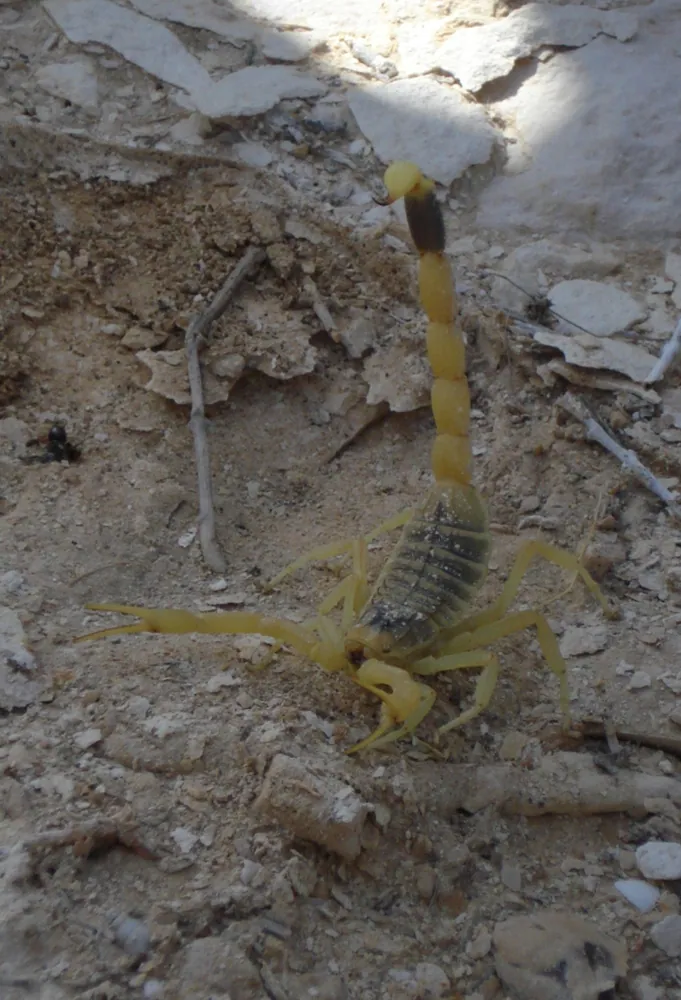
The Turkish deathstalker is a scorpion from the family Buthidae. Its venom is highly toxic to humans, but scientists also use scorpion venom in medical research. It lives in dry, rocky places and usually keeps away from people.1


 Jak je rozpoznać
- Brown front body section (cephalothorax), with a yellow head, legs and tail.1
- The very last segment of the tail is brown instead of yellow.1
- Its pincers and other body parts are yellowish, against a mostly black background on the front body and tail.1
Często mylone z: It was once considered the same species as the deathstalker (L. quinquestriatus), but was reclassified as a separate species in 2009 based on mitochondrial DNA analysis. Its tail segments are shorter than those of the deathstalker.1
Siła jadu
Jad wydostaje się przez żądło.
Jak działa jego jad?
Its venom comes from two venom glands and is mainly made of proteins. It stimulates voltage-gated sodium and potassium channels, which control the electrical signals in nerves and muscles. Symptoms can be severe: after a sting, pain can come in waves with seizures, and blisters can form at the site of the sting.1
Jak bardzo jest niebezpieczne dla ludzi?
Zagrożenie dla ludzi: Bardzo niebezpieczneMoże zabić człowieka, który nie dostanie leczenia.Only a small portion of scorpions are harmful to humans, but this species' venom is very toxic and can cause severe symptoms from a single sting. The sting is much worse in children, and it may pose a serious health threat to infants because of their small body weight.1
Co robi, gdy się boi?
Its venom is used for self-defence as well as for hunting.1
 Jeśli użądli
- Anyone who has been stung should have an early echocardiogram, which is a heart ultrasound, because the venom can affect the heart. In the case described, the patient was given sodium chloride (saline) and a local painkiller at hospital.1
- Schłodź miejsce użądlenia okładem z lodu i trzymaj poszkodowanego w bezruchu. Szybko szukaj pomocy medycznej, zwłaszcza w przypadku dzieci: niektóre skorpiony są śmiertelnie groźne dla dzieci.
Zawsze najpierw dzwoń na numer alarmowy (112, 000, 911). To ogólne wskazówki pierwszej pomocy, a nie porada medyczna. Podstawy pierwszej pomocy
 Uważaj na siebie
- Nigdy nie dotykaj, nie łap ani nie drażnij dzikiego zwierzęcia, nawet małego, i nawet jeśli wygląda, jakby spało albo było martwe.
- Zostaw mu miejsce. Jeśli je spotkasz, zachowaj spokój, powoli się wycofaj i pozwól mu odejść.
- Jeśli cię użądli: zachowaj spokój, nie ruszaj się, zadzwoń na numer alarmowy (112, 000, 911) albo jak najszybciej dotrzyj do szpitala. Zapamiętaj, jak wyglądało, zdjęcie pomaga.
Nie poluje na ciebie. Używa jadu, żeby złapać jedzenie albo się bronić, i dużo bardziej woli się schować. Więcej o bezpieczeństwie
Jakie jest duże?
Jakie jest długie?
 długie jak 3 klocków ułożonych w rzędzie
 100 metrów w 200 s (najszybszy człowiek potrzebuje 9,6)
Turkish deathstalker: jak duże jest w porównaniu z TOBĄ?
Zwykła matematyka w twojej przeglądarce. Nic nie jest zapisywane ani nigdzie wysyłane.
Jak szybkie jest?


Fakty
In one recorded case, a sting on the thumb of a 30-year-old man caused pain, reddening, seizures and blisters, and he was unable to move his arm up for a time.1
When a male wants to mate, he injects a small dose of venom into the female to calm her before they move together in a dance-like pattern.1
In tests on rats, the venom of this species had a greater effect than the venom of the Arabian fat-tailed scorpion (Androctonus crassicauda).1
Its venom is studied for treating nervous, immune, infection, cardiovascular and cancer (neoplastic) diseases.1
Birds, bats and mice prey on scorpions, which is why they are more active on moonless nights.1
Skąd pochodzą fakty
- Leiurus abdullahbayrami (Wikipedia (CC BY-SA 4.0))
- Leiurus abdullahbayrami (iNaturalist): nazwy i klasyfikacja.
- Venom Wiki: poziom zagrożenia, typowy rozmiar i szacowana prędkość to nasze własne oceny. Zobacz, jak je ustalamy: Jak oceniamy zagrożenie.
Każdy fakt na tej stronie ma numer, który wskazuje jego źródło. Jeśli coś pomyliliśmy, przepraszamy, jesteśmy fanami zwierząt, a nie czasopismem naukowym. Napisz do nas na [email protected], a poprawimy to.
 Skorpion jest głodny! Venom Wiki to projekt jednej osoby: darmowy, bez reklam i bez śledzenia. Mały napiwek pomaga utrzymać go w sieci.Nakarm skorpiona
 Skorpion żółty
 Indian red scorpion
 Arabian fat-tailed scorpion
 Chinese scorpion
 Asian forest scorpion
 Giant forest scorpion
 Kobra indyjska
 Efa piaskowa
 Kobra królewska
 Żmija sykliwa
 Żmija Russella
 Asian giant hornet