
 Afryka
 Azja
Azja Europa
 Ameryka Południowa
 Australia i Oceania
 Antarktyda
 Ocean Spokojny
 Ocean Atlantycki
 Ocean Indyjski
 Ocean Arktyczny
 Morze Śródziemne
 Morze Czerwone
 Morze Karaibskie
 Morze Koralowe
 Morze Południowochińskie
 Morze Filipińskie
 Morze Andamańskie
 Morze Północne
 Morze Timor i Morze Arafura
 Zatoka Bengalska
 Zatoka Kalifornijska
Valentin's sharpnose puffer
 Trujące po zjedzeniu
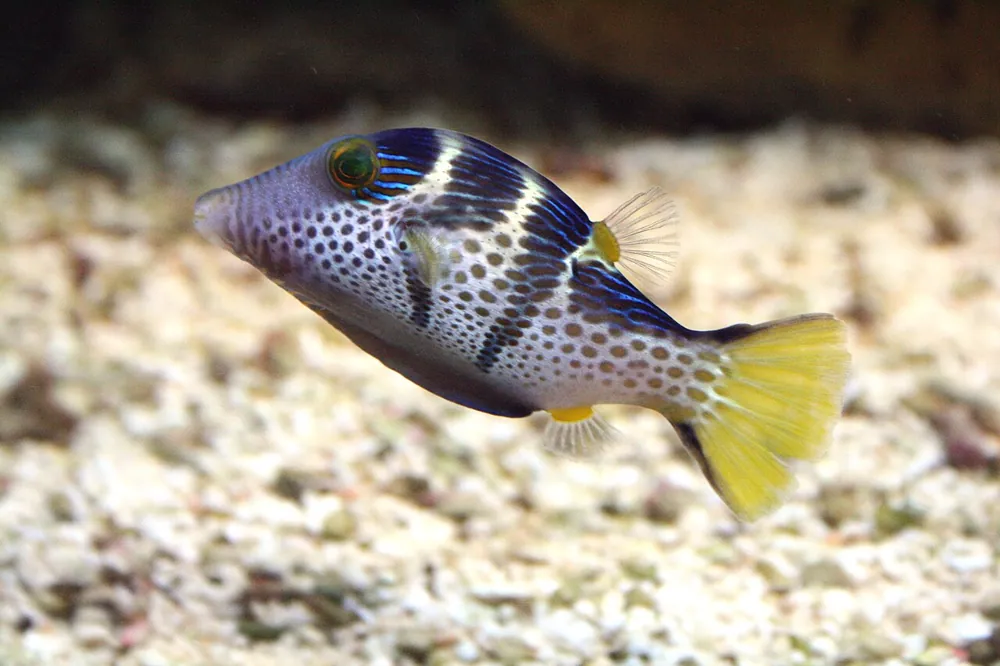
Valentin's sharpnose puffer is a small reef fish with four black stripes across its back. It lives in warm seas across the Indian Ocean, the Red Sea and parts of the Pacific. It is special because its skin holds one of the most potent natural poisons known, which keeps most predators away.1




 Jak je rozpoznać
- Four distinct black stripes, called saddles, run across its back.1
- The head is blue-grey.1
- The main body is white, speckled with blue-grey spots.1
- The tail and fins show hints of yellow, and a rainbow streak sits behind the eyes.1
Często mylone z: The filefish Paraluteres prionurus has similar colours and sometimes swims in schools with this puffer. It mimics the puffer's appearance for protection, but it is not toxic.1
Siła trucizny
Szkodzi tylko temu, kto je zje.
Jak działa jego trucizna?
Its skin and other tissues contain tetrodotoxin, a neurotoxin, which attacks the nerves. It is one of the most potent naturally occurring toxins and is lethal to many species of fish. This makes the fish unpalatable to predators.1
Jak bardzo jest niebezpieczne dla ludzi?
Zagrożenie dla ludzi: GroźneJeśli ktoś zje to zwierzę, trzeba iść do lekarza. Zgony są bardzo rzadkie.It is highly poisonous to eat.1
Co robi, gdy się boi?
It gulps water to puff its body up to three or four times its normal volume, and its toxic skin deters predators.1
 Jeśli ktoś je dotknął lub zjadł
- Jeśli ktoś je zjadł albo ma objawy po zjedzeniu: od razu zadzwoń na numer alarmowy albo do ośrodka toksykologicznego.
Zawsze najpierw dzwoń na numer alarmowy (112, 000, 911). To ogólne wskazówki pierwszej pomocy, a nie porada medyczna. Podstawy pierwszej pomocy
 Uważaj na siebie
- Nigdy nie dotykaj, nie łap ani nie drażnij dzikiego zwierzęcia, nawet małego, i nawet jeśli wygląda, jakby spało albo było martwe.
- Zostaw mu miejsce. Jeśli je spotkasz, zachowaj spokój, powoli się wycofaj i pozwól mu odejść.
- Po dotknięciu lub zjedzeniu: nie trzyj oczu ani ust, umyj ręce i szukaj pomocy medycznej.
Nie poluje na ciebie. Jego trucizna jest tylko po to, żeby nikt go nie zjadł. Więcej o bezpieczeństwie
Gdzie na świecie?
Jakie jest duże?
Jakie jest długie?
 długie jak 3 klocków ułożonych w rzędzie
 długość dużego basenu (50 m) wpław w 45 s
Valentin's sharpnose puffer: jak duże jest w porównaniu z TOBĄ?
Zwykła matematyka w twojej przeglądarce. Nic nie jest zapisywane ani nigdzie wysyłane.
Jak szybkie jest?
Fakty
Its tetrodotoxin is one of the most potent naturally occurring toxins, and it is lethal to many fish.1
A non-toxic filefish, Paraluteres prionurus, has evolved to look like this puffer, which helps it avoid predators.1
Its eggs are unpalatable, so predatory fish rarely eat them, and any swallowed eggs are quickly passed out again. This means the parents need not guard them.1
Juveniles of the grouper Plectropomus laevis also mimic its colours.1
Its eggs, at 0.68 to 0.72 mm across, are among the smallest in the puffer family Tetraodontidae.1
Pogromca mitów
Mit: Pufferfish hold their breath while they puff up.
Prawda: A 2014 study found that oxygen consumption actually increases while the fish is inflated. Oxygen intake through the gills is almost five times higher than normal.1
Dla znawców jadu
- Nazwa naukowa
- Canthigaster valentini
- Grupa
- Inne trujące zwierzęta
- Rodzina
- Tetraodontidae2
- Kolejność
- Tetraodontiformes
- Kontynenty
- Ocean Spokojny, Ocean Indyjski, Morze Czerwone, Morze Koralowe, Morze Filipińskie, Morze Południowochińskie, Morze Timor i Morze Arafura, Oceany
- Młode
- Females lay anywhere between fifteen and over 800 eggs at a time, every four to ten days depending on the season.1
- Zagrożenie dla ludzi
- 3 / 5: Groźne3
Skąd pochodzą fakty
- Valentin's sharpnose puffer (Wikipedia (CC BY-SA 4.0))
- Canthigaster valentini (iNaturalist): nazwy i klasyfikacja.
- Venom Wiki: poziom zagrożenia, typowy rozmiar i szacowana prędkość to nasze własne oceny. Zobacz, jak je ustalamy: Jak oceniamy zagrożenie.
Każdy fakt na tej stronie ma numer, który wskazuje jego źródło. Jeśli coś pomyliliśmy, przepraszamy, jesteśmy fanami zwierząt, a nie czasopismem naukowym. Napisz do nas na [email protected], a poprawimy to.
 Skorpion jest głodny! Venom Wiki to projekt jednej osoby: darmowy, bez reklam i bez śledzenia. Mały napiwek pomaga utrzymać go w sieci.Nakarm skorpiona
Więcej z tej samej grupy: Inne trujące zwierzęta
 Rozdymka japońskaInne trujące zwierzętaŚmiertelnie groźne
 Hawksbill sea turtleInne trujące zwierzętaMoże zabić
 Greenland sharkInne trujące zwierzętaTylko boli
 Silver-cheeked toadfishInne trujące zwierzętaŚmiertelnie groźne
 Blackspotted pufferInne trujące zwierzętaMoże zabić
 White-spotted pufferInne trujące zwierzętaMoże zabić
Żyje też w: Ocean Spokojny
 Kostkowiec australijskiMeduzy i parzące stworzenia morskieŚmiertelnie groźneNie dotykaj
 Stożek geograficznyStożki i ośmiorniceŚmiertelnie groźne
 Ośmiornica błękitnopierścieniowa większaStożki i ośmiorniceŚmiertelnie groźne
 Ośmiornica błękitnopierścieniowa południowaStożki i ośmiorniceŚmiertelnie groźne
 Irukandji jellyfishMeduzy i parzące stworzenia morskieMoże zabićNie dotykaj
 Reef stonefishJadowite rybyMoże zabićNie dotykaj