
 Afryka
 Azja
Azja Europa
 Ameryka Południowa
 Australia i Oceania
 Antarktyda
 Ocean Spokojny
 Ocean Atlantycki
 Ocean Indyjski
 Ocean Arktyczny
 Morze Śródziemne
 Morze Czerwone
 Morze Karaibskie
 Morze Koralowe
 Morze Południowochińskie
 Morze Filipińskie
 Morze Andamańskie
 Morze Północne
 Morze Timor i Morze Arafura
 Zatoka Bengalska
 Zatoka Kalifornijska
Yellow stingray
 Użądlenia
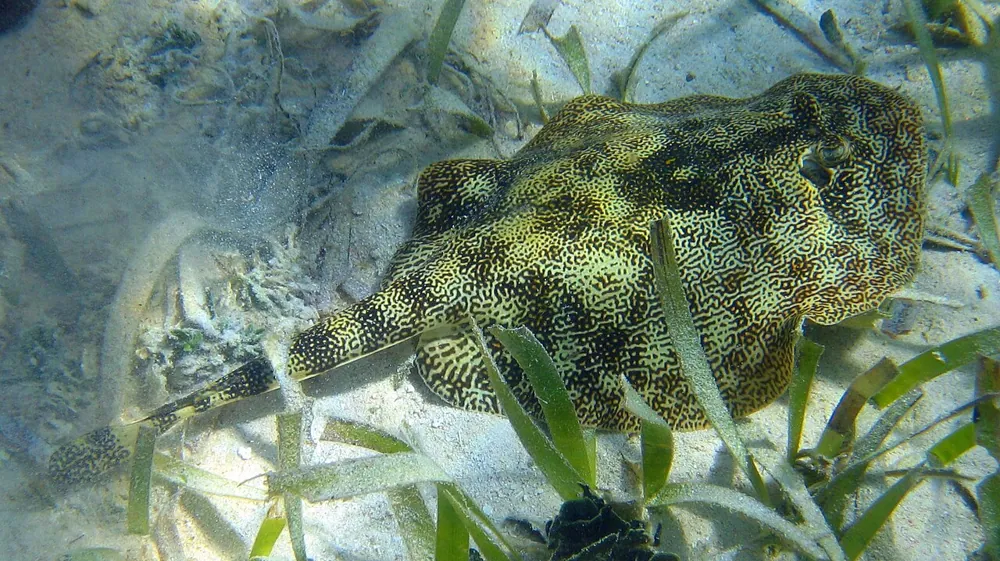
The yellow stingray is a small ray that lives on the sandy, muddy or seagrass bottoms of shallow coastal waters in the western Atlantic, the Gulf of Mexico and the Caribbean. It spends much of the day buried under sand or lying still. It can sting with a venomous spine on its tail, but it usually ignores divers unless it is stepped on or provoked.1



 Jak je rozpoznać
- Nearly round pectoral fin disc with a short tail and a small, leaf-shaped tail fin.1
- Pattern of spots and blotches, either light on dark or dark on light, which varies a lot between individuals.1
- Can quickly change the tone and contrast of its colour to match its surroundings.1
- Underside is yellowish, greenish or brownish white, with small darker spots near the edge of the disc and the tail.1
- A serrated spine sits about halfway along the tail.1
Siła jadu
Jad wydostaje się przez żądło.
Jak działa jego jad?
The tail spine is coated in potent venom. The wound it causes is extremely painful, but it is seldom life-threatening.1
Jak bardzo jest niebezpieczne dla ludzi?
Zagrożenie dla ludzi: BolesneMoże naprawdę boleć, ale prawie nigdy nie jest groźne.It is not aggressive towards people. It injures people only when it is stepped on or otherwise provoked, and the resulting wound is very painful but seldom life-threatening.1
Co robi, gdy się boi?
When threatened it mostly stays still, buried under sediment or lying in vegetation, and if stepped on or provoked it defends itself with its tail spine.1
 Jeśli użądli
- Włóż zranione miejsce do gorącej wody, tak gorącej, jak poszkodowany wytrzyma bez poparzenia (sprawdź ją własną ręką), na 30 do 90 minut. Szukaj pomocy medycznej, zwłaszcza po szkaradnicy i płaszczce.
Zawsze najpierw dzwoń na numer alarmowy (112, 000, 911). To ogólne wskazówki pierwszej pomocy, a nie porada medyczna. Podstawy pierwszej pomocy
 Uważaj na siebie
- Nigdy nie dotykaj, nie łap ani nie drażnij dzikiego zwierzęcia, nawet małego, i nawet jeśli wygląda, jakby spało albo było martwe.
- Zostaw mu miejsce. Jeśli je spotkasz, zachowaj spokój, powoli się wycofaj i pozwól mu odejść.
- Jeśli cię użądli: zachowaj spokój, nie ruszaj się, zadzwoń na numer alarmowy (112, 000, 911) albo jak najszybciej dotrzyj do szpitala. Zapamiętaj, jak wyglądało, zdjęcie pomaga.
Nie poluje na ciebie. Używa jadu, żeby złapać jedzenie albo się bronić, i dużo bardziej woli się schować. Więcej o bezpieczeństwie
Gdzie na świecie?
Jakie jest duże?
Jakie jest długie?
 długie jak 4 bananów ułożonych jeden za drugim
 długość dużego basenu (50 m) wpław w 13 s
Yellow stingray: jak duże jest w porównaniu z TOBĄ?
Zwykła matematyka w twojej przeglądarce. Nic nie jest zapisywane ani nigdzie wysyłane.
Jak szybkie jest?

Fakty
It glows green when lit by blue or ultraviolet light, a effect called biofluorescence that may help it communicate and camouflage itself.1
It can raise the front of its disc to form a shaded 'cave' that draws in small creatures looking for shelter.1
Off Jamaica, up to one yellow stingray per square metre gathers under mangrove roosts used by cattle egrets, possibly because bird droppings feed the small animals that attract the rays.1
Its eyes give it a 360° view of its surroundings, and each eye has a covering that controls how much light enters.1
It can live for 15 to 25 years.1
Pogromca mitów
Mit: Stingrays attack people in the water.
Prawda: Yellow stingrays generally pay little attention to divers and can be approached closely. They only sting when they are stepped on or otherwise provoked.1
Dla znawców jadu
- Nazwa naukowa
- Urobatis jamaicensis
- Grupa
- Jadowite ryby
- Rodzina
- Urotrygonidae2
- Kolejność
- Myliobatiformes
- Kontynenty
- Ocean Atlantycki, Morze Karaibskie, Zatoka Meksykańska, Oceany
- Młode
- It gives birth to live young, with litters of up to seven. Females have two litters a year in seagrass beds after a gestation period of 5–6 months.1
- Długość życia
- około 25 lat1
- Jak sobie radzi na wolności
- Least Concern1
- Zagrożenie dla ludzi
- 2 / 5: Bolesne3
Skąd pochodzą fakty
- Yellow stingray (Wikipedia (CC BY-SA 4.0))
- Urobatis jamaicensis (iNaturalist): nazwy i klasyfikacja.
- Venom Wiki: poziom zagrożenia, typowy rozmiar i szacowana prędkość to nasze własne oceny. Zobacz, jak je ustalamy: Jak oceniamy zagrożenie.
Każdy fakt na tej stronie ma numer, który wskazuje jego źródło. Jeśli coś pomyliliśmy, przepraszamy, jesteśmy fanami zwierząt, a nie czasopismem naukowym. Napisz do nas na [email protected], a poprawimy to.
 Skorpion jest głodny! Venom Wiki to projekt jednej osoby: darmowy, bez reklam i bez śledzenia. Mały napiwek pomaga utrzymać go w sieci.Nakarm skorpiona
Więcej z tej samej grupy: Jadowite ryby
 Reef stonefish
 Red lionfish
 Estuarine stonefish
 Short-tail stingray
 Striped eel catfish
 Bluespotted ribbontail ray
Żyje też w: Ocean Atlantycki
 Hawksbill sea turtleInne trujące zwierzętaMoże zabić
 Portuguese man o' warMeduzy i parzące stworzenia morskieWymaga lekarzaNie dotykaj
 Blue sea dragonStożki i ośmiorniceTylko boli
 Greenland sharkInne trujące zwierzętaTylko boli
 Lion's mane jellyfishMeduzy i parzące stworzenia morskieTylko boliNie dotykaj
 Common octopusStożki i ośmiorniceNieszkodliwe