
 افریقا
 اسیا
اسیا اروپا
اروپا سویلي امریکا
 استرالیا او اوقیانوسیه
 انټارکټیکا
 ارام سمندر
 اطلس سمندر
 هند سمندر
 شمالي منجمد سمندر
 مدیترانه بحیره
 سره بحیره
 د کارائیب بحیره
 مرجاني بحیره
 د سویلي چین بحیره
 د فیلیپین بحیره
 د اندامان بحیره
 شمالي بحیره
 د تیمور او ارافورا بحیره
 د بنګال خلیج
 د کالیفورنیا خلیج
Mexican fireleg tarantula
 چیچي
چیچيThe Mexican fireleg tarantula is a large, long-lived spider with bright orange and black colouring. It lives in dry scrubland in western Guerrero state, Mexico, where it hides in burrows. It is popular in the pet trade, which has put pressure on wild numbers.1



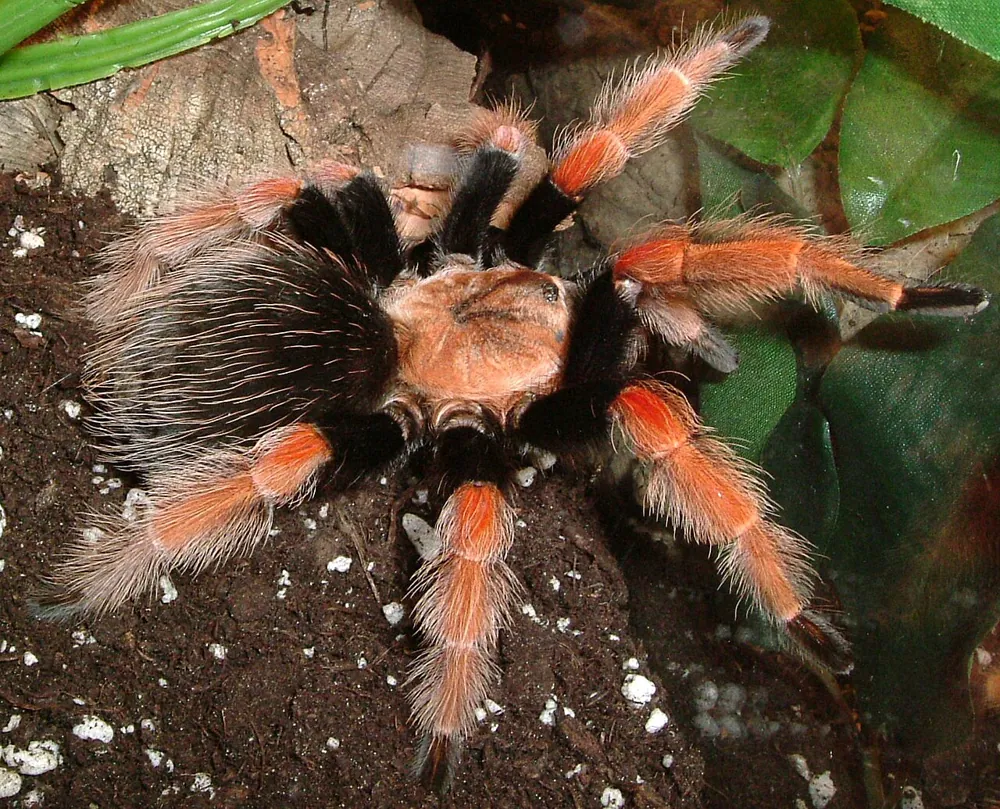
 څنګه یې وپېژنې
- Dramatic orange and black colouring.1
- Orange carapace (the upper body shell) with a dark black band on the upper legs (femora).1
- Bright, fiery red knees (patellae) that fade to a paler orange further down the leg.1
- Black tips on the feet (tarsi).1
- Adults are 12.7 to 15.2 cm across, converted from 5 to 6 inches.1
ډېر ځله ورسره ګډوډ کېږي: It resembles the Mexican redknee tarantula (Brachypelma hamorii). The main difference is the legs: the knees of the Mexican fireleg are bright red, while the joints of the redknee are orange.1
د زهرو ځواک
کله چې چیچي، زهر یې له زهري غاښونو یا غاښونو راوځي.
انسانانو ته څومره خطرناک دی؟
انسانانو ته خطر: سپکد مچۍ د نیش په اندازه یا تر هغې کم. انسانانو ته تقریباً بېضرره.The spider is not particularly defensive. Its main defence is its urticating hairs, which it can flick when threatened. Some individuals may have a nervous temperament.1
کله چې ډار شي څه کوي؟
When it feels threatened, it flicks urticating hairs at the attacker.1
 که وچیچي
- د چیچلو ځای ومینځه او سوړ یې کړه. که درد سخت وي یا کس ځان ناروغه احساسوي، طبي مرسته ترلاسه کړه.
تل لومړی خپلې بیړنۍ شمېرې ته زنګ ووهه (112، 000، 911). دا د لومړنۍ مرستې عمومي لارښوونه ده، طبي مشوره نه ده. د لومړنۍ مرستې بنسټونه
 خوندي اوسه
- هېڅکله ځنګلی ژوی مه لمسوه، مه یې نیسه او مه یې ځوروه، حتی که کوچنی وي، او حتی که ویده یا مړ ښکاري.
- ورته ځای ورکړه. که له یوه سره مخ شوې، ارام اوسه، ورو ورو شاته شه او پرېږده چې خپله لار ولاړ شي.
- که یو دې وچیچي: ارام اوسه، بېحرکته پاتې شه، خپلې بیړنۍ شمېرې ته زنګ ووهه (112، 000، 911) یا ژر روغتون ته ورسېږه. په یاد ولره چې څه ډول ښکارېده، عکس مرسته کوي.
دا ستا پسې نه ګرځي. خپل زهر د خوراک نیولو یا د ځان ساتلو لپاره کاروي، او ډېر غوره ګڼي چې پټ شي. د خوندي پاتې کېدو په اړه نور
په نړۍ کې چېرته؟
څومره لوی دی؟
څومره اوږد دی؟
 د 5 لوبو خښتو هومره اوږد چې په یوه قطار کې وي
 کولای شي 100 متره په 210 ثانیو کې ووهي (تر ټولو چټک انسان 9.6 ته اړتیا لري)
Mexican fireleg tarantula ستا په پرتله څومره لوی دی؟
یوازې ستا په براوزر کې حساب کتاب. هېڅ شی نه خوندي کېږي او نه چېرته لېږل کېږي.
څومره چټک دی؟


حقیقتونه
Tarantulas of this genus are long-lived. Females may live about ten years after reaching maturity, while males usually live only up to a year after their final moult.1
It is commonly kept as a pet and is regarded as suitable for beginners, which has led to heavy collection from the wild.1
It is mostly active after dark, but can sometimes be active during the day, especially in the morning and evening.1
Adults moult at the end of the dry season, between November and June. Males then begin searching for mates.1
د زهرو د کارپوهانو لپاره
- علمي نوم
- Brachypelma boehmei
- ډله
- ټرانټولا او قیفي جال لرونکې غڼې
- کورنۍ
- Theraphosidae2
- ترتیب
- Araneae
- وچې
- شمالي امریکا
- کوچني ماشومان
- Mated females produce an egg sac. If it succeeds, the eggs generally hatch three to four weeks before the rainy season begins.1
- په طبیعت کې یې حال څنګه دی
- Listed on CITES Appendix II, which regulates international trade. Ongoing habitat destruction, illegal pet trade and high mortality before maturity are a considerable concern for its future.1
- انسانانو ته خطر
- 1 / 5: سپک3
حقیقتونه له کومه راځي
- Brachypelma boehmei (Wikipedia (CC BY-SA 4.0))
- Brachypelma boehmei (iNaturalist): نومونه او ډلبندي.
- Venom Wiki: د خطر کچه، عادي اندازه او د سرعت اټکل زموږ خپل دي. وګوره چې څنګه یې محاسبه کوو: موږ خطر څنګه اندازه کوو.
په دې پاڼه کې هر حقیقت یوه شمېره لري چې خپلې سرچینې ته اشاره کوي. که موږ څه غلط کړي وي، بښنه غواړو، موږ د ژویو مینهوال یو، نه علمي مجله. په [email protected] کې راته ووایه او موږ به یې سم کړو.
 لړم وږی دی! Venom Wiki د یو کس پروژه ده: وړیا، پرته له اعلانونو او تعقیبوونکو. یوه کوچنۍ ډالۍ یې په انټرنېټ کې ساتلو کې مرسته کوي.لړم ته خواړه ورکړه
له همدې ډلې نور: ټرانټولا او قیفي جال لرونکې غڼې
 Mexican redknee tarantulaټرانټولا او قیفي جال لرونکې غڼېبېضرره
 Arizona blond tarantulaټرانټولا او قیفي جال لرونکې غڼېبېضرره
 Ravine trapdoor spiderټرانټولا او قیفي جال لرونکې غڼېبېضرره
 Trinidad chevron tarantulaټرانټولا او قیفي جال لرونکې غڼېیوازې درد کوي
 Antilles pinktoe tarantulaټرانټولا او قیفي جال لرونکې غڼېبېضرره
 California trapdoor spiderټرانټولا او قیفي جال لرونکې غڼېبېضرره
 Terciopelo
 Eastern coral snake
 Eastern diamondback rattlesnake
 Eyelash viper
 Timber rattlesnake
 Western diamondback rattlesnake