
 افریقا
 اسیا
اسیا اروپا
اروپا سویلي امریکا
 استرالیا او اوقیانوسیه
 انټارکټیکا
 ارام سمندر
 اطلس سمندر
 هند سمندر
 شمالي منجمد سمندر
 مدیترانه بحیره
 سره بحیره
 د کارائیب بحیره
 مرجاني بحیره
 د سویلي چین بحیره
 د فیلیپین بحیره
 د اندامان بحیره
 شمالي بحیره
 د تیمور او ارافورا بحیره
 د بنګال خلیج
 د کالیفورنیا خلیج
West African carpet viper
 چیچي
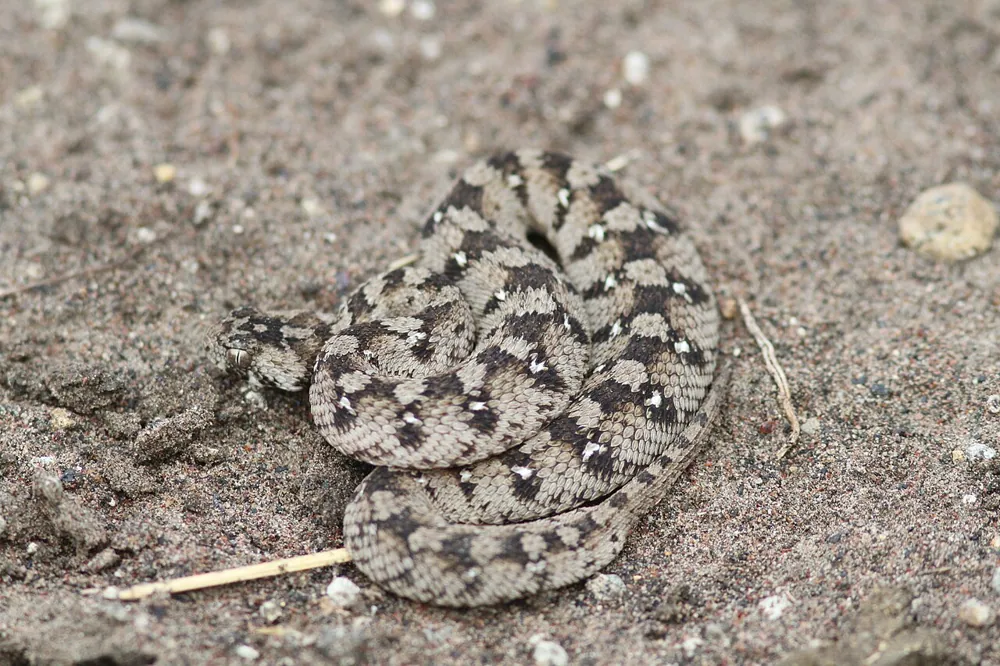
چیچيThe West African carpet viper is a small, highly venomous snake that lives in the savanna of West Africa. Its bite is one of the most dangerous of any snake in Africa. It is known for its row of eye-spots and its aggressive, alarm-like behaviour when threatened.1



 څنګه یې وپېژنې
- It has bulging eyes and a short snout, typical of vipers in the genus Echis.1
- A distinctive series of eye-spots, called ocelli, runs the length of its body.1
- It is terrestrial, so it lives on the ground rather than in trees.1
- It is mostly active at night and at dusk (nocturnal and crepuscular).1
ډېر ځله ورسره ګډوډ کېږي: Older records from Senegal, Guinea-Bissau and Guinea refer to Echis jogeri, and those from eastern Nigeria, Cameroon and southern Chad refer to Echis romani. These are now recognised as separate species. Echis leucogaster is more common north of the 15th parallel, where this snake is rarely found.1
د زهرو ځواک
کله چې چیچي، زهر یې له زهري غاښونو یا غاښونو راوځي.
زهر یې (چیچل یا نیش) څه کوي؟
Its venom is a mix of procoagulants, anticoagulants, haemorrhagins, nephrotoxins and necrotoxins. Procoagulants make blood clot, while anticoagulants stop it clotting, so bleeding can occur. Nephrotoxins damage the kidneys, and necrotoxins kill tissue around the bite. Local symptoms include pain, swelling, bleeding, tissue death (necrosis) and disfigurement, which may lead to amputation. Whole-body symptoms include coagulopathy (blood clotting problems), haemorrhages, shock, kidney failure and blindness.1
انسانانو ته څومره خطرناک دی؟
انسانانو ته خطر: وژونکید نړۍ یو له تر ټولو خطرناکو ژویو څخه.The West African carpet viper causes more human deaths from snakebite than all other African snakes combined. The envenoming rate is 80%, and the lethality rate is 10–20%.1
 ښه خبر: ډاکټران د دې لپاره درمل (انټي وینم) یا درملنه لري.1
کله چې ډار شي څه کوي؟
When threatened, it forms its body into an S shape and rubs its scales together to make an alert sound.1
 که وچیچي
- کس بېحرکته او ارام وساته، چیچل شوی لاس یا پښه د زړه په کچه وساته، ګوتمې او ټینګ شیان لرې کړه، او ژر یې روغتون ته ورسوه.
تل لومړی خپلې بیړنۍ شمېرې ته زنګ ووهه (112، 000، 911). دا د لومړنۍ مرستې عمومي لارښوونه ده، طبي مشوره نه ده. د لومړنۍ مرستې بنسټونه
 خوندي اوسه
- هېڅکله ځنګلی ژوی مه لمسوه، مه یې نیسه او مه یې ځوروه، حتی که کوچنی وي، او حتی که ویده یا مړ ښکاري.
- ورته ځای ورکړه. که له یوه سره مخ شوې، ارام اوسه، ورو ورو شاته شه او پرېږده چې خپله لار ولاړ شي.
- که یو دې وچیچي: ارام اوسه، بېحرکته پاتې شه، خپلې بیړنۍ شمېرې ته زنګ ووهه (112، 000، 911) یا ژر روغتون ته ورسېږه. په یاد ولره چې څه ډول ښکارېده، عکس مرسته کوي.
دا ستا پسې نه ګرځي. خپل زهر د خوراک نیولو یا د ځان ساتلو لپاره کاروي، او ډېر غوره ګڼي چې پټ شي. د خوندي پاتې کېدو په اړه نور
په نړۍ کې چېرته؟
څومره لوی دی؟
څومره اوږد دی؟
 د 4 کېلو هومره اوږد چې یو د بل پسې ایښودل شوي وي
 کولای شي 100 متره په 110 ثانیو کې ووهي (تر ټولو چټک انسان 9.6 ته اړتیا لري)
West African carpet viper ستا په پرتله څومره لوی دی؟
یوازې ستا په براوزر کې حساب کتاب. هېڅ شی نه خوندي کېږي او نه چېرته لېږل کېږي.
څومره چټک دی؟


حقیقتونه
It makes an alert sound by rubbing its scales together while in an S-shaped posture.1
Hatchlings are already 10–12 cm long, which is a sizeable fraction of an adult's average length.1
Its scientific name, ocellatus, comes from the row of eye-spots, called ocelli, that runs along its body.1
Some individual snakes have been found far from its main range, including in the Central African Republic and central Sudan.1
حقیقتونه له کومه راځي
- Echis ocellatus (Wikipedia (CC BY-SA 4.0))
- Echis ocellatus (iNaturalist): نومونه او ډلبندي.
- Venom Wiki: د خطر کچه، عادي اندازه او د سرعت اټکل زموږ خپل دي. وګوره چې څنګه یې محاسبه کوو: موږ خطر څنګه اندازه کوو.
په دې پاڼه کې هر حقیقت یوه شمېره لري چې خپلې سرچینې ته اشاره کوي. که موږ څه غلط کړي وي، بښنه غواړو، موږ د ژویو مینهوال یو، نه علمي مجله. په [email protected] کې راته ووایه او موږ به یې سم کړو.
 لړم وږی دی! Venom Wiki د یو کس پروژه ده: وړیا، پرته له اعلانونو او تعقیبوونکو. یوه کوچنۍ ډالۍ یې په انټرنېټ کې ساتلو کې مرسته کوي.لړم ته خواړه ورکړه
 پف افعي
 Gaboon viper
 Northeast African carpet viper
 Rhinoceros viper
 West African Gaboon viper
 Horned adder
 Black mamba
 Deathstalker
 Egyptian cobra
 Boomslang
 Fat-tailed scorpion
 Western honey bee