
 África
 Ásia
Ásia Europa
 América do Sul
 Austrália e Oceania
 Antártida
 Oceano Pacífico
 Oceano Atlântico
 Oceano Índico
 Oceano Ártico
 Mar Mediterrâneo
 Mar Vermelho
 Mar do Caribe
 Mar de Coral
 Mar do Sul da China
 Mar das Filipinas
 Mar de Andamão
 Mar do Norte
 Mar de Timor e de Arafura
 Golfo de Bengala
 Golfo da Califórnia
Black-legged poison frog
 Veneno na pele
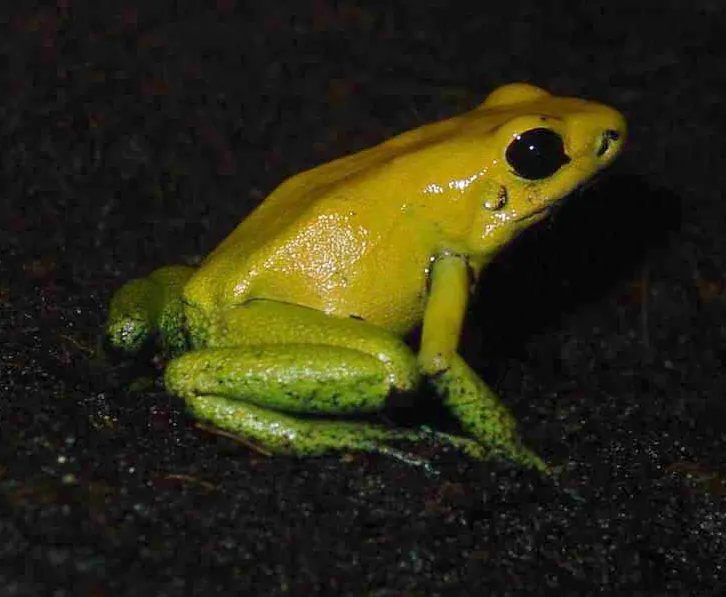
The black-legged poison frog is a small, brightly coloured frog from the rainforests of Colombia. It is one of the most toxic dart frogs in the world, and its skin can kill a person. It is also an endangered species, so it matters for conservation.1


 Como reconhecer
- The body is earthy orange to pure yellow.1
- The forelimbs and hindlegs are black or dark blue.1
- It is one of the largest poison dart frogs, but it is smaller and more slender than the golden poison frog.1
- Juveniles are brown or black and become more vibrant as they mature.1
- It is active in the daytime and moves across the forest floor in quick hops.1
Muitas vezes confundido com: It is often mistaken for the golden poison frog (Phyllobates terribilis), which looks similar. The black-legged poison frog is smaller, more slender and less poisonous. Juvenile golden poison frogs can also look like it. It also resembles the 'netted' colour form of D. leucomelas.1
Poder venenoso
A pele dele é venenosa. É perigoso tocar, lamber ou comer.
O que o veneno dele faz se você tocar ou comer?
This frog is poisonous rather than venomous, because its toxin comes out through its skin. The toxin is batrachotoxin, a neurotoxin that attacks the nerves. It stops nerve signals from getting through, which causes paralysis, heart failure and breathing failure. There are no known treatments or antidotes for it.1
Qual é o perigo para as pessoas?
Perigo para as pessoas: Muito perigosoPode matar uma pessoa que não recebe tratamento.It is one of the few frogs confirmed to have killed humans. Between 2 and 200 micrograms of its toxin is enough to kill a person. Its toxin is weaker than that of the golden poison frog.1
O que ele faz quando está com medo?
Its bright colours warn predators that it is poisonous, and its skin releases toxins through pores.1
 Se alguém tocou ou comeu
- Se alguém tocou em um: lave bem as mãos e não toque nos olhos nem na boca. Se uma criança ou um bichinho de estimação lambeu ou comeu um: ligue para o centro de informação toxicológica ou para o número de emergência.
Sempre ligue primeiro para o número de emergência (112, 000, 911). Estas são orientações gerais de primeiros socorros, não um conselho médico. Primeiros socorros básicos
 Fique em segurança
- Nunca toque, pegue ou provoque um animal selvagem, mesmo que seja pequeno, e mesmo que pareça estar dormindo ou morto.
- Dê espaço a ele. Se encontrar um, fique calmo, dê alguns passos para trás devagar e deixe que ele siga o caminho dele.
- Se você tocou ou comeu: não esfregue os olhos nem a boca, lave as mãos e procure ajuda médica.
Ele não está atrás de você. O veneno dele só existe para que ninguém o coma. Mais sobre como ficar em segurança
Em que lugar do mundo?
Qual é o tamanho dele?
Qual é o comprimento dele?
 menor que o seu dedo mindinho
 poderia percorrer 100 metros em 95 segundos (o humano mais rápido precisa de 9,6)
Qual é o tamanho de Black-legged poison frog comparado com VOCÊ?
Só contas no seu navegador. Nada é salvo nem enviado para lugar nenhum.
Quão rápido ele é?


Informações
Some Chocó people in Colombia use the poison from these frogs to tip hunting darts for blowguns.1
The male carries the tadpoles on his back. Some of the toxin rubs off onto them, so a predator that eats one would be poisoned.1
The frog cannot make its own toxin. It gets the chemicals it needs from its diet and its surroundings.1
Unlike most frogs, which are active at night, this frog is active during the daytime. Its bright colours are easier to see then, which helps warn predators.1
The male's high-pitched trill attracts females. Brighter males are more attractive, and their colour can help them win mates.1
Caça-mitos
Mito: That it is the most toxic dart frog in the world.
Verdade: It is the second most toxic dart frog. The golden poison frog is more toxic.1
Para especialistas em veneno
- Nome científico
- Phyllobates bicolor
- Grupo
- Rãs venenosas, sapos e tritões
- Família
- Dendrobatidae2
- Ordem
- Anura
- Continentes
- América do Sul
- Filhotes
- The eggs are fertilised outside the body, and a parent protects them until they hatch. The male then carries the tadpoles on his back to water.1
- Como ele está na natureza
- Endangered1
- Perigo para as pessoas
- 4 / 5: Muito perigoso3
De onde vêm as informações
- Phyllobates bicolor (Wikipedia (CC BY-SA 4.0))
- Phyllobates bicolor (iNaturalist): nomes e classificação.
- Venom Wiki: o nível de perigo, o tamanho típico e o palpite de velocidade são nossos. Veja como calculamos: Como avaliamos o perigo.
Cada informação desta página tem um número que leva à fonte. Se a gente errou alguma coisa, desculpe, somos fãs de animais, não uma revista científica. Avise a gente em [email protected] e nós corrigimos.
 O escorpião está com fome! O Venom Wiki é um projeto de uma pessoa só: grátis, sem anúncios e sem rastreadores. Uma pequena contribuição ajuda a manter o site no ar.Alimente o escorpião
Mais do mesmo grupo: Rãs venenosas, sapos e tritões
 Rã-dourada-venenosaRãs venenosas, sapos e tritõesMortalNão toque
 Cane toadRãs venenosas, sapos e tritõesPrecisa de médicoNão toque
 Dyeing poison dart frogRãs venenosas, sapos e tritõesSó dóiNão toque
 Bruno's casque-headed frogRãs venenosas, sapos e tritõesPrecisa de médicoNão toque
 Harlequin poison frogRãs venenosas, sapos e tritõesPrecisa de médicoNão toque
 Giant leaf frogRãs venenosas, sapos e tritõesSó dóiNão toque
 Terciopelo
 Brazilian wandering spider
 Eyelash viper
 Golden lancehead
 South American bushmaster
 Peruvian giant centipede