
 África
 Ásia
Ásia Europa
 América do Sul
 Austrália e Oceania
 Antártida
 Oceano Pacífico
 Oceano Atlântico
 Oceano Índico
 Oceano Ártico
 Mar Mediterrâneo
 Mar Vermelho
 Mar do Caribe
 Mar de Coral
 Mar do Sul da China
 Mar das Filipinas
 Mar de Andamão
 Mar do Norte
 Mar de Timor e de Arafura
 Golfo de Bengala
 Golfo da Califórnia
Colorado River toad
 Veneno na pele
The Colorado River toad is a large toad of the deserts of the southwestern United States and northwestern Mexico. It is famous for the toxic, mind-altering secretions it releases from glands in its skin when threatened. These secretions can be deadly if swallowed, so it should be left alone.1


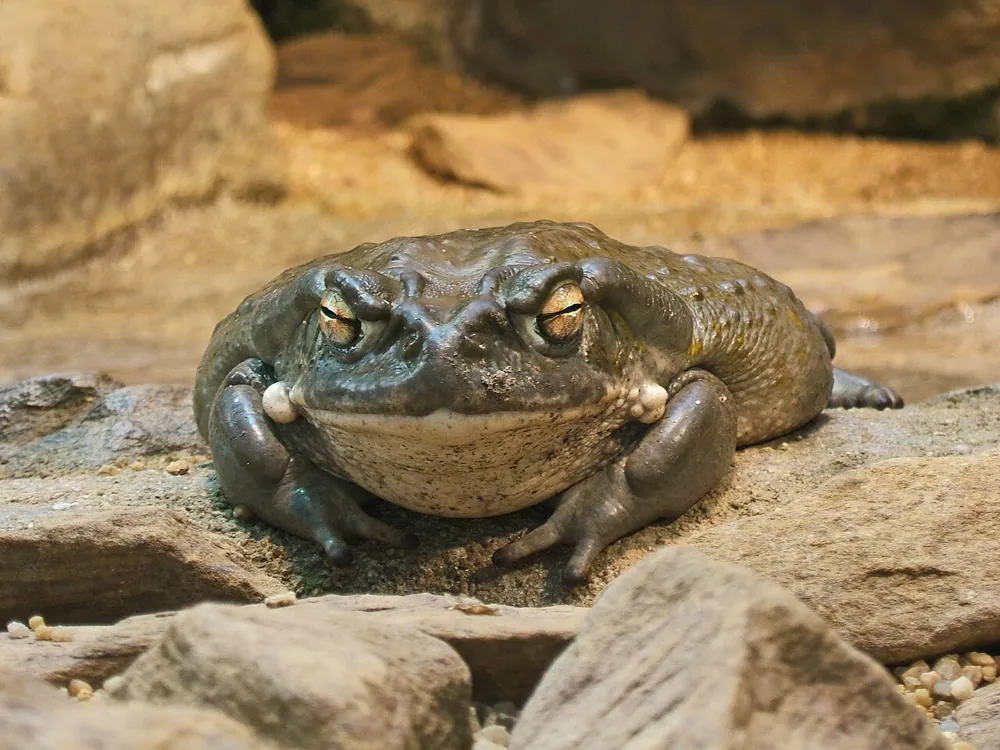
 Como reconhecer
Poder venenoso
A pele dele é venenosa. É perigoso tocar, lamber ou comer.
O que o veneno dele faz se você tocar ou comer?
The toad releases poison from glands in its skin, including the large parotoid glands behind the eyes. The poison contains psychoactive compounds, including 5-MeO-DMT and bufotenin, which affect the brain. It also contains digoxin-like cardiac glycosides, which act on the heart, and ingesting the poison can be fatal. In one reported case, a young woman who drank a tea made from toad preparation began vomiting and had difficulty breathing soon after, and died about two and a half hours later.1
Qual é o perigo para as pessoas?
Perigo para as pessoas: GraveSe alguém tocar nele ou comer, é preciso ir ao médico. Mortes são muito raras.The poison is potent enough to kill a grown dog, and dogs that attack toads have been paralysed or killed. Several cases of human poisoning from swallowing toad secretions or eggs have been reported, and at least one death from the ch'an su preparation has been recorded. The toad has also been linked to poisoning and at least one death from the use of related toad preparations as street drugs.1
O que ele faz quando está com medo?
When threatened, it releases toxins from glands in its skin.1
 Se alguém tocou ou comeu
- Se alguém tocou em um: lave bem as mãos e não toque nos olhos nem na boca. Se uma criança ou um bichinho de estimação lambeu ou comeu um: ligue para o centro de informação toxicológica ou para o número de emergência.
Sempre ligue primeiro para o número de emergência (112, 000, 911). Estas são orientações gerais de primeiros socorros, não um conselho médico. Primeiros socorros básicos
 Fique em segurança
- Nunca toque, pegue ou provoque um animal selvagem, mesmo que seja pequeno, e mesmo que pareça estar dormindo ou morto.
- Dê espaço a ele. Se encontrar um, fique calmo, dê alguns passos para trás devagar e deixe que ele siga o caminho dele.
- Se você tocou ou comeu: não esfregue os olhos nem a boca, lave as mãos e procure ajuda médica.
Ele não está atrás de você. O veneno dele só existe para que ninguém o coma. Mais sobre como ficar em segurança
Em que lugar do mundo?
Qual é o tamanho dele?
Qual é o comprimento dele?
 tem o comprimento de 6 blocos de montar em fila
 poderia percorrer 100 metros em 180 segundos (o humano mais rápido precisa de 9,6)
Qual é o tamanho de Colorado River toad comparado com VOCÊ?
Só contas no seu navegador. Nada é salvo nem enviado para lugar nenhum.
Quão rápido ele é?


Informações
It is the only toad species in which bufotenin is present in large enough amounts to have a psychoactive effect.1
Raccoons have learned to pull a toad away from water by its back leg, turn it over and feed on its belly, which keeps them away from the poison glands.1
Unlike most vertebrates, it gets most of its water by absorbing it across its belly through a special area of skin called the seat patch.1
A female can lay up to 8,000 eggs.1
It is the largest toad in the United States, apart from the non-native cane toad.1
Caça-mitos
Mito: Licking or smoking the toad's secretions is a safe way to get high or to treat illness.
Verdade: Swallowing the secretions has caused poisonings and deaths. Claims about its therapeutic use are unverified, and the US National Park Service has warned people not to handle or lick the toad.1
Para especialistas em veneno
- Nome científico
- Incilius alvarius
- Grupo
- Rãs venenosas, sapos e tritões
- Família
- Bufonidae2
- Ordem
- Anura
- Continentes
- América do Norte
- Filhotes
- Females lay eggs in ponds, slow-moving streams, temporary pools or man-made structures that hold water, and can lay up to 8,000 eggs in a long tube of jelly.1
- Como ele está na natureza
- Listed as threatened in New Mexico and California. A June 2025 study found that persistent trapping in Mexico has decimated several populations and put the species at risk of extinction.1
- Perigo para as pessoas
- 3 / 5: Grave3
De onde vêm as informações
- Colorado River toad (Wikipedia (CC BY-SA 4.0))
- Incilius alvarius (iNaturalist): nomes e classificação.
- Venom Wiki: o nível de perigo, o tamanho típico e o palpite de velocidade são nossos. Veja como calculamos: Como avaliamos o perigo.
Cada informação desta página tem um número que leva à fonte. Se a gente errou alguma coisa, desculpe, somos fãs de animais, não uma revista científica. Avise a gente em [email protected] e nós corrigimos.
 O escorpião está com fome! O Venom Wiki é um projeto de uma pessoa só: grátis, sem anúncios e sem rastreadores. Uma pequena contribuição ajuda a manter o site no ar.Alimente o escorpião
Mais do mesmo grupo: Rãs venenosas, sapos e tritões
 Cane toadRãs venenosas, sapos e tritõesPrecisa de médicoNão toque
 Strawberry poison-dart frogRãs venenosas, sapos e tritõesSó dóiNão toque
 California newtRãs venenosas, sapos e tritõesPode matarNão toque
 Rough-skinned newtRãs venenosas, sapos e tritõesPode matarNão toque
 Panamanian golden frogRãs venenosas, sapos e tritõesPrecisa de médicoNão toque
 Eastern newtRãs venenosas, sapos e tritõesSó dóiNão toque
 Terciopelo
 Eastern coral snake
 Eastern diamondback rattlesnake
 Eyelash viper
 Timber rattlesnake
 Western diamondback rattlesnake