
 África
 Ásia
Ásia Europa
 América do Sul
 Austrália e Oceania
 Antártida
 Oceano Pacífico
 Oceano Atlântico
 Oceano Índico
 Oceano Ártico
 Mar Mediterrâneo
 Mar Vermelho
 Mar do Caribe
 Mar de Coral
 Mar do Sul da China
 Mar das Filipinas
 Mar de Andamão
 Mar do Norte
 Mar de Timor e de Arafura
 Golfo de Bengala
 Golfo da Califórnia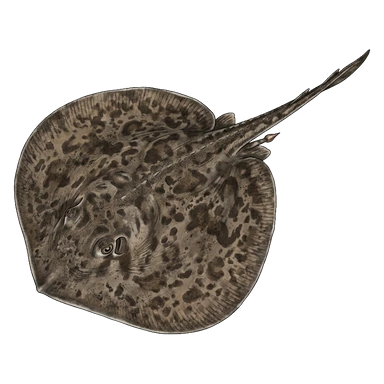
Giant freshwater stingray
 Picadas
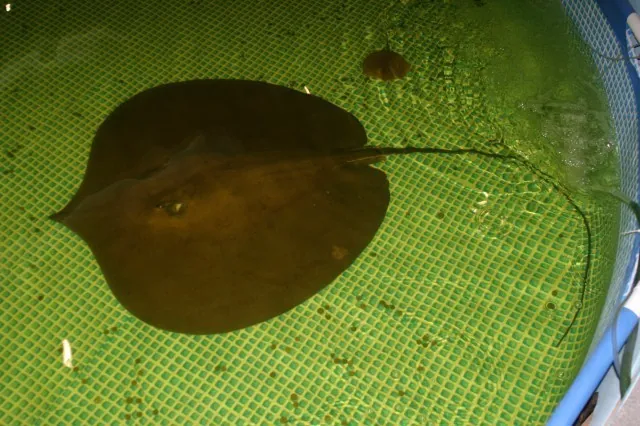
The giant freshwater stingray is a large ray that lives in big rivers and estuaries in Southeast Asia and Borneo. It is the widest freshwater fish in the world, and it is now endangered because of fishing and habitat loss. It has a long, whip-like tail with a sharp spine near the base.1



 Como reconhecer
- Plain grayish brown on top, often with a yellowish or pinkish tint towards the fin edges1
- White underside with broad dark bands on the rear edges of the pectoral and pelvic fins1
- Thin, whip-like tail that is black behind the spine and has no fin folds1
- Sharply pointed snout that projects beyond the disc1
- A single serrated stinging spine on the upper tail near its base, up to 38 cm long1
Muitas vezes confundido com: Similar freshwater stingrays in South Asia, Southeast Asia and Australasia were once tentatively grouped with this species. Some of them, such as the Australian Urogymnus dalyensis, are now described as separate species.1
Poder do veneno
O veneno sai por um ferrão.
O que o veneno dele faz?
Its sting is sheathed in toxic mucus. The sting is capable of piercing bone.1
Qual é o perigo para as pessoas?
Perigo para as pessoas: GraveUma picada precisa de médico. Mortes são muito raras.The giant freshwater stingray is not aggressive. Its sting is strong enough to pierce bone and is coated in toxic mucus, so it should be treated with care.1
 Se ele picar
- Coloque o ferimento em água quente, tão quente quanto a pessoa aguentar sem se queimar (teste com a sua própria mão), por 30 a 90 minutos. Procure ajuda médica, principalmente no caso de peixes-pedra e arraias.
Sempre ligue primeiro para o número de emergência (112, 000, 911). Estas são orientações gerais de primeiros socorros, não um conselho médico. Primeiros socorros básicos
 Fique em segurança
- Nunca toque, pegue ou provoque um animal selvagem, mesmo que seja pequeno, e mesmo que pareça estar dormindo ou morto.
- Dê espaço a ele. Se encontrar um, fique calmo, dê alguns passos para trás devagar e deixe que ele siga o caminho dele.
- Se um deles picar você: fique calmo, fique parado, ligue para o número de emergência (112, 000, 911) ou vá rápido para um hospital. Lembre como ele era, uma foto ajuda.
Ele não está atrás de você. Usa o veneno para pegar comida ou se proteger, e prefere muito mais se esconder. Mais sobre como ficar em segurança
Em que lugar do mundo?
Qual é o tamanho dele?
Qual é o comprimento dele?
Quanto ele pesa?
 tem o comprimento de 5 cachorros do focinho à cauda
 tem o comprimento de 28 bananas enfileiradas
 poderia nadar o comprimento de uma piscina grande (50 m) em 6 segundos
Qual é o tamanho de Giant freshwater stingray comparado com VOCÊ?
Só contas no seu navegador. Nada é salvo nem enviado para lugar nenhum.
Quão rápido ele é?

Informações
In June 2022, a specimen caught in the Mekong River was reported as the largest strict freshwater fish ever documented, at about 300 kg.1
It is the widest freshwater fish in the world, growing up to 2.2 m across.1
Its tail spine is up to 38 cm long, the largest of any stingray species.1
Pups are nourished in the womb by a milk-like substance called histotroph, or 'uterine milk', made by the mother.1
In Cambodia, the average weight of a landed ray fell from 23.2 kg in 1980 to 6.9 kg in 2006.1
Para especialistas em veneno
- Nome científico
- Urogymnus polylepis
- Grupo
- Peixes peçonhentos
- Família
- Dasyatidae2
- Ordem
- Myliobatiformes
- Continentes
- Ásia
- Filhotes
- It gives birth to live young. Females have litters of one to four pups, each about 30 cm across at birth.1
- Como ele está na natureza
- Endangered (IUCN overall); Critically Endangered in Thailand1
- Perigo para as pessoas
- 3 / 5: Grave3
De onde vêm as informações
- Giant freshwater stingray (Wikipedia (CC BY-SA 4.0))
- Urogymnus polylepis (iNaturalist): nomes e classificação.
- Venom Wiki: o nível de perigo, o tamanho típico e o palpite de velocidade são nossos. Veja como calculamos: Como avaliamos o perigo.
Cada informação desta página tem um número que leva à fonte. Se a gente errou alguma coisa, desculpe, somos fãs de animais, não uma revista científica. Avise a gente em [email protected] e nós corrigimos.
 O escorpião está com fome! O Venom Wiki é um projeto de uma pessoa só: grátis, sem anúncios e sem rastreadores. Uma pequena contribuição ajuda a manter o site no ar.Alimente o escorpião
Mais do mesmo grupo: Peixes peçonhentos
 Walking catfishPeixes peçonhentosSó dóiNão toque
 Asian stinging catfishPeixes peçonhentosPrecisa de médicoNão toque
 Reef stonefishPeixes peçonhentosPode matarNão toque
 Red lionfishPeixes peçonhentosPrecisa de médicoNão toque
 Estuarine stonefishPeixes peçonhentosPode matarNão toque
 Short-tail stingrayPeixes peçonhentosPode matar
 Escorpião-amarelo-palestino
 Naja-indiana
 Víbora-serrilhada-indiana
 Naja-real
 Víbora-bufadora
 Víbora-de-russell