
 África
 Ásia
Ásia Europa
 América do Sul
 Austrália e Oceania
 Antártida
 Oceano Pacífico
 Oceano Atlântico
 Oceano Índico
 Oceano Ártico
 Mar Mediterrâneo
 Mar Vermelho
 Mar do Caribe
 Mar de Coral
 Mar do Sul da China
 Mar das Filipinas
 Mar de Andamão
 Mar do Norte
 Mar de Timor e de Arafura
 Golfo de Bengala
 Golfo da Califórnia
Lesser weever
 Espinhos peçonhentos
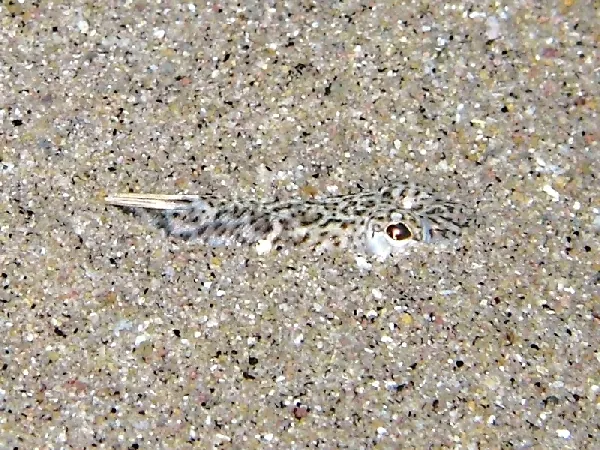
The lesser weever is a small, venomous fish that lies buried in sand on the sea floor, often close to the shore. Its venom is strong, and it is considered one of Europe's most dangerous weever species because it lives near beaches where people swim.1
 Como reconhecer
Poder do veneno
Espinhos afiados levam o veneno. Pisar nele ou pegá-lo dói.
O que o veneno dele faz?
The venom contains trachinine, a cytolysin (a substance that breaks down cells), along with serotonin, histamine-releasing substances and various enzymes. The sting causes acute and intense pain that often spreads to the area around the limb, and it peaks about 30 minutes after the sting. Swelling, redness, numbness, tingling, nausea and vomiting are common, and rare severe effects include abnormal heart rhythms, seizures, decreased blood pressure and unconsciousness.1
Qual é o perigo para as pessoas?
Perigo para as pessoas: GraveSe os espinhos dele espetarem você, vá ao médico. Mortes são muito raras.The lesser weever can sting swimmers badly if they disturb it in the water, and fishermen can be stung when cleaning their nets. Because of its venom and its occurrence near beaches, it is considered one of Europe's most dangerous weever species. Some pain may continue for up to 24 hours.1
O que ele faz quando está com medo?
It rests buried in the sand with only its eyes and the tip of its first dorsal fin exposed, and it stings when disturbed.1
 Se os espinhos dele espetarem você
- Wash the wound, then immerse it in very hot water for at least an hour to ease the pain and help destroy the protein-based venom. The water should be 40 °C (104 °F) or as hot as the patient can tolerate. Reassure the patient that the sting is relatively harmless.1
- Coloque o ferimento em água quente, tão quente quanto a pessoa aguentar sem se queimar (teste com a sua própria mão), por 30 a 90 minutos. Procure ajuda médica, principalmente no caso de peixes-pedra e arraias.
Sempre ligue primeiro para o número de emergência (112, 000, 911). Estas são orientações gerais de primeiros socorros, não um conselho médico. Primeiros socorros básicos
 Fique em segurança
- Nunca toque, pegue ou provoque um animal selvagem, mesmo que seja pequeno, e mesmo que pareça estar dormindo ou morto.
- Dê espaço a ele. Se encontrar um, fique calmo, dê alguns passos para trás devagar e deixe que ele siga o caminho dele.
- Se os espinhos dele espetarem você: fique calmo, fique parado, ligue para o número de emergência (112, 000, 911) ou vá rápido para um hospital. Lembre como ele era, uma foto ajuda.
Ele não está atrás de você. Usa o veneno para pegar comida ou se proteger, e prefere muito mais se esconder. Mais sobre como ficar em segurança
Em que lugar do mundo?
Qual é o tamanho dele?
Qual é o comprimento dele?
 tem o comprimento de 9 blocos de montar em fila
 poderia nadar o comprimento de uma piscina grande (50 m) em 43 segundos
Qual é o tamanho de Lesser weever comparado com VOCÊ?
Só contas no seu navegador. Nada é salvo nem enviado para lugar nenhum.
Quão rápido ele é?
Informações
It has the most potent toxin of all the weevers.1
Pain from its sting usually peaks about 30 minutes after the sting.1
Its venom contains trachinine, a cytolysin that breaks down cells.1
Very rarely, sting pain spreads to the lymph nodes in the groin or armpit.1
Its venom glands are on the first dorsal fin and on the gill cover.1
De onde vêm as informações
- Lesser weever (Wikipedia (CC BY-SA 4.0))
- Echiichthys vipera (iNaturalist): nomes e classificação.
- Venom Wiki: o nível de perigo, o tamanho típico e o palpite de velocidade são nossos. Veja como calculamos: Como avaliamos o perigo.
Cada informação desta página tem um número que leva à fonte. Se a gente errou alguma coisa, desculpe, somos fãs de animais, não uma revista científica. Avise a gente em [email protected] e nós corrigimos.
 O escorpião está com fome! O Venom Wiki é um projeto de uma pessoa só: grátis, sem anúncios e sem rastreadores. Uma pequena contribuição ajuda a manter o site no ar.Alimente o escorpião
Mais do mesmo grupo: Peixes peçonhentos
 Reef stonefishPeixes peçonhentosPode matarNão toque
 Red lionfishPeixes peçonhentosPrecisa de médicoNão toque
 Estuarine stonefishPeixes peçonhentosPode matarNão toque
 Short-tail stingrayPeixes peçonhentosPode matar
 Striped eel catfishPeixes peçonhentosPode matarNão toque
 Bluespotted ribbontail rayPeixes peçonhentosPrecisa de médico
Também vive em: Oceano Atlântico
 Hawksbill sea turtleOutros animais venenososPode matar
 Portuguese man o' warÁguas-vivas e outros bichos marinhos que queimamPrecisa de médicoNão toque
 Blue sea dragonCaramujos-cone e polvosSó dói
 Greenland sharkOutros animais venenososSó dói
 Lion's mane jellyfishÁguas-vivas e outros bichos marinhos que queimamSó dóiNão toque
 Common octopusCaramujos-cone e polvosInofensivo