
 África
 Ásia
Ásia Europa
 América do Sul
 Austrália e Oceania
 Antártida
 Oceano Pacífico
 Oceano Atlântico
 Oceano Índico
 Oceano Ártico
 Mar Mediterrâneo
 Mar Vermelho
 Mar do Caribe
 Mar de Coral
 Mar do Sul da China
 Mar das Filipinas
 Mar de Andamão
 Mar do Norte
 Mar de Timor e de Arafura
 Golfo de Bengala
 Golfo da Califórnia
Northern brown snake
 Mordidas
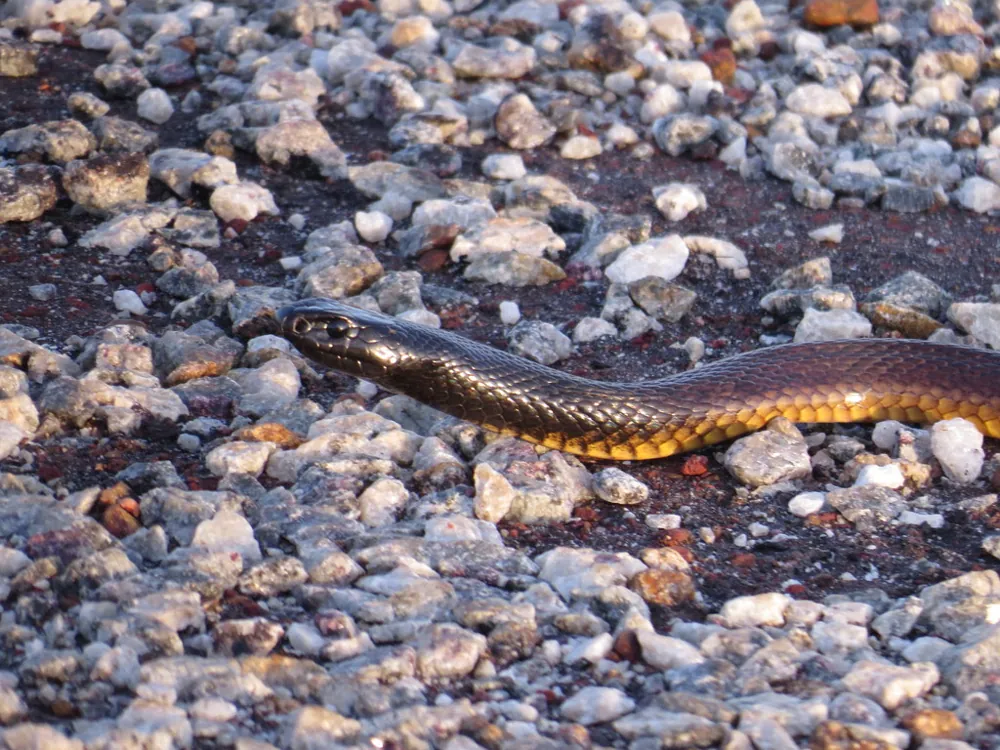
The northern brown snake is a fast, highly venomous snake found across the north of Australia. It lives in dry country, woodlands and grasslands, and sometimes near towns. It matters because its bite can be deadly, so it is important to know what it looks like and to keep your distance.1


 Como reconhecer
- Its back can be shades of orange-brown with flecks and bands, or it can be plain.1
- Its belly is cream to orange with pink blotches.1
- Some individuals have jet black heads.1
- Others have a black 'V' shape on the back of the neck, just below the head.1
- It grows up to 1.8 m in total length, including the tail.1
Muitas vezes confundido com: Some northern brown snakes have jet black heads, which can cause them to be confused with the black-headed python.1
Poder do veneno
O veneno sai pelas presas ou pelos dentes quando ele morde.
O que o veneno dele faz?
Its venom contains neurotoxins, which attack the nerves, nephrotoxins, which damage the kidneys, and a procoagulant, which affects blood clotting. Although its venom is not the most toxic in the brown snake genus, each bite can deliver a relatively large amount, so it has a high potential to cause a deadly bite. Human symptoms include headache, nausea or vomiting, abdominal pain, severe coagulopathy (serious blood clotting problems) and sometimes kidney damage.1
Qual é o perigo para as pessoas?
Perigo para as pessoas: Muito perigosoPode matar uma pessoa que não recebe tratamento.The northern brown snake has a high potential to deliver a deadly bite. The bite is usually painless and is difficult to see because the fangs are small, so a bite can go unnoticed. In dogs and cats, paralysis is also likely to occur.1
O que ele faz quando está com medo?
It usually prefers to retreat from danger, but it is very aggressive when disturbed or threatened and will defend itself if cornered.1
 Se ele morder
- Imobilização com pressão: enrole uma atadura elástica firme sobre a mordida e depois pelo membro inteiro, coloque uma tala e mantenha a pessoa completamente parada até a ajuda chegar.
- Não lave a mordida: o hospital pode testar o veneno que ficou na pele para escolher o soro antiveneno certo.
Sempre ligue primeiro para o número de emergência (112, 000, 911). Estas são orientações gerais de primeiros socorros, não um conselho médico. Primeiros socorros básicos
 Fique em segurança
- Nunca toque, pegue ou provoque um animal selvagem, mesmo que seja pequeno, e mesmo que pareça estar dormindo ou morto.
- Dê espaço a ele. Se encontrar um, fique calmo, dê alguns passos para trás devagar e deixe que ele siga o caminho dele.
- Se um deles morder você: fique calmo, fique parado, ligue para o número de emergência (112, 000, 911) ou vá rápido para um hospital. Lembre como ele era, uma foto ajuda.
Ele não está atrás de você. Usa o veneno para pegar comida ou se proteger, e prefere muito mais se esconder. Mais sobre como ficar em segurança
Em que lugar do mundo?
Qual é o tamanho dele?
Qual é o comprimento dele?
 tem o comprimento de 4 gatos domésticos do focinho à cauda
 tem o comprimento de 10 bananas enfileiradas
 poderia percorrer 100 metros em 48 segundos (o humano mais rápido precisa de 9,6)
Qual é o tamanho de Northern brown snake comparado com VOCÊ?
Só contas no seu navegador. Nada é salvo nem enviado para lugar nenhum.
Quão rápido ele é?


Informações
Although it is generally shy, it has been known to practise cannibalism, though this is not common.1
It can climb small shrubs or trees, although it is not a tree-dwelling species.1
Its name, gwardar, is an Aboriginal word meaning "go the long way around".1
It may become active at night during the warmer months, but it is otherwise active during the day and enjoys sunlight.1
Caça-mitos
Mito: Snakes like this one always attack people.
Verdade: The northern brown snake is generally cautious and shy, and it usually retreats rather than attacks. It only defends itself strongly when it is cornered or threatened.1
Para especialistas em veneno
- Nome científico
- Pseudonaja nuchalis
- Grupo
- Cobras australianas
- Família
- Elapidae2
- Ordem
- Squamata
- Continentes
- Austrália e Oceania
- Filhotes
- The mating season is roughly from September to November, and the female usually produces around 11 to 14 eggs, but may produce up to 38.1
- Perigo para as pessoas
- 4 / 5: Muito perigoso3
De onde vêm as informações
- Pseudonaja nuchalis (Wikipedia (CC BY-SA 4.0))
- Pseudonaja nuchalis (iNaturalist): nomes e classificação.
- Venom Wiki: o nível de perigo, o tamanho típico e o palpite de velocidade são nossos. Veja como calculamos: Como avaliamos o perigo.
Cada informação desta página tem um número que leva à fonte. Se a gente errou alguma coisa, desculpe, somos fãs de animais, não uma revista científica. Avise a gente em [email protected] e nós corrigimos.
 O escorpião está com fome! O Venom Wiki é um projeto de uma pessoa só: grátis, sem anúncios e sem rastreadores. Uma pequena contribuição ajuda a manter o site no ar.Alimente o escorpião
Mais do mesmo grupo: Cobras australianas
 Taipan-costeira
 Víbora-da-morte-comum
 Cobra-marrom-oriental
 Taipan-do-interior
 Cobra-tigre
 Collett's snake
Também vive em: Austrália e Oceania
 Aranha-teia-de-funil-de-sydneyCaranguejeiras e aranhas-teia-de-funilMortal
 Redback spiderAranhasPrecisa de médico
 Brown tree snakeCobras com presas no fundo da bocaSó dói
 Hooded pitohuiOutros animais venenososSó dóiNão toque
 PlatypusMamíferos peçonhentosSó dói
 Northern tree-dwelling funnel-web spiderCaranguejeiras e aranhas-teia-de-funilMortal