
 África
 Ásia
Ásia Europa
 América do Sul
 Austrália e Oceania
 Antártida
 Oceano Pacífico
 Oceano Atlântico
 Oceano Índico
 Oceano Ártico
 Mar Mediterrâneo
 Mar Vermelho
 Mar do Caribe
 Mar de Coral
 Mar do Sul da China
 Mar das Filipinas
 Mar de Andamão
 Mar do Norte
 Mar de Timor e de Arafura
 Golfo de Bengala
 Golfo da Califórnia
Patagonian bumblebee
 Picadas
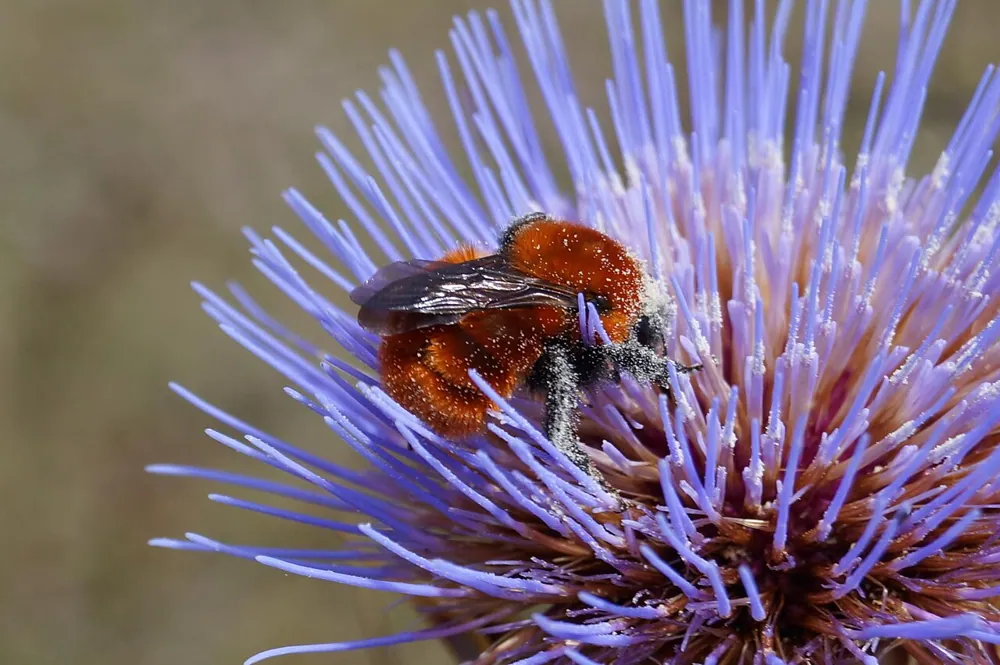
The Patagonian bumblebee is a large, furry bee that lives naturally only in the temperate forests of southern South America. Its queens are among the biggest bumblebees in the world. Its numbers have fallen since other bumblebee species were brought into the region to pollinate crops.1



 Como reconhecer
- Mostly red-orange in colour, with a completely red-orange thorax.1
- The abdomen is a lighter orange, fading slightly towards the end, and has a rounded tip.1
- The head, wings and legs are distinctly black.1
- Long bristles cover most of the body, giving it a very furry look.1
- Queens can reach up to 4 cm from head to tail and weigh around 0.5 to 1.5 grams.1
Muitas vezes confundido com: The syrphid fly Aneriophora aureorufa looks very similar to this bumblebee. The two have similar colour and size and can be hard to tell apart in the wild because of their similar flight.1
Poder do veneno
O veneno sai por um ferrão.
Qual é o perigo para as pessoas?
Perigo para as pessoas: LeveComo uma picada de abelha ou menos. Praticamente inofensivo para as pessoas. Se ele picar
- Raspe o ferrão da abelha para tirar e esfrie o local.
- Se a pessoa tem dificuldade para respirar, inchaço no rosto ou na garganta, ou se sente desmaiar, é uma emergência alérgica: ligue para o número de emergência e use a caneta de adrenalina dela, se ela tiver uma.
Sempre ligue primeiro para o número de emergência (112, 000, 911). Estas são orientações gerais de primeiros socorros, não um conselho médico. Primeiros socorros básicos
 Fique em segurança
- Nunca toque, pegue ou provoque um animal selvagem, mesmo que seja pequeno, e mesmo que pareça estar dormindo ou morto.
- Dê espaço a ele. Se encontrar um, fique calmo, dê alguns passos para trás devagar e deixe que ele siga o caminho dele.
- Se um deles picar você: fique calmo, fique parado, ligue para o número de emergência (112, 000, 911) ou vá rápido para um hospital. Lembre como ele era, uma foto ajuda.
Ele não está atrás de você. Usa o veneno para pegar comida ou se proteger, e prefere muito mais se esconder. Mais sobre como ficar em segurança
Em que lugar do mundo?
Qual é o tamanho dele?
Qual é o comprimento dele?
Quanto ele pesa?
 mais ou menos o comprimento de um clipe de papel
 tão leve que você nem sentiria na mão
 poderia atravessar voando um campo de futebol inteiro em 10 segundos
Qual é o tamanho de Patagonian bumblebee comparado com VOCÊ?
Só contas no seu navegador. Nada é salvo nem enviado para lugar nenhum.
Quão rápido ele é?


Informações
It is one of the largest bee species in the world, and its furry look has earned it the nickname 'flying mouse'.1
It often visits red flowers, which most bees avoid. It can detect red through a specific receptor system.1
A syrphid fly in Patagonia, Aneriophora aureorufa, has evolved to look and fly much like this bumblebee, which may help it avoid predators.1
In the Maulino forest of central Chile, individuals living in fragmented forest have longer wings relative to their body size, because they need to fly longer distances between patches.1
Its populations began to decline after non-native bumblebees were introduced into Chile to pollinate crops.1
It is the only native bumblebee species in southern South America.1
Para especialistas em veneno
- Nome científico
- Bombus dahlbomii
- Grupo
- Abelhas, vespas e vespões
- Família
- Apidae2
- Ordem
- Hymenoptera
- Continentes
- América do Sul
- Filhotes
- Queens lay their first eggs in a structure made of pollen and wax inside an underground cavity. The first brood becomes workers after a couple of months, and nests can hold more than 100 workers.1
- Perigo para as pessoas
- 1 / 5: Leve3
De onde vêm as informações
- Bombus dahlbomii (Wikipedia (CC BY-SA 4.0))
- Bombus dahlbomii (iNaturalist): nomes e classificação.
- Venom Wiki: o nível de perigo, o tamanho típico e o palpite de velocidade são nossos. Veja como calculamos: Como avaliamos o perigo.
Cada informação desta página tem um número que leva à fonte. Se a gente errou alguma coisa, desculpe, somos fãs de animais, não uma revista científica. Avise a gente em [email protected] e nós corrigimos.
 O escorpião está com fome! O Venom Wiki é um projeto de uma pessoa só: grátis, sem anúncios e sem rastreadores. Uma pequena contribuição ajuda a manter o site no ar.Alimente o escorpião
Mais do mesmo grupo: Abelhas, vespas e vespões
 Tarantula hawkAbelhas, vespas e vespõesSó dói
 Executioner waspAbelhas, vespas e vespõesPrecisa de médico
 Warrior waspAbelhas, vespas e vespõesPrecisa de médico
 Armadillo waspAbelhas, vespas e vespõesPrecisa de médico
 Giant tarantula hawkAbelhas, vespas e vespõesSó dói
 Paulista waspAbelhas, vespas e vespõesSó dói
 Rã-dourada-venenosa
 Terciopelo
 Brazilian wandering spider
 Eyelash viper
 Golden lancehead
 South American bushmaster