
 África
 Ásia
Ásia Europa
 América do Sul
 Austrália e Oceania
 Antártida
 Oceano Pacífico
 Oceano Atlântico
 Oceano Índico
 Oceano Ártico
 Mar Mediterrâneo
 Mar Vermelho
 Mar do Caribe
 Mar de Coral
 Mar do Sul da China
 Mar das Filipinas
 Mar de Andamão
 Mar do Norte
 Mar de Timor e de Arafura
 Golfo de Bengala
 Golfo da Califórnia
Southern house spider
 Mordidas
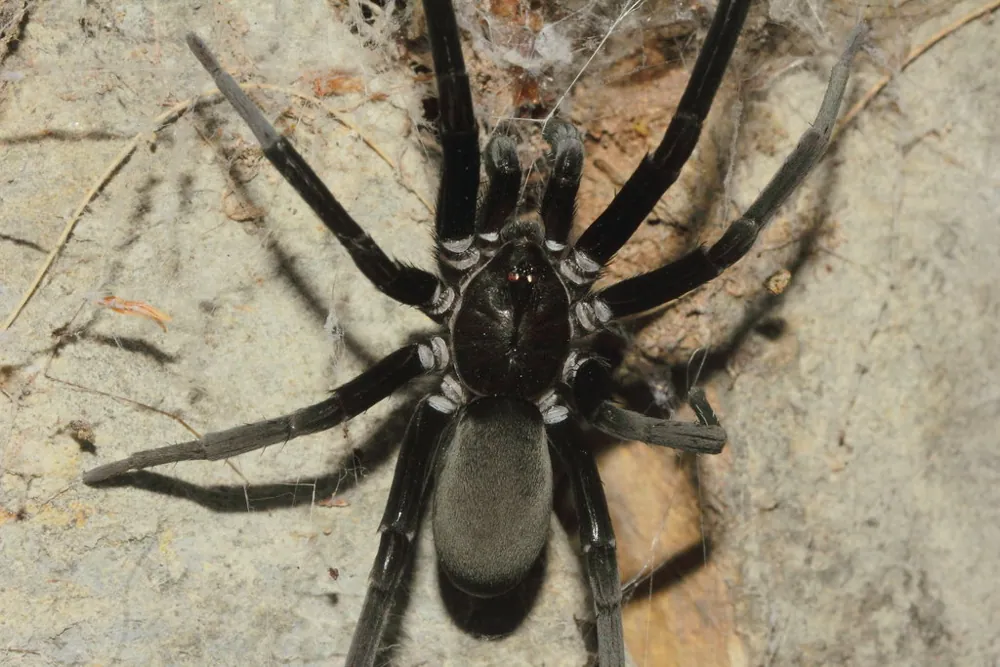
The southern house spider is a large spider that lives in the Americas, from the southern United States to Argentina. It is often mistaken for the brown recluse, but it is not aggressive and rarely bites. Its males wander around looking for mates, and both sexes can squeeze through very narrow cracks.1

 Como reconhecer
- Females are dark brown or black and more compact in shape, with often larger, bulbous bodies.1
- Males have longer legs and unusually long, slender pedipalps (the leg-like feelers near the mouth).1
- Males lack the violin-shaped marking on the front part of the body that the brown recluse has.1
- The abdomen (rear part of the body) is covered in fine, velvety light grey hair.1
- Both sexes may grow to about 5.1 cm across with legs extended.1
Muitas vezes confundido com: Males are often mistaken for the brown recluse because they have similar colours and body structure. Male southern house spiders are usually larger, have no violin shape on the front of the body, and have long, slender pedipalps.1
Poder do veneno
O veneno sai pelas presas ou pelos dentes quando ele morde.
Qual é o perigo para as pessoas?
Perigo para as pessoas: LeveComo uma picada de abelha ou menos. Praticamente inofensivo para as pessoas.Males may seem aggressive, but they bite only when trapped. Their mouthparts are too small to easily get through human skin, so bites are unlikely to be harmful.1
O que ele faz quando está com medo?
When it feels threatened, it instinctively plays dead, a tactic that works well against its common predators.1
 Se ele morder
- Lave a mordida e coloque uma bolsa de gelo para a dor. Procure ajuda médica se a dor for forte, se espalhar ou a pessoa se sentir mal.
Sempre ligue primeiro para o número de emergência (112, 000, 911). Estas são orientações gerais de primeiros socorros, não um conselho médico. Primeiros socorros básicos
 Fique em segurança
- Nunca toque, pegue ou provoque um animal selvagem, mesmo que seja pequeno, e mesmo que pareça estar dormindo ou morto.
- Dê espaço a ele. Se encontrar um, fique calmo, dê alguns passos para trás devagar e deixe que ele siga o caminho dele.
- Se um deles morder você: fique calmo, fique parado, ligue para o número de emergência (112, 000, 911) ou vá rápido para um hospital. Lembre como ele era, uma foto ajuda.
Ele não está atrás de você. Usa o veneno para pegar comida ou se proteger, e prefere muito mais se esconder. Mais sobre como ficar em segurança
Em que lugar do mundo?
Qual é o tamanho dele?
Qual é o comprimento dele?
 menor que o seu dedo mindinho
 poderia percorrer 100 metros em 330 segundos (o humano mais rápido precisa de 9,6)
Qual é o tamanho de Southern house spider comparado com VOCÊ?
Só contas no seu navegador. Nada é salvo nem enviado para lugar nenhum.
Quão rápido ele é?


Informações
It is a cribellate spider, meaning its silk is not sticky. Its web works by tangling silk into a velcro-like net.1
It can crawl through cracks as narrow as 0.66 cm, thanks to its long body and compact legs.1
It is almost blind, so it may crawl over anything in its path, living or not, without meaning to attack.1
Its mating ritual can last over an hour, with long pauses where neither spider moves much.1
Its family, Filistatidae, is known as the crevice weavers because the females build webs around cracks.1
Caça-mitos
Mito: Southern house spiders are aggressive and bite people often.
Verdade: Males may look aggressive, but they bite only when trapped, and their mouthparts are too small to easily penetrate human skin. Their crawling over things is not aggression, as they cannot see larger animals.1
De onde vêm as informações
- Southern house spider (Wikipedia (CC BY-SA 4.0))
- Kukulcania hibernalis (iNaturalist): nomes e classificação.
- Venom Wiki: o nível de perigo, o tamanho típico e o palpite de velocidade são nossos. Veja como calculamos: Como avaliamos o perigo.
Cada informação desta página tem um número que leva à fonte. Se a gente errou alguma coisa, desculpe, somos fãs de animais, não uma revista científica. Avise a gente em [email protected] e nós corrigimos.
 O escorpião está com fome! O Venom Wiki é um projeto de uma pessoa só: grátis, sem anúncios e sem rastreadores. Uma pequena contribuição ajuda a manter o site no ar.Alimente o escorpião
 Brazilian wandering spider
 Brown recluse
 Southern black widow
 Amazon wandering spider
 Chilean recluse
 Northern black widow
 Terciopelo
 Eastern coral snake
 Eastern diamondback rattlesnake
 Eyelash viper
 Timber rattlesnake
 Western diamondback rattlesnake