
 África
 Ásia
Ásia Europa
 América do Sul
 Austrália e Oceânia
 Antártida
 Oceano Pacífico
 Oceano Atlântico
 Oceano Índico
 Oceano Ártico
 Mar Mediterrâneo
 Mar Vermelho
 Mar das Caraíbas
 Mar de Coral
 Mar da China Meridional
 Mar das Filipinas
 Mar de Andamão
 Mar do Norte
 Mar de Timor e de Arafura
 Golfo de Bengala
 Golfo da Califórnia
Cantil
 Mordeduras
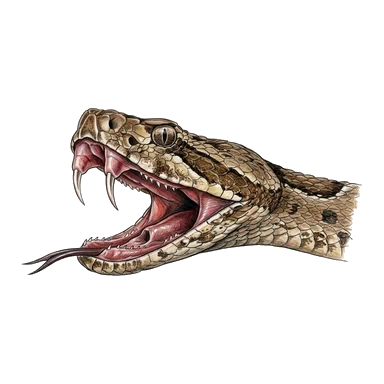
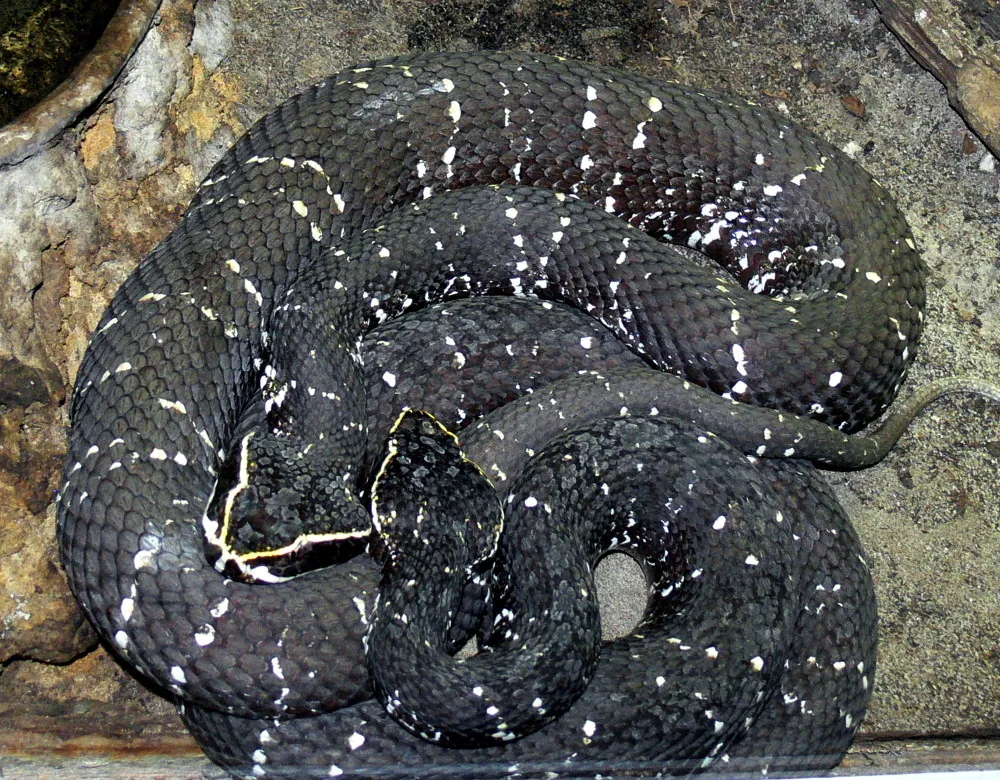
The cantil is a highly venomous pit viper, a type of snake that senses heat with pits on its face. It lives in Mexico and Central America, reaching south as far as Honduras. Its bite can be very dangerous, which is why it is so well known in the region.1
 Como reconhecê-lo
- Heavy-bodied, with a broad, triangular head and small eyes with vertical pupils.1
- Usually brown or black, with darker brown or black banding, sometimes with white or cream accents.1
- Yellow and/or white lines on the head, including a broader line on the upper lip.1
- Juveniles are almost always distinctly banded, with bright green or yellow tail tips.1
- Adults are often more faded, with their pattern and colour darkening as they age.1
Muitas vezes confundido com: It shares its general body structure with the copperhead and is in the same genus as the cottonmouth, so it is closely related to both.1
Poder do veneno
O veneno sai pelas presas ou pelos dentes quando morde.
O que faz o seu veneno?
Bites can cause local pain, swelling and discolouration, but bites from adults can cause massive swelling and necrosis, which is the death of body tissue. Symptoms reported in Honduras include severe pain, bleeding from the fang punctures, nosebleeds, bleeding gums, blood in the urine, shock and kidney failure. Some bites were fatal within only a few hours.1
Quão perigoso é para as pessoas?
Perigo para as pessoas: Muito perigosoPode matar uma pessoa que não seja tratada.The cantil is feared throughout its range, and in Sonora, Mexico, it is feared more than any other reptile. In Nicaragua, it is considered the country's most dangerous snake. One researcher suggested that amputation may be needed in about one in six cases because of necrosis. It is generally shy, and its reputation for aggression is probably not well deserved.1
 Boa notícia: os médicos têm um medicamento (antídoto) ou um tratamento para isto.1
O que faz quando tem medo?
It first relies on camouflage. If that fails, it coils tightly, raises the end of its tail and vibrates it to make a loud whipping sound, and may strike or gape, but only when it has no other choice.1
 Se morder
- A polyvalent antivenom, made by the Instituto Clodomiro Picado in Costa Rica, is used to treat bites from this species.1
- Mantém a pessoa quieta e calma, o membro mordido à altura do coração, tira anéis e coisas apertadas e leva-a depressa para um hospital.
Liga sempre primeiro para o teu número de emergência (112, 000, 911). Isto são orientações gerais de primeiros socorros, não conselho médico. Primeiros socorros básicos
 Fica em segurança
- Nunca toques, apanhes ou provoques um animal selvagem, mesmo pequeno, e mesmo que pareça a dormir ou morto.
- Dá-lhe espaço. Se encontrares um, mantém a calma, recua devagar e deixa-o seguir o seu caminho.
- Se te morder: mantém a calma, fica quieto, liga para o teu número de emergência (112, 000, 911) ou vai depressa para um hospital. Lembra-te de como era, uma foto ajuda.
Não anda atrás de ti. Usa o veneno para caçar ou para se proteger, e prefere muito mais esconder-se. Mais sobre como estar seguro
Que tamanho tem?
Quanto mede?
 tão comprido como 1,5 gatos domésticos do focinho à cauda
 tão comprido como 4 bananas em fila
 conseguia percorrer 100 metros em 100 segundos (o humano mais rápido precisa de 9,6)
Que tamanho tem Cantil comparado contigo?
São só contas no teu navegador. Nada é guardado nem enviado para lado nenhum.
Quão rápido é?


Factos
Caça-mitos
Mito: The cantil has a reputation for having a nasty disposition and being extremely aggressive.
Verdade: This reputation is probably not well deserved. The cantil is generally shy and relies on camouflage first, and it only displays or strikes when it has no other choice.1
Para especialistas em veneno
- Nome científico
- Agkistrodon bilineatus
- Grupo
- Víboras-de-fosseta
- Família
- Viperidae2
- Ordem
- Squamata
- Continentes
- América do Norte
- Crias
- Cantils are ovoviviparous, meaning they give birth to live young rather than laying eggs. They breed in spring and give birth to 5 to 20 young at a time.1
- Como está na natureza
- Near Threatened (IUCN Red List). Its population trend is down, and its primary ecological concern is habitat loss.1
- Perigo para as pessoas
- 4 / 5: Muito perigoso3
De onde vêm os factos
- Agkistrodon bilineatus (Wikipedia (CC BY-SA 4.0))
- Agkistrodon bilineatus (iNaturalist): nomes e classificação.
- Venom Wiki: o nível de perigo, o tamanho típico e a velocidade estimada são nossos. Vê como os calculamos: Como avaliamos o perigo.
Cada facto desta página tem um número que aponta para a sua fonte. Se nos enganámos em alguma coisa, desculpa, somos fãs de animais, não uma revista científica. Diz-nos em [email protected] e nós corrigimos.
 O escorpião tem fome! A Venom Wiki é um projeto de uma só pessoa: gratuito, sem anúncios e sem rastreadores. Uma pequena gorjeta ajuda a mantê-la online.Alimenta o escorpião
 Terciopelo
 Eyelash viper
 Cottonmouth
 Eastern copperhead
 Central American bushmaster
 Martinique lancehead
 Eastern coral snake
 Eastern diamondback rattlesnake
 Timber rattlesnake
 Western diamondback rattlesnake
 Arizona bark scorpion
 Brown recluse