
 África
 Ásia
Ásia Europa
 América do Sul
 Austrália e Oceânia
 Antártida
 Oceano Pacífico
 Oceano Atlântico
 Oceano Índico
 Oceano Ártico
 Mar Mediterrâneo
 Mar Vermelho
 Mar das Caraíbas
 Mar de Coral
 Mar da China Meridional
 Mar das Filipinas
 Mar de Andamão
 Mar do Norte
 Mar de Timor e de Arafura
 Golfo de Bengala
 Golfo da Califórnia
Dog-toothed cat snake
 Mordeduras
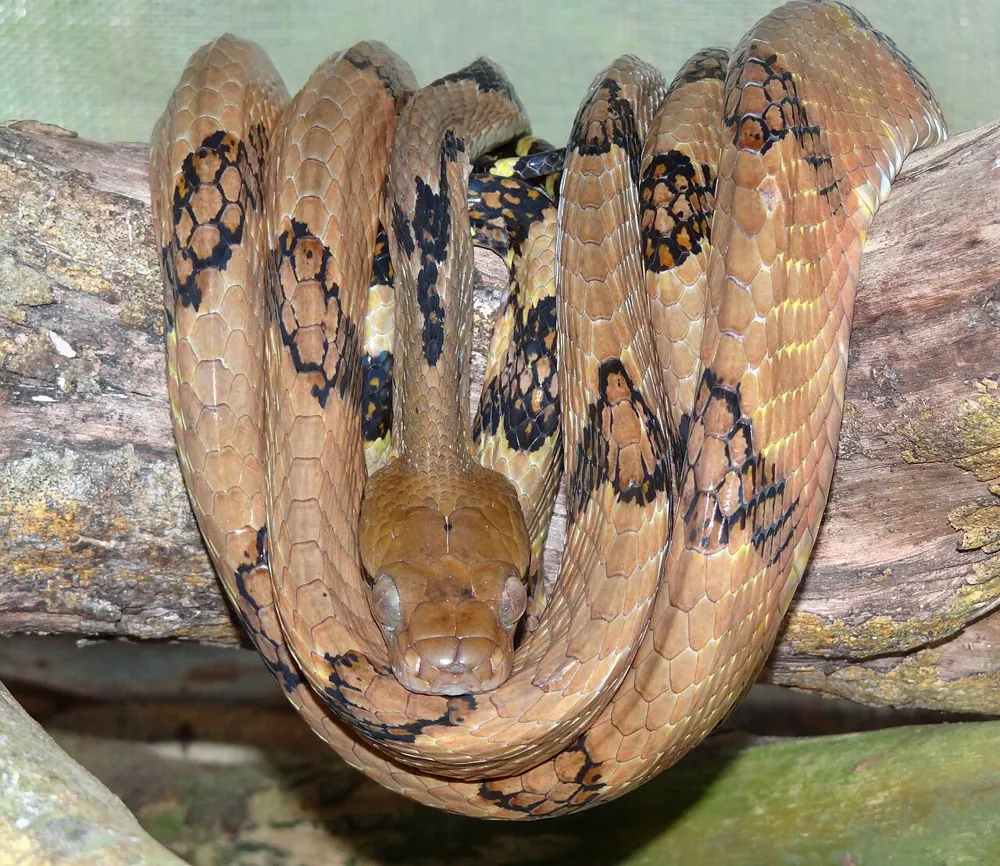
The dog-toothed cat snake is a large, nocturnal snake that is active at night. It lives across Southeast Asia, from southern Thailand to the Philippines and Indonesia, and it is often found in gardens, plantations and towns as well as forests. It is a rear-fanged snake, so its venom is delivered through teeth at the back of its mouth.1


 Como reconhecê-lo
- A slender, large snake that can reach more than 2 m in total length1
- Yellowish or pale reddish-brown back with dark brown or black crossbars or spots1
- A wavy or irregular dark stripe behind each eye, with a dark streak on each side of the head1
- Yellowish belly, sometimes plain or marbled with brown1
- Strongly enlarged front teeth in the upper and lower jaws. Indonesian populations include black individuals.1
Muitas vezes confundido com: Other similar snakes have a more even or nearly even upper and lower line behind the eye, while this species has a distinctly wavy or irregular one. The closely related Boiga hoeseli is found in the Lesser Sundas east of Bali, including Sumbawa and Flores, and not where this species lives.1
Poder do veneno
O veneno sai pelas presas ou pelos dentes quando morde.
O que faz o seu veneno?
It may have a potent neurotoxic venom, which attacks the nerves. Its effects have been shown to be reversible with neostigmine, a drug that affects nerve signalling, so envenoming from this species can be treated with anticholinesterase therapy.1
Quão perigoso é para as pessoas?
Perigo para as pessoas: DolorosoPode doer muito, mas quase nunca é grave.Its venom may be potent, so any bite should be taken seriously. The effects of the venom have been shown to be reversible with treatment.1
 Se morder
- Envenoming from this species is said to be treatable with anticholinesterase therapy, which is a medical treatment.1
- Lava a mordedura, mantém a pessoa calma e procura ajuda médica. Algumas espécies (como a boomslang) podem ser mortais horas depois.
Liga sempre primeiro para o teu número de emergência (112, 000, 911). Isto são orientações gerais de primeiros socorros, não conselho médico. Primeiros socorros básicos
 Fica em segurança
- Nunca toques, apanhes ou provoques um animal selvagem, mesmo pequeno, e mesmo que pareça a dormir ou morto.
- Dá-lhe espaço. Se encontrares um, mantém a calma, recua devagar e deixa-o seguir o seu caminho.
- Se te morder: mantém a calma, fica quieto, liga para o teu número de emergência (112, 000, 911) ou vai depressa para um hospital. Lembra-te de como era, uma foto ajuda.
Não anda atrás de ti. Usa o veneno para caçar ou para se proteger, e prefere muito mais esconder-se. Mais sobre como estar seguro
Que tamanho tem?
Quanto mede?
 tão comprido como 4 gatos domésticos do focinho à cauda
 tão comprido como 11 bananas em fila
 conseguia percorrer 100 metros em 54 segundos (o humano mais rápido precisa de 9,6)
Que tamanho tem Dog-toothed cat snake comparado contigo?
São só contas no teu navegador. Nada é guardado nem enviado para lado nenhum.
Quão rápido é?


Factos
Its venom is neurotoxic, but its effects have been shown to be reversible with a drug called neostigmine.1
It is known to live high in the forest canopy, where it hunts birds, lizards and small bats.1
The eggs often stick together in a clutch, and the young cut a slit from inside the egg about one day before they hatch.1
The black spitting cobra (Naja sumatrana) is known to prey on this snake.1
Para especialistas em veneno
- Nome científico
- Boiga cynodon
- Grupo
- Cobras de dentes traseiros
- Família
- Colubridae2
- Ordem
- Squamata
- Continentes
- Ásia
- Crias
- It is egg-laying (oviparous). Females lay 6 to 12 eggs per clutch, and the eggs are about 52 mm long and 24.6 mm wide on average.1
- Como está na natureza
- Least concern1
- Perigo para as pessoas
- 2 / 5: Doloroso3
De onde vêm os factos
- Boiga cynodon (Wikipedia (CC BY-SA 4.0))
- Boiga cynodon (iNaturalist): nomes e classificação.
- Venom Wiki: o nível de perigo, o tamanho típico e a velocidade estimada são nossos. Vê como os calculamos: Como avaliamos o perigo.
Cada facto desta página tem um número que aponta para a sua fonte. Se nos enganámos em alguma coisa, desculpa, somos fãs de animais, não uma revista científica. Diz-nos em [email protected] e nós corrigimos.
 O escorpião tem fome! A Venom Wiki é um projeto de uma só pessoa: gratuito, sem anúncios e sem rastreadores. Uma pequena gorjeta ajuda a mantê-la online.Alimenta o escorpião
Mais do mesmo grupo: Cobras de dentes traseiros
 Brown tree snakeCobras de dentes traseirosSó dói
 Tiger keelbackCobras de dentes traseirosPode matar
 Red-necked keelbackCobras de dentes traseirosPrecisa de médico
 Green cat snakeCobras de dentes traseirosSó dói
 Mangrove snakeCobras de dentes traseirosSó dói
 Asian vine snakeCobras de dentes traseirosInofensivo
 Escorpião-amarelo-palestino
 Cobra-indiana
 Víbora-de-escamas-serrilhadas-indiana
 Cobra-real
 Víbora-ladradora
 Víbora-de-russell