
 África
 Ásia
Ásia Europa
 América do Sul
 Austrália e Oceânia
 Antártida
 Oceano Pacífico
 Oceano Atlântico
 Oceano Índico
 Oceano Ártico
 Mar Mediterrâneo
 Mar Vermelho
 Mar das Caraíbas
 Mar de Coral
 Mar da China Meridional
 Mar das Filipinas
 Mar de Andamão
 Mar do Norte
 Mar de Timor e de Arafura
 Golfo de Bengala
 Golfo da Califórnia
Saddleback caterpillar
 Pelos urticantes
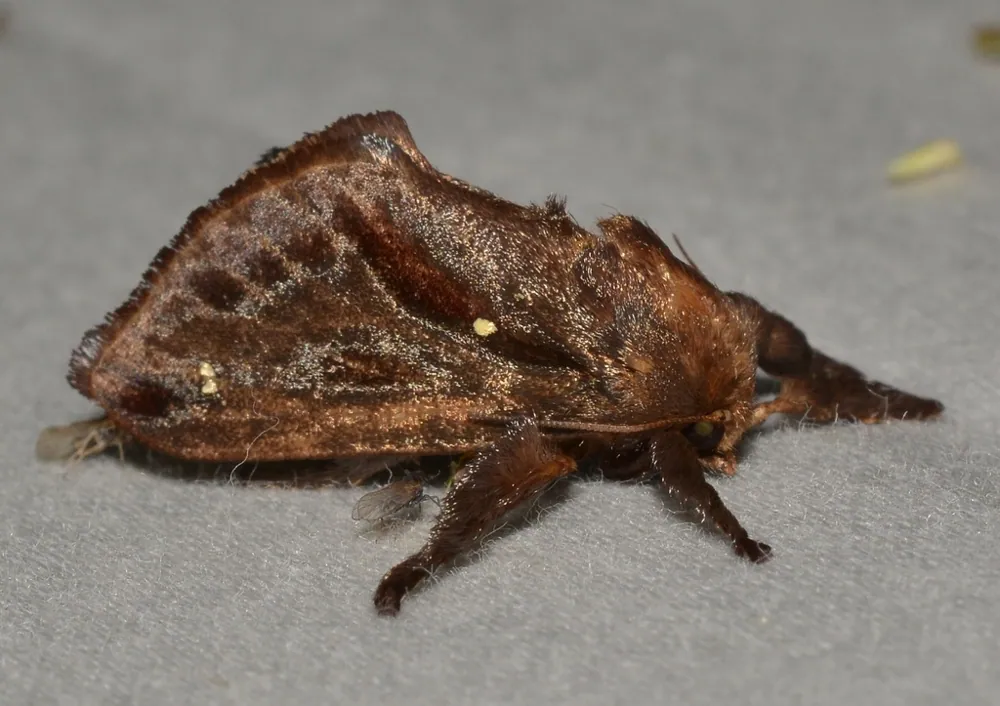
The saddleback caterpillar is the larva of a moth found in eastern North America and Mexico. It is green with a brown saddle-shaped marking on its back, and its spiny hairs can cause a painful rash. Gardeners who handle plants where it lives are most at risk of contact.1

 Como reconhecê-lo
- Primarily lime-green, with brown at both ends.1
- A dark brown centre marking, outlined in white and black, that looks like a saddle.1
- A pair of fleshy horns, called tentacles, at each end of the body, which are orange or black as the caterpillar grows.1
- Tufts of spines along the body, with a row of orange spines along the sides.1
- Some larvae have a false face at the rear, with two pale dots that look like large eyes.1
Poder do veneno
Pelinhos ou cerdas minúsculas partem-se na pele e picam.
O que faz o seu veneno?
The hairs and spines contain an irritating venom that is released when they touch skin or are broken. Contact causes a painful, swollen rash and sometimes nausea. Severe reactions are possible and can include migraines, breathing trouble related to asthma, anaphylactic shock (a dangerous allergic reaction) and bleeding. Symptoms can last from a few hours to a few days, depending on how sensitive a person is.1
Quão perigoso é para as pessoas?
Perigo para as pessoas: DolorosoPode doer muito, mas quase nunca é grave.This caterpillar has one of the strongest stings of its kind. Gardeners are most at risk because the caterpillar is common on ornamental plants. Symptoms vary from mild to severe, and the sensitivity of the person affected makes a difference.1
 Boa notícia: os médicos têm um medicamento (antídoto) ou um tratamento para isto.1
O que faz quando tem medo?
When threatened, the larva curls outwards so its spines are hard for a predator to avoid, and its bright colours warn of its toxicity.1
 Se tocares nos pelos
- Remove the spines from the skin immediately using adhesive tape over the affected area, with a new piece of tape for each treatment, to stop the venom spreading. Ice packs, corticosteroids and antihistamines (taken orally or applied to the skin) have been reported to help relieve pain. Symptoms are relieved with prescribed medication on a case-by-case basis.1
- Para pelos urticantes de lagartas: tira-os com fita-cola e depois lava a pele. Não esfregues.
- Para mordeduras: lava e arrefece. Procura ajuda médica se a pessoa se sentir mal ou sangrar com facilidade.
Liga sempre primeiro para o teu número de emergência (112, 000, 911). Isto são orientações gerais de primeiros socorros, não conselho médico. Primeiros socorros básicos
 Fica em segurança
- Nunca toques, apanhes ou provoques um animal selvagem, mesmo pequeno, e mesmo que pareça a dormir ou morto.
- Dá-lhe espaço. Se encontrares um, mantém a calma, recua devagar e deixa-o seguir o seu caminho.
- Se tocares nos seus pelos: mantém a calma, fica quieto, liga para o teu número de emergência (112, 000, 911) ou vai depressa para um hospital. Lembra-te de como era, uma foto ajuda.
Não anda atrás de ti. Usa o veneno para caçar ou para se proteger, e prefere muito mais esconder-se. Mais sobre como estar seguro
Que tamanho tem?
Quanto mede?
 mais ou menos o comprimento de um clipe
 mais lento do que um caracol de jardim
Que tamanho tem Saddleback caterpillar comparado contigo?
São só contas no teu navegador. Nada é guardado nem enviado para lado nenhum.
Quão rápido é?

Factos
The false face on the rear end is thought to confuse predators, which may attack the wrong end.1
Its cocoon is made of silk mixed with its stinging spines, which protect the pupa during metamorphosis.1
Braconid wasps often lay their eggs inside these caterpillars, and the wasp larvae feed from the inside and later emerge through holes in the body.1
Like other slug caterpillars, it moves on suckers and mucus, which help it roll and stick to surfaces.1
The adult moth has no sting and lives about 10 days on average.1
The adult moth loses the caterpillar's bright colours and has velvety dark brown forewings and cream hindwings.1
De onde vêm os factos
- Saddleback caterpillar (Wikipedia (CC BY-SA 4.0))
- Acharia stimulea (iNaturalist): nomes e classificação.
- Venom Wiki: o nível de perigo, o tamanho típico e a velocidade estimada são nossos. Vê como os calculamos: Como avaliamos o perigo.
Cada facto desta página tem um número que aponta para a sua fonte. Se nos enganámos em alguma coisa, desculpa, somos fãs de animais, não uma revista científica. Diz-nos em [email protected] e nós corrigimos.
 O escorpião tem fome! A Venom Wiki é um projeto de uma só pessoa: gratuito, sem anúncios e sem rastreadores. Uma pequena gorjeta ajuda a mantê-la online.Alimenta o escorpião
 Giant water bug
 Puss caterpillar
 Wheel bug
 Giant vinegaroon
 Rhodnius kissing bug
 Black-waved flannel moth
 Terciopelo
 Eastern coral snake
 Eastern diamondback rattlesnake
 Eyelash viper
 Timber rattlesnake
 Western diamondback rattlesnake