
 අප්රිකාව
 ආසියාව
 යුරෝපය
 දකුණු ඇමෙරිකාව
 ඕස්ට්රේලියාව සහ ඕෂනියාව
 ඇන්ටාක්ටිකාව
 පැසිෆික් සාගරය
 අත්ලාන්තික් සාගරය
 ඉන්දියන් සාගරය
 ආක්ටික් සාගරය
 මධ්යධරණී මුහුද
 රතු මුහුද
 කැරිබියන් මුහුද
 කොරල් මුහුද
 දකුණු චීන මුහුද
 පිලිපීන මුහුද
 අන්දමන් මුහුද
 උතුරු මුහුද
 ටිමෝර් සහ අරෆුරා මුහුද
 බෙංගාල බොක්ක
 කැලිෆෝනියා බොක්ක
Chinese cobra
 දෂ්ට කිරීම්
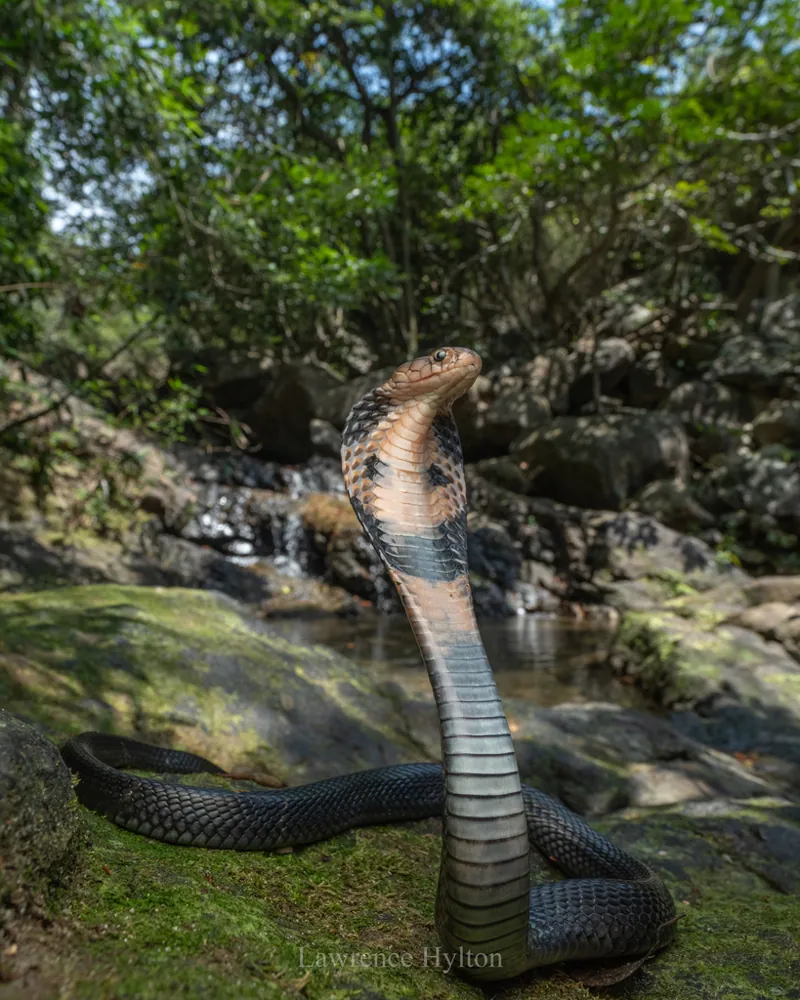
The Chinese cobra is a venomous snake from southern China and a few neighbouring countries and islands. It is one of the most common venomous snakes in China, and it has caused many snakebites there.1
 ඒක හඳුනාගන්නේ කොහොමද
- The hood marking varies. It can look like spectacles, a mask, a horseshoe or the letter O, and it is often linked to a pale throat area on at least one side.1
- The body is iridescent black, with widely spaced yellow double lines running across it.1
- The underside is pearl or slate-coloured. The upper colour is usually brown, grey or black, sometimes with narrow pale lines, which are especially clear in young snakes.1
- Typical adults are 1.2 to 1.5 metres long.1
බොහෝ විට පටලවා ගන්නේ: It is sometimes confused with the monocled cobra (Naja kaouthia). The Chinese cobra has lower counts of ventral and subcaudal scales, which are the belly and tail scales. Sex should be taken into account when comparing these counts.1
විෂ බලය
දෂ්ට කරනකොට විෂ එළියට එන්නේ ඒකේ දළ හෝ දත් හරහා.
ඒකේ විදින විෂ කරන්නේ මොකක්ද?
The Chinese cobra is a highly venomous member of the true cobras. Local symptoms at the bite include darkening of the wound, redness, swelling, pain and numbness, and blisters and necrosis (death of tissue) almost always follow. Necrosis can last for years after the person has otherwise recovered. Whole-body symptoms can include chest discomfort, fever, sore throat, difficulty swallowing, loss of voice, weak limbs, unsteady walking, lockjaw and difficulty breathing.1
ඒක මිනිසුන්ට කොච්චර භයානකද?
මිනිසුන්ට ඇති අනතුර: ඉතා භයානකප්රතිකාර නොලැබෙන කෙනෙක්ව මරන්න ඒකට පුළුවන්.It is one of the most common venomous snakes in China and has caused many snakebite incidents there. Deaths occasionally occur, but they are much rarer than they used to be.1
 සුබ ආරංචියක්: වෛද්යවරුන් ළඟ මේකට බෙහෙතක් (ප්රතිවිෂ) හෝ ප්රතිකාරයක් තියෙනවා.1
බය වුණාම ඒක කරන්නේ මොකක්ද?
Adults can be aggressive, and young snakes are more nervous and more likely to be aggressive, but it usually escapes to avoid a confrontation.1
 දෂ්ට කළොත්
- පුද්ගලයාව නොසෙල්වී සහ සන්සුන්ව තියන්න, මුදු සහ තද දේවල් ගලවන්න, ඉක්මනින් රෝහලකට ගෙනියන්න: ප්රතිකාරය ප්රතිවිෂයි.
- ඇස්වලට විෂ විසි කළා නම්, වහාම පිරිසිදු වතුර ගොඩක් දාලා ඇස් සෝදන්න.
හැම විටම මුලින්ම ඔයාගේ හදිසි අංකයට කතා කරන්න (112, 000, 911). මෙය සාමාන්ය ප්රථමාධාර මඟපෙන්වීමක් මිස වෛද්ය උපදෙස් නොවේ. මූලික ප්රථමාධාර
 ආරක්ෂිතව ඉන්න
- වන සතෙක්ව කවදාවත් ස්පර්ශ කරන්න, අල්ලන්න හෝ කරදර කරන්න එපා, ඒක පුංචි වුණත්, ඒක නිදාගෙන හෝ මැරිලා වගේ පෙනුනත්.
- ඒකට ඉඩ දෙන්න. එකක් හමු වුණොත්, සන්සුන්ව ඉඳලා, හෙමින් පස්සට යන්න, ඒකට තමන්ගේ පාරේ යන්න ඉඩ දෙන්න.
- එකක් ඔයාට දෂ්ට කළොත්: සන්සුන්ව ඉන්න, නොසෙල්වී ඉන්න, ඔයාගේ හදිසි අංකයට (112, 000, 911) කතා කරන්න, නැත්නම් ඉක්මනින් රෝහලකට යන්න. ඒක පෙනුනේ කොහොමද කියලා මතක තියාගන්න, ෆොටෝ එකක් උදව් වෙනවා.
ඒක ඔයාව අල්ලන්න එන්නේ නැහැ. ඒක විෂ පාවිච්චි කරන්නේ කෑම අල්ලගන්න හෝ තමන්ව ආරක්ෂා කරගන්න, ඒකට හැංගෙන්න තමයි වඩා කැමති. ආරක්ෂිතව ඉන්න ගැන තව
ඒක කොච්චර ලොකුද?
ඒක කොච්චර දිගද?
 ගෙදර පූසන් 4ක් නාසයේ සිට වලිගය දක්වා පේළියට තිබ්බා තරම් දිගයි
 කෙසෙල් ගෙඩි 11ක් එක පිට එක තිබ්බා තරම් දිගයි
 මීටර් 100ක් තත්පර 48කින් යන්න පුළුවන් (වේගවත්ම මිනිසාට තත්පර 9.6ක් ඕන)
Chinese cobra ඔයාට සාපේක්ෂව කොච්චර ලොකුද?
ඔයාගේ බ්රවුසරයේ ගණිතය විතරයි. කිසිම දෙයක් සේව් වෙන්නේවත් කොහේවත් යවන්නේවත් නැහැ.
ඒක කොච්චර වේගවත්ද?


කරුණු
Necrosis from a bite can continue for many years after the victim has recovered in general.1
A snake kept at a snake farm gave an average venom yield of about 250.8 mg, of which about 80 mg was dry weight.1
Its fangs are always erect and sit at the front of the upper jaw, as in other elapid snakes.1
කරුණු එන්නේ කොහෙන්ද
- Chinese cobra (Wikipedia (CC BY-SA 4.0))
- Naja atra (iNaturalist): නම් සහ වර්ගීකරණය.
- Venom Wiki: අනතුරු මට්ටම, සාමාන්ය ප්රමාණය සහ වේග අනුමානය අපේම ඒවා. අපි ඒවා ගණනය කරන හැටි බලන්න: අපි අනතුර ශ්රේණිගත කරන හැටි.
මේ පිටුවේ හැම කරුණකටම ඒකේ මූලාශ්රයට යොමු කරන අංකයක් තියෙනවා. අපි මොනවහරි වැරදියට කිව්වා නම්, සමාවෙන්න, අපි සත්ව ලෝලීන් මිසක් විද්යා සඟරාවක් නෙවෙයි. [email protected] වෙත අපිට කියන්න, අපි ඒක හදන්නම්.
 ගෝනුස්සාට බඩගිනියි! Venom Wiki එක පුද්ගලයෙකුගේ ව්යාපෘතියක්: නොමිලේ, දැන්වීම් නැහැ, ට්රැකර් නැහැ. පුංචි ටිප් එකක් ඒක ඔන්ලයින් තියන්න උදව් වෙනවා.ගෝනුස්සාට කන්න දෙන්න
 Indian cobra
 King cobra
 Caspian cobra
 Common krait
 Malayan krait
 Many-banded krait
 Deathstalker
 Indian saw-scaled viper
 Puff adder
 තිත් පොළඟා
 Asian giant hornet
 Komodo dragon