
 අප්රිකාව
 ආසියාව
 යුරෝපය
 දකුණු ඇමෙරිකාව
 ඕස්ට්රේලියාව සහ ඕෂනියාව
 ඇන්ටාක්ටිකාව
 පැසිෆික් සාගරය
 අත්ලාන්තික් සාගරය
 ඉන්දියන් සාගරය
 ආක්ටික් සාගරය
 මධ්යධරණී මුහුද
 රතු මුහුද
 කැරිබියන් මුහුද
 කොරල් මුහුද
 දකුණු චීන මුහුද
 පිලිපීන මුහුද
 අන්දමන් මුහුද
 උතුරු මුහුද
 ටිමෝර් සහ අරෆුරා මුහුද
 බෙංගාල බොක්ක
 කැලිෆෝනියා බොක්ක
Egg-yolk jellyfish
 ඇනුම් ස්පර්ශක
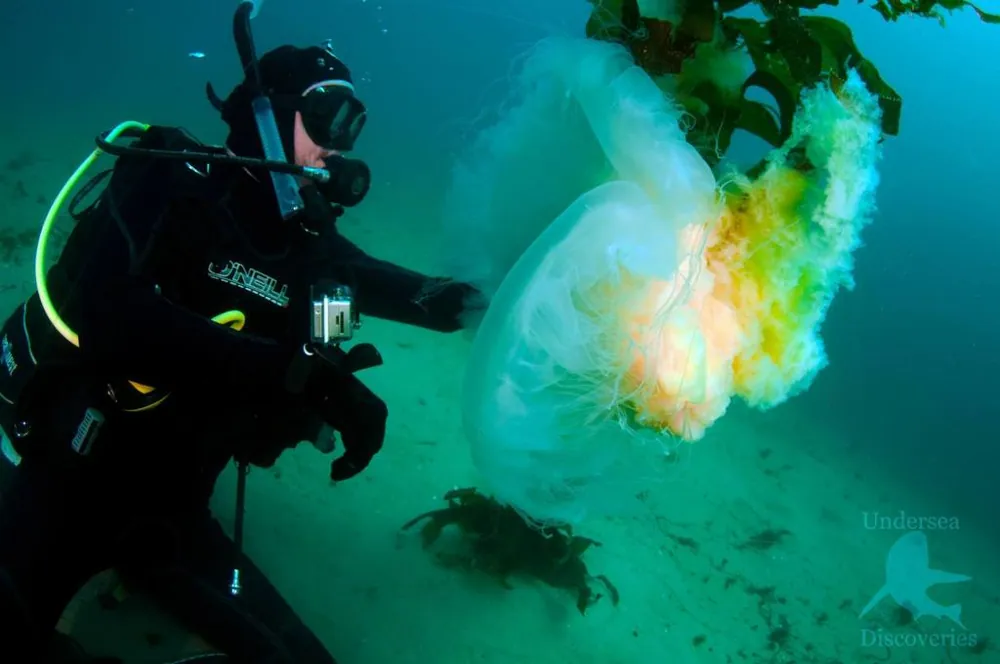
The egg-yolk jellyfish is a very large jellyfish with a bright yellow centre that looks like a fried egg. It lives in cool seas across most of the world's oceans and is most common in the Northern Pacific. It is special because it can grow very large, and it is one of the few jellyfish that can survive in low-oxygen water.1



 ඒක හඳුනාගන්නේ කොහොමද
- A yellow centre that looks like a broken egg yolk, surrounded by opaque white tissue1
- A large bell, sometimes close to 60 cm across1
- 16 clusters of tentacles, each with up to a few dozen tentacles, and each tentacle up to 6 m long1
- Broad, curtain-like oral arms1
- Mostly drifts with the current, with only limited movement1
බොහෝ විට පටලවා ගන්නේ: The lion's mane jellyfish (Cyanea capillata) is sometimes confused with this species. The smaller Cotylorhiza tuberculata, which is found mainly in warmer water, especially in the Mediterranean Sea, is also called a fried egg jellyfish.1
විෂ බලය
යමක් ස්පර්ශ වූ විට පුංචි ඇනුම් සෛල දහස් ගණනක් විදිනවා.
ඒකේ විදින විෂ කරන්නේ මොකක්ද?
Its tentacles contain nematocysts, stinging cells that help it catch prey. Its sting is weak, which allows some small animals to ride on its bell and steal food from its arms and tentacles.1
ඒක මිනිසුන්ට කොච්චර භයානකද?
මිනිසුන්ට ඇති අනතුර: සුළුමී මැස්සෙක් ඇනීමක් තරම් හෝ ඊට අඩුයි. මිනිසුන්ට හානියක් නැති තරම්.Its sting is weak.1
බය වුණාම ඒක කරන්නේ මොකක්ද?
Its tentacles contain nematocysts, which also help protect it from predators.1
 ඇන්නොත්
- වතුරෙන් එළියට ඇවිත් ඇලී ඇති ස්පර්ශක (අත්වැසුම් හෝ රෙද්දක් පාවිච්චි කරලා) ගලවා දමන්න.
- නිවර්තන බොක්ස් ජෙලිෆිෂ් සඳහා: ඇනුම් මත අවම වශයෙන් තත්පර 30ක් විනාකිරි වත් කරන්න, උදව් ඉල්ලන්න, CPR (හෘද පෙනහළු පුනර්ජීවනය) කරන්න සූදානම්ව ඉන්න. බ්ලූබොටල් සහ අනිත් බොහෝ ඒවා සඳහා: මුහුදු වතුරෙන් සෝදලා, ඊට පස්සේ වේදනාවට උණු වතුර දාන්න.
හැම විටම මුලින්ම ඔයාගේ හදිසි අංකයට කතා කරන්න (112, 000, 911). මෙය සාමාන්ය ප්රථමාධාර මඟපෙන්වීමක් මිස වෛද්ය උපදෙස් නොවේ. මූලික ප්රථමාධාර
 ආරක්ෂිතව ඉන්න
- වන සතෙක්ව කවදාවත් ස්පර්ශ කරන්න, අල්ලන්න හෝ කරදර කරන්න එපා, ඒක පුංචි වුණත්, ඒක නිදාගෙන හෝ මැරිලා වගේ පෙනුනත්.
- ඒකට ඉඩ දෙන්න. එකක් හමු වුණොත්, සන්සුන්ව ඉඳලා, හෙමින් පස්සට යන්න, ඒකට තමන්ගේ පාරේ යන්න ඉඩ දෙන්න.
- එකක් ඔයාට ඇන්නොත්: සන්සුන්ව ඉන්න, නොසෙල්වී ඉන්න, ඔයාගේ හදිසි අංකයට (112, 000, 911) කතා කරන්න, නැත්නම් ඉක්මනින් රෝහලකට යන්න. ඒක පෙනුනේ කොහොමද කියලා මතක තියාගන්න, ෆොටෝ එකක් උදව් වෙනවා.
ඒක ඔයාව අල්ලන්න එන්නේ නැහැ. ඒක විෂ පාවිච්චි කරන්නේ කෑම අල්ලගන්න හෝ තමන්ව ආරක්ෂා කරගන්න, ඒකට හැංගෙන්න තමයි වඩා කැමති. ආරක්ෂිතව ඉන්න ගැන තව
ඒක කොච්චර ලොකුද?
ඒක කොච්චර දිගද?
 කෙසෙල් ගෙඩි 3ක් එක පිට එක තිබ්බා තරම් දිගයි
 සෙල්ලම් බිල්ඩිං බ්ලොක් 18ක් පේළියට තිබ්බා තරම් දිගයි
 ලොකු පිහිනුම් තටාකයක දිග (මීටර් 50) තත්පර 140කින් පීනන්න පුළුවන්
Egg-yolk jellyfish ඔයාට සාපේක්ෂව කොච්චර ලොකුද?
ඔයාගේ බ්රවුසරයේ ගණිතය විතරයි. කිසිම දෙයක් සේව් වෙන්නේවත් කොහේවත් යවන්නේවත් නැහැ.
ඒක කොච්චර වේගවත්ද?

කරුණු
Its tentacles can reach up to 6 m long, which is far longer than its bell.1
It has no gills, lungs or circulatory system. It takes in oxygen through its thin body surface instead.1
The giant deep-sea octopus Haliphron atlanticus clings to this jellyfish and eats its oral arms and stomach.1
It can survive in low-oxygen water for several hours at a time, and it sometimes dives into these zones during the day to avoid competition.1
Small crabs and an amphipod called Hyperia medusarum can live on its bell, and some feed on the parasites that infest the jellyfish.1
විෂ විශේෂඥයන් සඳහා
- විද්යාත්මක නාමය
- Phacellophora camtschatica
- කාණ්ඩය
- ජෙලිෆිෂ් සහ මුහුදු ඇනුම් සතුන්
- පවුල
- Phacellophoridae2
- පිළිවෙළ
- Semaeostomeae
- මහාද්වීප
- පැසිෆික් සාගරය, සාගර
- බබාලා
- Eggs are fertilised and develop into swimming larvae called planulae. These settle on the seabed and grow into polyps, which later release young jellyfish called ephyrae.1
- මිනිසුන්ට ඇති අනතුර
- 1 / 5: සුළු3
කරුණු එන්නේ කොහෙන්ද
- Phacellophora (Wikipedia (CC BY-SA 4.0))
- Phacellophora camtschatica (iNaturalist): නම් සහ වර්ගීකරණය.
- Venom Wiki: අනතුරු මට්ටම, සාමාන්ය ප්රමාණය සහ වේග අනුමානය අපේම ඒවා. අපි ඒවා ගණනය කරන හැටි බලන්න: අපි අනතුර ශ්රේණිගත කරන හැටි.
මේ පිටුවේ හැම කරුණකටම ඒකේ මූලාශ්රයට යොමු කරන අංකයක් තියෙනවා. අපි මොනවහරි වැරදියට කිව්වා නම්, සමාවෙන්න, අපි සත්ව ලෝලීන් මිසක් විද්යා සඟරාවක් නෙවෙයි. [email protected] වෙත අපිට කියන්න, අපි ඒක හදන්නම්.
 ගෝනුස්සාට බඩගිනියි! Venom Wiki එක පුද්ගලයෙකුගේ ව්යාපෘතියක්: නොමිලේ, දැන්වීම් නැහැ, ට්රැකර් නැහැ. පුංචි ටිප් එකක් ඒක ඔන්ලයින් තියන්න උදව් වෙනවා.ගෝනුස්සාට කන්න දෙන්න
එම කාණ්ඩයෙන් තව: ජෙලිෆිෂ් සහ මුහුදු ඇනුම් සතුන්
 Australian box jellyfishජෙලිෆිෂ් සහ මුහුදු ඇනුම් සතුන්මාරාන්තිකඅල්ලන්න එපා
 Irukandji jellyfishජෙලිෆිෂ් සහ මුහුදු ඇනුම් සතුන්මරන්න පුළුවන්අල්ලන්න එපා
 Portuguese man o' warජෙලිෆිෂ් සහ මුහුදු ඇනුම් සතුන්දොස්තර කෙනෙක් ඕනෑඅල්ලන්න එපා
 Lion's mane jellyfishජෙලිෆිෂ් සහ මුහුදු ඇනුම් සතුන්රිදෙනවා විතරයිඅල්ලන්න එපා
 Moon jellyfishජෙලිෆිෂ් සහ මුහුදු ඇනුම් සතුන්හානියක් නැති
 Common kingslayerජෙලිෆිෂ් සහ මුහුදු ඇනුම් සතුන්මරන්න පුළුවන්අල්ලන්න එපා
ජීවත් වන වෙනත් තැන්: පැසිෆික් සාගරය
 Geography coneකේතු ගොළුබෙල්ලෝ සහ බූවල්ලෝමාරාන්තික
 Greater blue-ringed octopusකේතු ගොළුබෙල්ලෝ සහ බූවල්ලෝමාරාන්තික
 Japanese pufferfishවෙනත් විෂ සහිත සතුන්මාරාන්තික
 Southern blue-ringed octopusකේතු ගොළුබෙල්ලෝ සහ බූවල්ලෝමාරාන්තික
 Hawksbill sea turtleවෙනත් විෂ සහිත සතුන්මරන්න පුළුවන්
 Reef stonefishවිෂ විදින මාළුවන්මරන්න පුළුවන්අල්ලන්න එපා