
 අප්රිකාව
 ආසියාව
 යුරෝපය
 දකුණු ඇමෙරිකාව
 ඕස්ට්රේලියාව සහ ඕෂනියාව
 ඇන්ටාක්ටිකාව
 පැසිෆික් සාගරය
 අත්ලාන්තික් සාගරය
 ඉන්දියන් සාගරය
 ආක්ටික් සාගරය
 මධ්යධරණී මුහුද
 රතු මුහුද
 කැරිබියන් මුහුද
 කොරල් මුහුද
 දකුණු චීන මුහුද
 පිලිපීන මුහුද
 අන්දමන් මුහුද
 උතුරු මුහුද
 ටිමෝර් සහ අරෆුරා මුහුද
 බෙංගාල බොක්ක
 කැලිෆෝනියා බොක්ක
Estuarine stonefish
 විෂ කටු
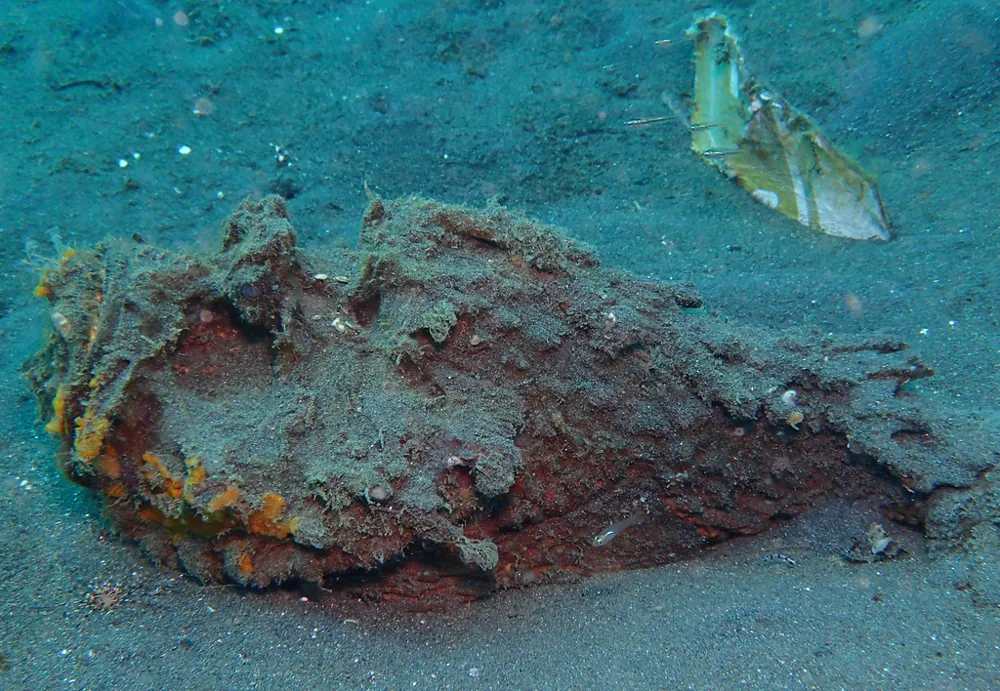
The estuarine stonefish is a fish that looks like a stone lying on the seabed. It lives in shallow reefs and estuaries across the Indo-Pacific, including northern Australia. It is considered one of the most dangerous venomous fish in the world, so it is important to know what it looks like.1



 ඒක හඳුනාගන්නේ කොහොමද
- Drab brownish-grey, reddish or greenish-brown colour1
- Skin has no scales and is covered in warts, often with filamentous algae growing on it1
- Head is flattened, with small eyes set high and pointing upwards, and a deep pit behind and under each eye1
- Large, almost vertical mouth with fringing cirri on the lips1
- Camouflaged to look like a stone resting on the bottom; it has no bright warning colours1
- Grows to a maximum of 60 cm1
විෂ බලය
තියුණු කටුවල විෂ තියෙනවා. ඒක පෑගුවොත් හෝ අල්ලගත්තොත් රිදෙනවා.
ඒකේ විදින විෂ කරන්නේ මොකක්ද?
Each fin spine has two venom-producing glands. The venom affects the cardiovascular and neuromuscular systems. The sting is extremely painful and has been known to be lethal.1
ඒක මිනිසුන්ට කොච්චර භයානකද?
මිනිසුන්ට ඇති අනතුර: ඉතා භයානකප්රතිකාර නොලැබෙන කෙනෙක්ව මරන්න ඒකට පුළුවන්.It is considered one of the most dangerous venomous fishes. Stings are extremely painful and have been known to be fatal. Since European settlement, there have been no recorded deaths in Australia from stonefish venom, but deaths have been recorded elsewhere in its range.1
 සුබ ආරංචියක්: වෛද්යවරුන් ළඟ මේකට බෙහෙතක් (ප්රතිවිෂ) හෝ ප්රතිකාරයක් තියෙනවා.1
බය වුණාම ඒක කරන්නේ මොකක්ද?
When disturbed, it erects its venomous spines, which inject venom if the fish is stepped on.1
 ඒකේ කටු ඔයාට ඇනුණොත්
- Antivenom can be given after envenomation. Immersing the sting wound in hot water can be used to denature the venom.1
- තුවාලය උණු වතුරේ දාන්න, පිළිස්සෙන්නේ නැතුව පුද්ගලයාට ඉවසන්න පුළුවන් තරම් උණුවට (ඔයාගේම අතින් පරීක්ෂා කරන්න), විනාඩි 30 සිට 90 දක්වා. වෛද්ය උදව් ගන්න, විශේෂයෙන් ගල් මාළුවන් සහ මඩුවන් සඳහා.
හැම විටම මුලින්ම ඔයාගේ හදිසි අංකයට කතා කරන්න (112, 000, 911). මෙය සාමාන්ය ප්රථමාධාර මඟපෙන්වීමක් මිස වෛද්ය උපදෙස් නොවේ. මූලික ප්රථමාධාර
 ආරක්ෂිතව ඉන්න
- වන සතෙක්ව කවදාවත් ස්පර්ශ කරන්න, අල්ලන්න හෝ කරදර කරන්න එපා, ඒක පුංචි වුණත්, ඒක නිදාගෙන හෝ මැරිලා වගේ පෙනුනත්.
- ඒකට ඉඩ දෙන්න. එකක් හමු වුණොත්, සන්සුන්ව ඉඳලා, හෙමින් පස්සට යන්න, ඒකට තමන්ගේ පාරේ යන්න ඉඩ දෙන්න.
- ඒකේ කටු ඔයාට ඇනුණොත්: සන්සුන්ව ඉන්න, නොසෙල්වී ඉන්න, ඔයාගේ හදිසි අංකයට (112, 000, 911) කතා කරන්න, නැත්නම් ඉක්මනින් රෝහලකට යන්න. ඒක පෙනුනේ කොහොමද කියලා මතක තියාගන්න, ෆොටෝ එකක් උදව් වෙනවා.
ඒක ඔයාව අල්ලන්න එන්නේ නැහැ. ඒක විෂ පාවිච්චි කරන්නේ කෑම අල්ලගන්න හෝ තමන්ව ආරක්ෂා කරගන්න, ඒකට හැංගෙන්න තමයි වඩා කැමති. ආරක්ෂිතව ඉන්න ගැන තව
ලෝකයේ කොහෙද?
ඒක කොච්චර ලොකුද?
ඒක කොච්චර දිගද?
 කෙසෙල් ගෙඩි 3ක් එක පිට එක තිබ්බා තරම් දිගයි
 ලොකු පිහිනුම් තටාකයක දිග (මීටර් 50) තත්පර 90කින් පීනන්න පුළුවන්
Estuarine stonefish ඔයාට සාපේක්ෂව කොච්චර ලොකුද?
ඔයාගේ බ්රවුසරයේ ගණිතය විතරයි. කිසිම දෙයක් සේව් වෙන්නේවත් කොහේවත් යවන්නේවත් නැහැ.
ඒක කොච්චර වේගවත්ද?


කරුණු
It can tolerate being out of the water for up to 24 hours.1
It scoops out a shallow hollow in the seabed with its large pectoral fins and curls its tail around its body to hide.1
It is camouflaged to look like a stone, unlike many venomous animals that use bright warning colours.1
Females are larger than males.1
මිථ්යා බිඳින්නා
මිථ්යාව: The species name horrida refers to its dangerous spines.
ඇත්ත: The name means "dreadful" or "frightful" and alludes to its appearance, not its venomous spines.1
කරුණු එන්නේ කොහෙන්ද
- Synanceia horrida (Wikipedia (CC BY-SA 4.0))
- Synanceia horrida (iNaturalist): නම් සහ වර්ගීකරණය.
- Venom Wiki: අනතුරු මට්ටම, සාමාන්ය ප්රමාණය සහ වේග අනුමානය අපේම ඒවා. අපි ඒවා ගණනය කරන හැටි බලන්න: අපි අනතුර ශ්රේණිගත කරන හැටි.
මේ පිටුවේ හැම කරුණකටම ඒකේ මූලාශ්රයට යොමු කරන අංකයක් තියෙනවා. අපි මොනවහරි වැරදියට කිව්වා නම්, සමාවෙන්න, අපි සත්ව ලෝලීන් මිසක් විද්යා සඟරාවක් නෙවෙයි. [email protected] වෙත අපිට කියන්න, අපි ඒක හදන්නම්.
 ගෝනුස්සාට බඩගිනියි! Venom Wiki එක පුද්ගලයෙකුගේ ව්යාපෘතියක්: නොමිලේ, දැන්වීම් නැහැ, ට්රැකර් නැහැ. පුංචි ටිප් එකක් ඒක ඔන්ලයින් තියන්න උදව් වෙනවා.ගෝනුස්සාට කන්න දෙන්න
එම කාණ්ඩයෙන් තව: විෂ විදින මාළුවන්
 Reef stonefishවිෂ විදින මාළුවන්මරන්න පුළුවන්අල්ලන්න එපා
 Red lionfishවිෂ විදින මාළුවන්දොස්තර කෙනෙක් ඕනෑඅල්ලන්න එපා
 Short-tail stingrayවිෂ විදින මාළුවන්මරන්න පුළුවන්
 Striped eel catfishවිෂ විදින මාළුවන්මරන්න පුළුවන්අල්ලන්න එපා
 Bluespotted ribbontail rayවිෂ විදින මාළුවන්දොස්තර කෙනෙක් ඕනෑ
 Common stingrayවිෂ විදින මාළුවන්දොස්තර කෙනෙක් ඕනෑ
ජීවත් වන වෙනත් තැන්: ඉන්දියන් සාගරය
 Australian box jellyfishජෙලිෆිෂ් සහ මුහුදු ඇනුම් සතුන්මාරාන්තිකඅල්ලන්න එපා
 Geography coneකේතු ගොළුබෙල්ලෝ සහ බූවල්ලෝමාරාන්තික
 Greater blue-ringed octopusකේතු ගොළුබෙල්ලෝ සහ බූවල්ලෝමාරාන්තික
 Southern blue-ringed octopusකේතු ගොළුබෙල්ලෝ සහ බූවල්ලෝමාරාන්තික
 Hawksbill sea turtleවෙනත් විෂ සහිත සතුන්මරන්න පුළුවන්
 Irukandji jellyfishජෙලිෆිෂ් සහ මුහුදු ඇනුම් සතුන්මරන්න පුළුවන්අල්ලන්න එපා