
 අප්රිකාව
 ආසියාව
 යුරෝපය
 දකුණු ඇමෙරිකාව
 ඕස්ට්රේලියාව සහ ඕෂනියාව
 ඇන්ටාක්ටිකාව
 පැසිෆික් සාගරය
 අත්ලාන්තික් සාගරය
 ඉන්දියන් සාගරය
 ආක්ටික් සාගරය
 මධ්යධරණී මුහුද
 රතු මුහුද
 කැරිබියන් මුහුද
 කොරල් මුහුද
 දකුණු චීන මුහුද
 පිලිපීන මුහුද
 අන්දමන් මුහුද
 උතුරු මුහුද
 ටිමෝර් සහ අරෆුරා මුහුද
 බෙංගාල බොක්ක
 කැලිෆෝනියා බොක්ක
Giant Caribbean sea anemone
 ඇනුම් ස්පර්ශක
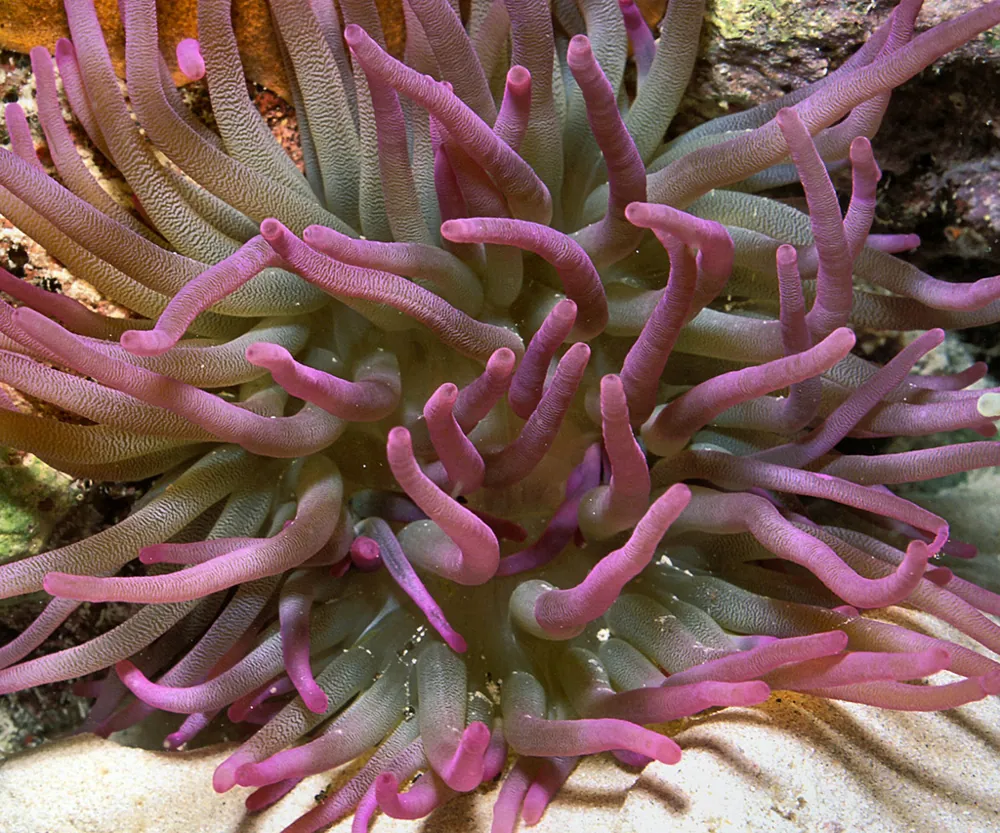
The giant Caribbean sea anemone is a large, colourful sea animal that looks like a soft, flower-shaped blob on the seabed. It lives in shallow reefs and calm inshore waters in the Caribbean and western Atlantic. Its sting is strong enough to stun the fish and shrimp it eats.1



 ඒක හඳුනාගන්නේ කොහොමද
- Grows about 15 cm high and 30 cm wide, with a disc up to about 40 cm across1
- Body can be white, light blue, pink, orange, pale red or light brown1
- More than 100 tentacles surround the mouth1
- Tentacle tips may be purple or rose-coloured, or may be paler than the body1
- Grows singly or in loose groups, never as colonies1
විෂ බලය
යමක් ස්පර්ශ වූ විට පුංචි ඇනුම් සෛල දහස් ගණනක් විදිනවා.
ඒකේ විදින විෂ කරන්නේ මොකක්ද?
Its stinging cells (nematocysts) at the tentacle tips contain a toxin called CgNa. When the stinging cells fire, they impale the attacker and release the toxin, which causes extreme pain and paralysis.1
ඒක මිනිසුන්ට කොච්චර භයානකද?
මිනිසුන්ට ඇති අනතුර: සුළුමී මැස්සෙක් ඇනීමක් තරම් හෝ ඊට අඩුයි. මිනිසුන්ට හානියක් නැති තරම්.බය වුණාම ඒක කරන්නේ මොකක්ද?
When threatened it shrinks by pulling its tentacles into its body and forcing out most of the water, which reduces the surface a predator can attack.1
 ඇන්නොත්
- වතුරෙන් එළියට ඇවිත් ඇලී ඇති ස්පර්ශක (අත්වැසුම් හෝ රෙද්දක් පාවිච්චි කරලා) ගලවා දමන්න.
- නිවර්තන බොක්ස් ජෙලිෆිෂ් සඳහා: ඇනුම් මත අවම වශයෙන් තත්පර 30ක් විනාකිරි වත් කරන්න, උදව් ඉල්ලන්න, CPR (හෘද පෙනහළු පුනර්ජීවනය) කරන්න සූදානම්ව ඉන්න. බ්ලූබොටල් සහ අනිත් බොහෝ ඒවා සඳහා: මුහුදු වතුරෙන් සෝදලා, ඊට පස්සේ වේදනාවට උණු වතුර දාන්න.
හැම විටම මුලින්ම ඔයාගේ හදිසි අංකයට කතා කරන්න (112, 000, 911). මෙය සාමාන්ය ප්රථමාධාර මඟපෙන්වීමක් මිස වෛද්ය උපදෙස් නොවේ. මූලික ප්රථමාධාර
 ආරක්ෂිතව ඉන්න
- වන සතෙක්ව කවදාවත් ස්පර්ශ කරන්න, අල්ලන්න හෝ කරදර කරන්න එපා, ඒක පුංචි වුණත්, ඒක නිදාගෙන හෝ මැරිලා වගේ පෙනුනත්.
- ඒකට ඉඩ දෙන්න. එකක් හමු වුණොත්, සන්සුන්ව ඉඳලා, හෙමින් පස්සට යන්න, ඒකට තමන්ගේ පාරේ යන්න ඉඩ දෙන්න.
- එකක් ඔයාට ඇන්නොත්: සන්සුන්ව ඉන්න, නොසෙල්වී ඉන්න, ඔයාගේ හදිසි අංකයට (112, 000, 911) කතා කරන්න, නැත්නම් ඉක්මනින් රෝහලකට යන්න. ඒක පෙනුනේ කොහොමද කියලා මතක තියාගන්න, ෆොටෝ එකක් උදව් වෙනවා.
ඒක ඔයාව අල්ලන්න එන්නේ නැහැ. ඒක විෂ පාවිච්චි කරන්නේ කෑම අල්ලගන්න හෝ තමන්ව ආරක්ෂා කරගන්න, ඒකට හැංගෙන්න තමයි වඩා කැමති. ආරක්ෂිතව ඉන්න ගැන තව
ලෝකයේ කොහෙද?
ඒක කොච්චර ලොකුද?
ඒක කොච්චර දිගද?
 සෙල්ලම් බිල්ඩිං බ්ලොක් 5ක් පේළියට තිබ්බා තරම් දිගයි
 වත්තේ ගොළුබෙල්ලෙකුටත් වඩා හෙමින්
Giant Caribbean sea anemone ඔයාට සාපේක්ෂව කොච්චර ලොකුද?
ඔයාගේ බ්රවුසරයේ ගණිතය විතරයි. කිසිම දෙයක් සේව් වෙන්නේවත් කොහේවත් යවන්නේවත් නැහැ.
ඒක කොච්චර වේගවත්ද?

කරුණු
Its nerve cells contain proteins that are molecularly similar to those in mammal nerve cells, which helps scientists study how nervous systems evolved.1
Fish and cleaner shrimp shelter among its tentacles, and it serves as a base station for fish cleaning.1
Although mostly stuck in place, it can crawl very slowly on its base, the pedal disc.1
Its larvae carry their own food in a yolk, so starvation is unlikely and they can drift far to spread out.1
Most individuals are either male or female, with a roughly equal ratio of the two sexes, though they occasionally have both.1
විෂ විශේෂඥයන් සඳහා
- විද්යාත්මක නාමය
- Condylactis gigantea
- කාණ්ඩය
- ජෙලිෆිෂ් සහ මුහුදු ඇනුම් සතුන්
- පවුල
- Actiniidae2
- පිළිවෙළ
- Actiniaria
- මහාද්වීප
- අත්ලාන්තික් සාගරය, කැරිබියන් මුහුද, මෙක්සිකෝ බොක්ක, සාගර
- බබාලා
- Eggs and sperm are released into the water, where fertilisation happens. The fertilised egg becomes a larva that settles on the seabed and grows into an adult.1
- මිනිසුන්ට ඇති අනතුර
- 1 / 5: සුළු3
කරුණු එන්නේ කොහෙන්ද
- Condylactis gigantea (Wikipedia (CC BY-SA 4.0))
- Condylactis gigantea (iNaturalist): නම් සහ වර්ගීකරණය.
- Venom Wiki: අනතුරු මට්ටම, සාමාන්ය ප්රමාණය සහ වේග අනුමානය අපේම ඒවා. අපි ඒවා ගණනය කරන හැටි බලන්න: අපි අනතුර ශ්රේණිගත කරන හැටි.
මේ පිටුවේ හැම කරුණකටම ඒකේ මූලාශ්රයට යොමු කරන අංකයක් තියෙනවා. අපි මොනවහරි වැරදියට කිව්වා නම්, සමාවෙන්න, අපි සත්ව ලෝලීන් මිසක් විද්යා සඟරාවක් නෙවෙයි. [email protected] වෙත අපිට කියන්න, අපි ඒක හදන්නම්.
 ගෝනුස්සාට බඩගිනියි! Venom Wiki එක පුද්ගලයෙකුගේ ව්යාපෘතියක්: නොමිලේ, දැන්වීම් නැහැ, ට්රැකර් නැහැ. පුංචි ටිප් එකක් ඒක ඔන්ලයින් තියන්න උදව් වෙනවා.ගෝනුස්සාට කන්න දෙන්න
එම කාණ්ඩයෙන් තව: ජෙලිෆිෂ් සහ මුහුදු ඇනුම් සතුන්
 Australian box jellyfishජෙලිෆිෂ් සහ මුහුදු ඇනුම් සතුන්මාරාන්තිකඅල්ලන්න එපා
 Irukandji jellyfishජෙලිෆිෂ් සහ මුහුදු ඇනුම් සතුන්මරන්න පුළුවන්අල්ලන්න එපා
 Portuguese man o' warජෙලිෆිෂ් සහ මුහුදු ඇනුම් සතුන්දොස්තර කෙනෙක් ඕනෑඅල්ලන්න එපා
 Lion's mane jellyfishජෙලිෆිෂ් සහ මුහුදු ඇනුම් සතුන්රිදෙනවා විතරයිඅල්ලන්න එපා
 Moon jellyfishජෙලිෆිෂ් සහ මුහුදු ඇනුම් සතුන්හානියක් නැති
 Common kingslayerජෙලිෆිෂ් සහ මුහුදු ඇනුම් සතුන්මරන්න පුළුවන්අල්ලන්න එපා
ජීවත් වන වෙනත් තැන්: අත්ලාන්තික් සාගරය
 Hawksbill sea turtleවෙනත් විෂ සහිත සතුන්මරන්න පුළුවන්
 Blue sea dragonකේතු ගොළුබෙල්ලෝ සහ බූවල්ලෝරිදෙනවා විතරයි
 Greenland sharkවෙනත් විෂ සහිත සතුන්රිදෙනවා විතරයි
 Common octopusකේතු ගොළුබෙල්ලෝ සහ බූවල්ලෝහානියක් නැති
 Common stingrayවිෂ විදින මාළුවන්දොස්තර කෙනෙක් ඕනෑ
 Greater weeverවිෂ විදින මාළුවන්දොස්තර කෙනෙක් ඕනෑඅල්ලන්න එපා