
 අප්රිකාව
 ආසියාව
 යුරෝපය
 දකුණු ඇමෙරිකාව
 ඕස්ට්රේලියාව සහ ඕෂනියාව
 ඇන්ටාක්ටිකාව
 පැසිෆික් සාගරය
 අත්ලාන්තික් සාගරය
 ඉන්දියන් සාගරය
 ආක්ටික් සාගරය
 මධ්යධරණී මුහුද
 රතු මුහුද
 කැරිබියන් මුහුද
 කොරල් මුහුද
 දකුණු චීන මුහුද
 පිලිපීන මුහුද
 අන්දමන් මුහුද
 උතුරු මුහුද
 ටිමෝර් සහ අරෆුරා මුහුද
 බෙංගාල බොක්ක
 කැලිෆෝනියා බොක්ක
Giant green anemone
 ඇනුම් ස්පර්ශක
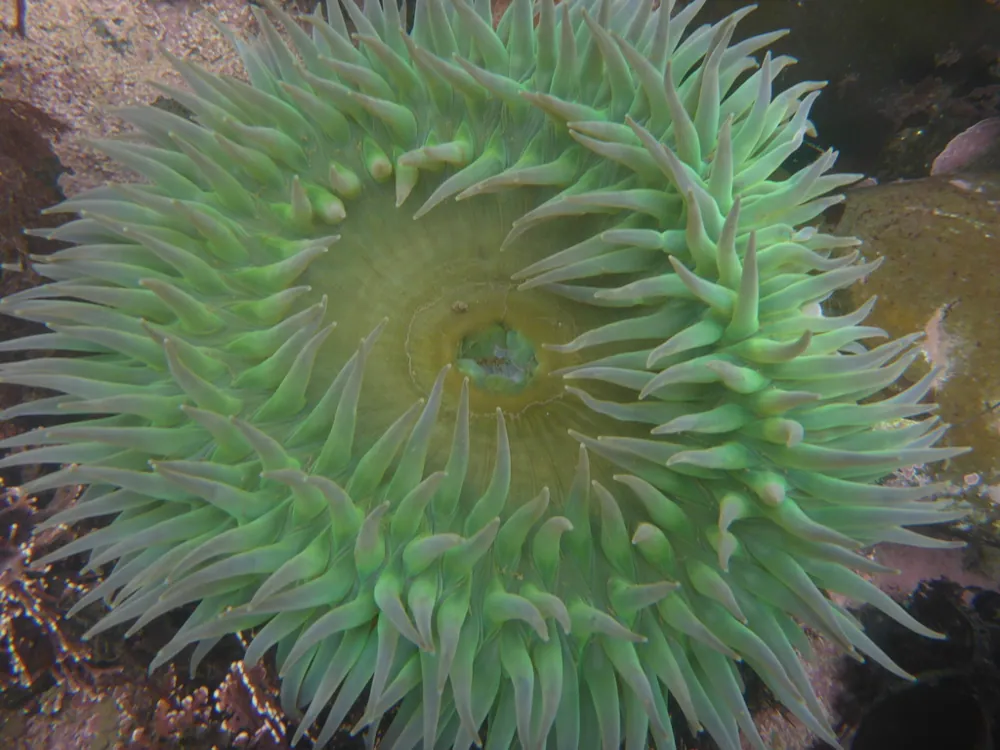
The giant green anemone is a sea animal that looks like a flower but is a relative of jellyfish. It lives on rocky and sandy shores along the Pacific coast of North America, where it is covered by water for most of the day. Its bright green colour comes partly from tiny algae that live inside its body and make food for it.1



 ඒක හඳුනාගන්නේ කොහොමද
- Bright green when underwater in good sunlight.1
- Dark green or brown when out of the water, because it closes up and droops, showing its darker outer body.1
- Broad, flat top surface (oral disk) with no stripes, bands or other markings.1
- Short, cone-shaped tentacles arranged in six or more rows around the mouth, with pointed or blunt tips.1
බොහෝ විට පටලවා ගන්නේ: Large giant green anemones can be confused with A. elegantissima or A. sola. Those two usually have pink-tipped tentacles and a striped oral disk, which the giant green anemone does not have.1
විෂ බලය
යමක් ස්පර්ශ වූ විට පුංචි ඇනුම් සෛල දහස් ගණනක් විදිනවා.
ඒකේ විදින විෂ කරන්නේ මොකක්ද?
Stinging cells called nematocysts in the tentacles release a paralysing venom that helps the anemone catch prey.1
ඒක මිනිසුන්ට කොච්චර භයානකද?
මිනිසුන්ට ඇති අනතුර: සුළුමී මැස්සෙක් ඇනීමක් තරම් හෝ ඊට අඩුයි. මිනිසුන්ට හානියක් නැති තරම්.බය වුණාම ඒක කරන්නේ මොකක්ද?
It uses its stinging cells in the tentacles to defend itself against predators.1
 ඇන්නොත්
- වතුරෙන් එළියට ඇවිත් ඇලී ඇති ස්පර්ශක (අත්වැසුම් හෝ රෙද්දක් පාවිච්චි කරලා) ගලවා දමන්න.
- නිවර්තන බොක්ස් ජෙලිෆිෂ් සඳහා: ඇනුම් මත අවම වශයෙන් තත්පර 30ක් විනාකිරි වත් කරන්න, උදව් ඉල්ලන්න, CPR (හෘද පෙනහළු පුනර්ජීවනය) කරන්න සූදානම්ව ඉන්න. බ්ලූබොටල් සහ අනිත් බොහෝ ඒවා සඳහා: මුහුදු වතුරෙන් සෝදලා, ඊට පස්සේ වේදනාවට උණු වතුර දාන්න.
හැම විටම මුලින්ම ඔයාගේ හදිසි අංකයට කතා කරන්න (112, 000, 911). මෙය සාමාන්ය ප්රථමාධාර මඟපෙන්වීමක් මිස වෛද්ය උපදෙස් නොවේ. මූලික ප්රථමාධාර
 ආරක්ෂිතව ඉන්න
- වන සතෙක්ව කවදාවත් ස්පර්ශ කරන්න, අල්ලන්න හෝ කරදර කරන්න එපා, ඒක පුංචි වුණත්, ඒක නිදාගෙන හෝ මැරිලා වගේ පෙනුනත්.
- ඒකට ඉඩ දෙන්න. එකක් හමු වුණොත්, සන්සුන්ව ඉඳලා, හෙමින් පස්සට යන්න, ඒකට තමන්ගේ පාරේ යන්න ඉඩ දෙන්න.
- එකක් ඔයාට ඇන්නොත්: සන්සුන්ව ඉන්න, නොසෙල්වී ඉන්න, ඔයාගේ හදිසි අංකයට (112, 000, 911) කතා කරන්න, නැත්නම් ඉක්මනින් රෝහලකට යන්න. ඒක පෙනුනේ කොහොමද කියලා මතක තියාගන්න, ෆොටෝ එකක් උදව් වෙනවා.
ඒක ඔයාව අල්ලන්න එන්නේ නැහැ. ඒක විෂ පාවිච්චි කරන්නේ කෑම අල්ලගන්න හෝ තමන්ව ආරක්ෂා කරගන්න, ඒකට හැංගෙන්න තමයි වඩා කැමති. ආරක්ෂිතව ඉන්න ගැන තව
ඒක කොච්චර ලොකුද?
ඒක කොච්චර දිගද?
 සෙල්ලම් බිල්ඩිං බ්ලොක් 9ක් පේළියට තිබ්බා තරම් දිගයි
 වත්තේ ගොළුබෙල්ලෙකුටත් වඩා හෙමින්
Giant green anemone ඔයාට සාපේක්ෂව කොච්චර ලොකුද?
ඔයාගේ බ්රවුසරයේ ගණිතය විතරයි. කිසිම දෙයක් සේව් වෙන්නේවත් කොහේවත් යවන්නේවත් නැහැ.
ඒක කොච්චර වේගවත්ද?

කරුණු
Tiny algae living inside its body help feed it through photosynthesis and add to its bright green colour.1
It can have a crown of tentacles up to 25 cm across.1
Anemones in caves and shady places have few or no algae and are usually less colourful.1
Its main predators include a leather seastar, two nudibranchs and several snails and sea spiders.1
විෂ විශේෂඥයන් සඳහා
- විද්යාත්මක නාමය
- Anthopleura xanthogrammica
- කාණ්ඩය
- ජෙලිෆිෂ් සහ මුහුදු ඇනුම් සතුන්
- පවුල
- Actiniidae2
- පිළිවෙළ
- Actiniaria
- මහාද්වීප
- පැසිෆික් සාගරය, සාගර
- බබාලා
- Sperm and eggs are released into the water in late autumn and join outside the body. The young larvae float in the water until they settle in mussel beds.1
- මිනිසුන්ට ඇති අනතුර
- 1 / 5: සුළු3
කරුණු එන්නේ කොහෙන්ද
- Anthopleura xanthogrammica (Wikipedia (CC BY-SA 4.0))
- Anthopleura xanthogrammica (iNaturalist): නම් සහ වර්ගීකරණය.
- Venom Wiki: අනතුරු මට්ටම, සාමාන්ය ප්රමාණය සහ වේග අනුමානය අපේම ඒවා. අපි ඒවා ගණනය කරන හැටි බලන්න: අපි අනතුර ශ්රේණිගත කරන හැටි.
මේ පිටුවේ හැම කරුණකටම ඒකේ මූලාශ්රයට යොමු කරන අංකයක් තියෙනවා. අපි මොනවහරි වැරදියට කිව්වා නම්, සමාවෙන්න, අපි සත්ව ලෝලීන් මිසක් විද්යා සඟරාවක් නෙවෙයි. [email protected] වෙත අපිට කියන්න, අපි ඒක හදන්නම්.
 ගෝනුස්සාට බඩගිනියි! Venom Wiki එක පුද්ගලයෙකුගේ ව්යාපෘතියක්: නොමිලේ, දැන්වීම් නැහැ, ට්රැකර් නැහැ. පුංචි ටිප් එකක් ඒක ඔන්ලයින් තියන්න උදව් වෙනවා.ගෝනුස්සාට කන්න දෙන්න
එම කාණ්ඩයෙන් තව: ජෙලිෆිෂ් සහ මුහුදු ඇනුම් සතුන්
 Australian box jellyfishජෙලිෆිෂ් සහ මුහුදු ඇනුම් සතුන්මාරාන්තිකඅල්ලන්න එපා
 Irukandji jellyfishජෙලිෆිෂ් සහ මුහුදු ඇනුම් සතුන්මරන්න පුළුවන්අල්ලන්න එපා
 Portuguese man o' warජෙලිෆිෂ් සහ මුහුදු ඇනුම් සතුන්දොස්තර කෙනෙක් ඕනෑඅල්ලන්න එපා
 Lion's mane jellyfishජෙලිෆිෂ් සහ මුහුදු ඇනුම් සතුන්රිදෙනවා විතරයිඅල්ලන්න එපා
 Moon jellyfishජෙලිෆිෂ් සහ මුහුදු ඇනුම් සතුන්හානියක් නැති
 Common kingslayerජෙලිෆිෂ් සහ මුහුදු ඇනුම් සතුන්මරන්න පුළුවන්අල්ලන්න එපා
ජීවත් වන වෙනත් තැන්: පැසිෆික් සාගරය
 Geography coneකේතු ගොළුබෙල්ලෝ සහ බූවල්ලෝමාරාන්තික
 Greater blue-ringed octopusකේතු ගොළුබෙල්ලෝ සහ බූවල්ලෝමාරාන්තික
 Japanese pufferfishවෙනත් විෂ සහිත සතුන්මාරාන්තික
 Southern blue-ringed octopusකේතු ගොළුබෙල්ලෝ සහ බූවල්ලෝමාරාන්තික
 Hawksbill sea turtleවෙනත් විෂ සහිත සතුන්මරන්න පුළුවන්
 Reef stonefishවිෂ විදින මාළුවන්මරන්න පුළුවන්අල්ලන්න එපා