
 අප්රිකාව
 ආසියාව
 යුරෝපය
 දකුණු ඇමෙරිකාව
 ඕස්ට්රේලියාව සහ ඕෂනියාව
 ඇන්ටාක්ටිකාව
 පැසිෆික් සාගරය
 අත්ලාන්තික් සාගරය
 ඉන්දියන් සාගරය
 ආක්ටික් සාගරය
 මධ්යධරණී මුහුද
 රතු මුහුද
 කැරිබියන් මුහුද
 කොරල් මුහුද
 දකුණු චීන මුහුද
 පිලිපීන මුහුද
 අන්දමන් මුහුද
 උතුරු මුහුද
 ටිමෝර් සහ අරෆුරා මුහුද
 බෙංගාල බොක්ක
 කැලිෆෝනියා බොක්ක
Mexican fireleg tarantula
 දෂ්ට කිරීම්
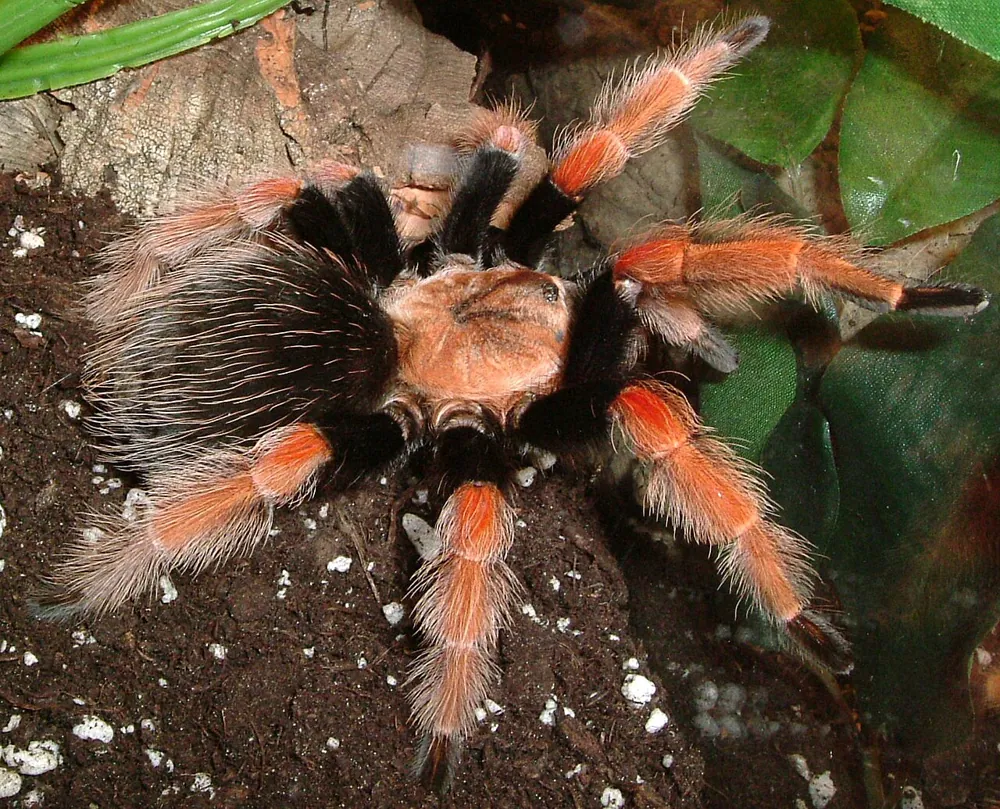
The Mexican fireleg tarantula is a large, long-lived spider with bright orange and black colouring. It lives in dry scrubland in western Guerrero state, Mexico, where it hides in burrows. It is popular in the pet trade, which has put pressure on wild numbers.1



 ඒක හඳුනාගන්නේ කොහොමද
- Dramatic orange and black colouring.1
- Orange carapace (the upper body shell) with a dark black band on the upper legs (femora).1
- Bright, fiery red knees (patellae) that fade to a paler orange further down the leg.1
- Black tips on the feet (tarsi).1
- Adults are 12.7 to 15.2 cm across, converted from 5 to 6 inches.1
බොහෝ විට පටලවා ගන්නේ: It resembles the Mexican redknee tarantula (Brachypelma hamorii). The main difference is the legs: the knees of the Mexican fireleg are bright red, while the joints of the redknee are orange.1
විෂ බලය
දෂ්ට කරනකොට විෂ එළියට එන්නේ ඒකේ දළ හෝ දත් හරහා.
ඒක මිනිසුන්ට කොච්චර භයානකද?
මිනිසුන්ට ඇති අනතුර: සුළුමී මැස්සෙක් ඇනීමක් තරම් හෝ ඊට අඩුයි. මිනිසුන්ට හානියක් නැති තරම්.The spider is not particularly defensive. Its main defence is its urticating hairs, which it can flick when threatened. Some individuals may have a nervous temperament.1
බය වුණාම ඒක කරන්නේ මොකක්ද?
When it feels threatened, it flicks urticating hairs at the attacker.1
 දෂ්ට කළොත්
- දෂ්ට කළ තැන හෝදලා සිසිල් කරන්න. වේදනාව දැඩි නම් හෝ පුද්ගලයාට අසනීප ගතියක් දැනෙනවා නම් වෛද්ය උදව් ගන්න.
හැම විටම මුලින්ම ඔයාගේ හදිසි අංකයට කතා කරන්න (112, 000, 911). මෙය සාමාන්ය ප්රථමාධාර මඟපෙන්වීමක් මිස වෛද්ය උපදෙස් නොවේ. මූලික ප්රථමාධාර
 ආරක්ෂිතව ඉන්න
- වන සතෙක්ව කවදාවත් ස්පර්ශ කරන්න, අල්ලන්න හෝ කරදර කරන්න එපා, ඒක පුංචි වුණත්, ඒක නිදාගෙන හෝ මැරිලා වගේ පෙනුනත්.
- ඒකට ඉඩ දෙන්න. එකක් හමු වුණොත්, සන්සුන්ව ඉඳලා, හෙමින් පස්සට යන්න, ඒකට තමන්ගේ පාරේ යන්න ඉඩ දෙන්න.
- එකක් ඔයාට දෂ්ට කළොත්: සන්සුන්ව ඉන්න, නොසෙල්වී ඉන්න, ඔයාගේ හදිසි අංකයට (112, 000, 911) කතා කරන්න, නැත්නම් ඉක්මනින් රෝහලකට යන්න. ඒක පෙනුනේ කොහොමද කියලා මතක තියාගන්න, ෆොටෝ එකක් උදව් වෙනවා.
ඒක ඔයාව අල්ලන්න එන්නේ නැහැ. ඒක විෂ පාවිච්චි කරන්නේ කෑම අල්ලගන්න හෝ තමන්ව ආරක්ෂා කරගන්න, ඒකට හැංගෙන්න තමයි වඩා කැමති. ආරක්ෂිතව ඉන්න ගැන තව
ඒක කොච්චර ලොකුද?
ඒක කොච්චර දිගද?
 සෙල්ලම් බිල්ඩිං බ්ලොක් 5ක් පේළියට තිබ්බා තරම් දිගයි
 මීටර් 100ක් තත්පර 210කින් යන්න පුළුවන් (වේගවත්ම මිනිසාට තත්පර 9.6ක් ඕන)
Mexican fireleg tarantula ඔයාට සාපේක්ෂව කොච්චර ලොකුද?
ඔයාගේ බ්රවුසරයේ ගණිතය විතරයි. කිසිම දෙයක් සේව් වෙන්නේවත් කොහේවත් යවන්නේවත් නැහැ.
ඒක කොච්චර වේගවත්ද?


කරුණු
Tarantulas of this genus are long-lived. Females may live about ten years after reaching maturity, while males usually live only up to a year after their final moult.1
It is commonly kept as a pet and is regarded as suitable for beginners, which has led to heavy collection from the wild.1
It is mostly active after dark, but can sometimes be active during the day, especially in the morning and evening.1
Adults moult at the end of the dry season, between November and June. Males then begin searching for mates.1
විෂ විශේෂඥයන් සඳහා
- විද්යාත්මක නාමය
- Brachypelma boehmei
- කාණ්ඩය
- ටැරන්ටියුලා සහ ෆනල්-වෙබ් මකුළුවන්
- පවුල
- Theraphosidae2
- පිළිවෙළ
- Araneae
- මහාද්වීප
- උතුරු ඇමෙරිකාව
- බබාලා
- Mated females produce an egg sac. If it succeeds, the eggs generally hatch three to four weeks before the rainy season begins.1
- වනයේ ඒකේ තත්ත්වය
- Listed on CITES Appendix II, which regulates international trade. Ongoing habitat destruction, illegal pet trade and high mortality before maturity are a considerable concern for its future.1
- මිනිසුන්ට ඇති අනතුර
- 1 / 5: සුළු3
කරුණු එන්නේ කොහෙන්ද
- Brachypelma boehmei (Wikipedia (CC BY-SA 4.0))
- Brachypelma boehmei (iNaturalist): නම් සහ වර්ගීකරණය.
- Venom Wiki: අනතුරු මට්ටම, සාමාන්ය ප්රමාණය සහ වේග අනුමානය අපේම ඒවා. අපි ඒවා ගණනය කරන හැටි බලන්න: අපි අනතුර ශ්රේණිගත කරන හැටි.
මේ පිටුවේ හැම කරුණකටම ඒකේ මූලාශ්රයට යොමු කරන අංකයක් තියෙනවා. අපි මොනවහරි වැරදියට කිව්වා නම්, සමාවෙන්න, අපි සත්ව ලෝලීන් මිසක් විද්යා සඟරාවක් නෙවෙයි. [email protected] වෙත අපිට කියන්න, අපි ඒක හදන්නම්.
 ගෝනුස්සාට බඩගිනියි! Venom Wiki එක පුද්ගලයෙකුගේ ව්යාපෘතියක්: නොමිලේ, දැන්වීම් නැහැ, ට්රැකර් නැහැ. පුංචි ටිප් එකක් ඒක ඔන්ලයින් තියන්න උදව් වෙනවා.ගෝනුස්සාට කන්න දෙන්න
එම කාණ්ඩයෙන් තව: ටැරන්ටියුලා සහ ෆනල්-වෙබ් මකුළුවන්
 Mexican redknee tarantulaටැරන්ටියුලා සහ ෆනල්-වෙබ් මකුළුවන්හානියක් නැති
 Arizona blond tarantulaටැරන්ටියුලා සහ ෆනල්-වෙබ් මකුළුවන්හානියක් නැති
 Ravine trapdoor spiderටැරන්ටියුලා සහ ෆනල්-වෙබ් මකුළුවන්හානියක් නැති
 Trinidad chevron tarantulaටැරන්ටියුලා සහ ෆනල්-වෙබ් මකුළුවන්රිදෙනවා විතරයි
 Antilles pinktoe tarantulaටැරන්ටියුලා සහ ෆනල්-වෙබ් මකුළුවන්හානියක් නැති
 California trapdoor spiderටැරන්ටියුලා සහ ෆනල්-වෙබ් මකුළුවන්හානියක් නැති
ජීවත් වන වෙනත් තැන්: උතුරු ඇමෙරිකාව
 Terciopeloපිට් වයිපර් (උණුසුම දැනෙන පොළඟුන්)මාරාන්තික
 Eastern coral snakeකොරල් සර්පයන්මරන්න පුළුවන්
 Eastern diamondback rattlesnakeරැටල්ස්නේක්මරන්න පුළුවන්
 Eyelash viperපිට් වයිපර් (උණුසුම දැනෙන පොළඟුන්)මරන්න පුළුවන්
 Timber rattlesnakeරැටල්ස්නේක්මරන්න පුළුවන්
 Western diamondback rattlesnakeරැටල්ස්නේක්මරන්න පුළුවන්