
 අප්රිකාව
 ආසියාව
 යුරෝපය
 දකුණු ඇමෙරිකාව
 ඕස්ට්රේලියාව සහ ඕෂනියාව
 ඇන්ටාක්ටිකාව
 පැසිෆික් සාගරය
 අත්ලාන්තික් සාගරය
 ඉන්දියන් සාගරය
 ආක්ටික් සාගරය
 මධ්යධරණී මුහුද
 රතු මුහුද
 කැරිබියන් මුහුද
 කොරල් මුහුද
 දකුණු චීන මුහුද
 පිලිපීන මුහුද
 අන්දමන් මුහුද
 උතුරු මුහුද
 ටිමෝර් සහ අරෆුරා මුහුද
 බෙංගාල බොක්ක
 කැලිෆෝනියා බොක්ක
New Guinea small-eyed snake
 දෂ්ට කිරීම්
The New Guinea small-eyed snake, Micropechis ikaheka, is a highly venomous snake that lives on New Guinea and nearby islands. It is the only species in its genus, and it is known for causing many deadly bites, especially on Karkar Island in Papua New Guinea. Its bites are a serious medical concern in the places where it lives.1



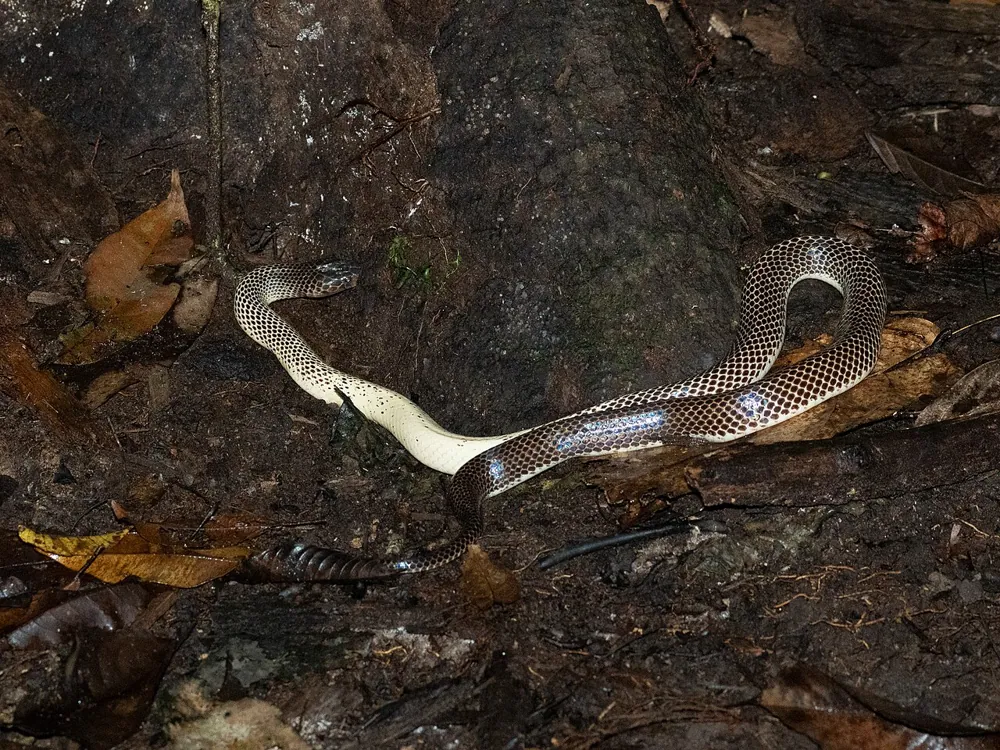
 ඒක හඳුනාගන්නේ කොහොමද
විෂ බලය
දෂ්ට කරනකොට විෂ එළියට එන්නේ ඒකේ දළ හෝ දත් හරහා.
ඒකේ විදින විෂ කරන්නේ මොකක්ද?
Its venom is strong enough that it is considered a dangerous snake. Common symptoms include local muscle pain and tenderness, fever, abdominal pain, vomiting, dizziness, headache, low blood pressure and spontaneous bleeding. In severe cases, the venom also affects the nerves and muscles, causing drooping eyelids, slurred speech and jaw locking, and death can result from respiratory paralysis (when the muscles used for breathing stop working).1
ඒක මිනිසුන්ට කොච්චර භයානකද?
මිනිසුන්ට ඇති අනතුර: ඉතා භයානකප්රතිකාර නොලැබෙන කෙනෙක්ව මරන්න ඒකට පුළුවන්.This snake has been linked to many fatal bites. The first proven human death occurred in 1958 in Wau, Papua New Guinea, where a young man died 36 hours after being bitten on the base of the thumb while handling the snake. It causes about 40% of snake envenomations on Karkar Island, but less than 10% on the mainland, where death adders cause most snakebites. Plantation workers are most at risk, especially when moving husk piles, cutting grass, walking on plantation tracks or harvesting cocoa beans.1
 සුබ ආරංචියක්: වෛද්යවරුන් ළඟ මේකට බෙහෙතක් (ප්රතිවිෂ) හෝ ප්රතිකාරයක් තියෙනවා.1
බය වුණාම ඒක කරන්නේ මොකක්ද?
Although it is normally shy, it becomes highly aggressive when disturbed, for example if it is handled or stepped on, and then it strikes quickly and readily. Its bite is tenacious and chewing, and it is not easily released.1
 දෂ්ට කළොත්
- පීඩන නිශ්චලනය: දෂ්ට කළ තැනට උඩින් තද ඉලාස්ටික් වෙළුම් පටියක් ඔතලා, ඊට පස්සේ මුළු අත හෝ කකුල දිගේම උඩට ඔතන්න, පුවරුවකින් (ස්ප්ලින්ට්) තදකරන්න, උදව් එනකම් පුද්ගලයාව සම්පූර්ණයෙන්ම නොසෙල්වී තියන්න.
- දෂ්ට කළ තැන හෝදන්න එපා: හරි ප්රතිවිෂය තෝරාගන්න සමේ ඉතිරි වූ විෂ රෝහල්වලට පරීක්ෂා කරන්න පුළුවන්.
හැම විටම මුලින්ම ඔයාගේ හදිසි අංකයට කතා කරන්න (112, 000, 911). මෙය සාමාන්ය ප්රථමාධාර මඟපෙන්වීමක් මිස වෛද්ය උපදෙස් නොවේ. මූලික ප්රථමාධාර
 ආරක්ෂිතව ඉන්න
- වන සතෙක්ව කවදාවත් ස්පර්ශ කරන්න, අල්ලන්න හෝ කරදර කරන්න එපා, ඒක පුංචි වුණත්, ඒක නිදාගෙන හෝ මැරිලා වගේ පෙනුනත්.
- ඒකට ඉඩ දෙන්න. එකක් හමු වුණොත්, සන්සුන්ව ඉඳලා, හෙමින් පස්සට යන්න, ඒකට තමන්ගේ පාරේ යන්න ඉඩ දෙන්න.
- එකක් ඔයාට දෂ්ට කළොත්: සන්සුන්ව ඉන්න, නොසෙල්වී ඉන්න, ඔයාගේ හදිසි අංකයට (112, 000, 911) කතා කරන්න, නැත්නම් ඉක්මනින් රෝහලකට යන්න. ඒක පෙනුනේ කොහොමද කියලා මතක තියාගන්න, ෆොටෝ එකක් උදව් වෙනවා.
ඒක ඔයාව අල්ලන්න එන්නේ නැහැ. ඒක විෂ පාවිච්චි කරන්නේ කෑම අල්ලගන්න හෝ තමන්ව ආරක්ෂා කරගන්න, ඒකට හැංගෙන්න තමයි වඩා කැමති. ආරක්ෂිතව ඉන්න ගැන තව
ඒක කොච්චර ලොකුද?
ඒක කොච්චර දිගද?
 ගෙදර පූසන් 4ක් නාසයේ සිට වලිගය දක්වා පේළියට තිබ්බා තරම් දිගයි
 කෙසෙල් ගෙඩි 12ක් එක පිට එක තිබ්බා තරම් දිගයි
 මීටර් 100ක් තත්පර 46කින් යන්න පුළුවන් (වේගවත්ම මිනිසාට තත්පර 9.6ක් ඕන)
New Guinea small-eyed snake ඔයාට සාපේක්ෂව කොච්චර ලොකුද?
ඔයාගේ බ්රවුසරයේ ගණිතය විතරයි. කිසිම දෙයක් සේව් වෙන්නේවත් කොහේවත් යවන්නේවත් නැහැ.
ඒක කොච්චර වේගවත්ද?


කරුණු
A bite from this snake was linked to a human death in 1958, when a young man died 36 hours after being bitten on the thumb while handling it.1
It is cannibalistic, and it also hunts rodents, lizards and other snakes.1
On Karkar Island, where it is common, it is called the "white snake" because of its pale colouring.1
Its name, ikaheca, means "land eel" in a local West Papuan language.1
මිථ්යා බිඳින්නා
මිථ්යාව: A dead snake is harmless and cannot bite.
ඇත්ත: A villager was bitten on the thumb by a snake he had reportedly killed, possibly because of a reflex action after death. Dead snakes can still bite, so they should be handled with care.1
කරුණු එන්නේ කොහෙන්ද
- Micropechis (Wikipedia (CC BY-SA 4.0))
- Micropechis ikaheka (iNaturalist): නම් සහ වර්ගීකරණය.
- Venom Wiki: අනතුරු මට්ටම, සාමාන්ය ප්රමාණය සහ වේග අනුමානය අපේම ඒවා. අපි ඒවා ගණනය කරන හැටි බලන්න: අපි අනතුර ශ්රේණිගත කරන හැටි.
මේ පිටුවේ හැම කරුණකටම ඒකේ මූලාශ්රයට යොමු කරන අංකයක් තියෙනවා. අපි මොනවහරි වැරදියට කිව්වා නම්, සමාවෙන්න, අපි සත්ව ලෝලීන් මිසක් විද්යා සඟරාවක් නෙවෙයි. [email protected] වෙත අපිට කියන්න, අපි ඒක හදන්නම්.
 ගෝනුස්සාට බඩගිනියි! Venom Wiki එක පුද්ගලයෙකුගේ ව්යාපෘතියක්: නොමිලේ, දැන්වීම් නැහැ, ට්රැකර් නැහැ. පුංචි ටිප් එකක් ඒක ඔන්ලයින් තියන්න උදව් වෙනවා.ගෝනුස්සාට කන්න දෙන්න
එම කාණ්ඩයෙන් තව: ඕස්ට්රේලියානු සර්පයන්
 Coastal taipan
 Common death adder
 Eastern brown snake
 ඉන්ලන්ඩ් ටයිපාන්
 ව්යාඝ්ර සර්පයා
 Collett's snake
ජීවත් වන වෙනත් තැන්: ඕස්ට්රේලියාව සහ ඕෂනියාව
 Sydney funnel-web spiderටැරන්ටියුලා සහ ෆනල්-වෙබ් මකුළුවන්මාරාන්තික
 Redback spiderමකුළුවෝදොස්තර කෙනෙක් ඕනෑ
 Brown tree snakeපිටුපස දළ ඇති සර්පයන්රිදෙනවා විතරයි
 Hooded pitohuiවෙනත් විෂ සහිත සතුන්රිදෙනවා විතරයිඅල්ලන්න එපා
 Platypusවිෂ විදින ක්ෂීරපායීන්රිදෙනවා විතරයි
 Northern tree-dwelling funnel-web spiderටැරන්ටියුලා සහ ෆනල්-වෙබ් මකුළුවන්මාරාන්තික