
 අප්රිකාව
 ආසියාව
 යුරෝපය
 දකුණු ඇමෙරිකාව
 ඕස්ට්රේලියාව සහ ඕෂනියාව
 ඇන්ටාක්ටිකාව
 පැසිෆික් සාගරය
 අත්ලාන්තික් සාගරය
 ඉන්දියන් සාගරය
 ආක්ටික් සාගරය
 මධ්යධරණී මුහුද
 රතු මුහුද
 කැරිබියන් මුහුද
 කොරල් මුහුද
 දකුණු චීන මුහුද
 පිලිපීන මුහුද
 අන්දමන් මුහුද
 උතුරු මුහුද
 ටිමෝර් සහ අරෆුරා මුහුද
 බෙංගාල බොක්ක
 කැලිෆෝනියා බොක්ක
Pacific sea nettle
 ඇනුම් ස්පර්ශක
The Pacific sea nettle is a large jellyfish with a golden-brown bell and long, trailing tentacles. It lives in the cool and temperate coastal waters of the northeastern Pacific Ocean, from southern British Columbia down to Mexico. Its sting is irritating, but it is rarely dangerous to people.1



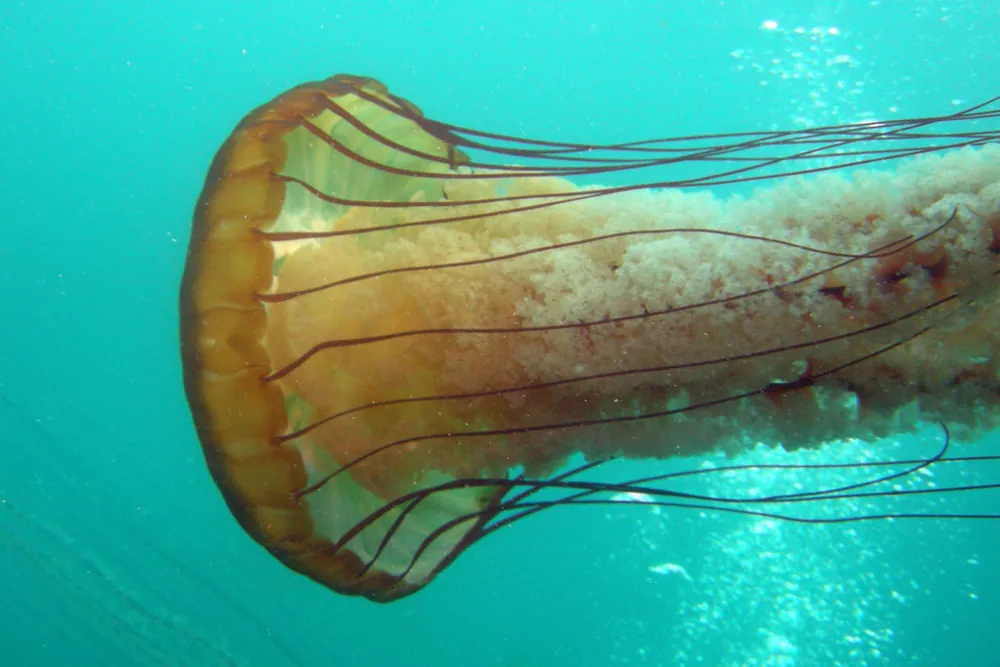
 ඒක හඳුනාගන්නේ කොහොමද
විෂ බලය
යමක් ස්පර්ශ වූ විට පුංචි ඇනුම් සෛල දහස් ගණනක් විදිනවා.
ඒකේ විදින විෂ කරන්නේ මොකක්ද?
When prey touches the tentacles, thousands of stinging cells (nematocysts) fire barbed stingers that inject venom. The venom contains proteins, including proteases and pore-forming toxins, which can disrupt cell membranes and tissues. The venom is effective against prey and humans, but is typically not lethal to people.1
ඒක මිනිසුන්ට කොච්චර භයානකද?
මිනිසුන්ට ඇති අනතුර: වේදනාකාරීඇත්තටම රිදෙන්න පුළුවන්, නමුත් බරපතළ වෙන්නේ නැති තරම්.Its sting is often irritating and possibly mildly painful to people, but it is rarely dangerous. It is typically nonlethal to humans.1
බය වුණාම ඒක කරන්නේ මොකක්ද?
Its stinging tentacles are its main defence, although some animals, such as leatherback turtles, are not bothered by the sting.1
 ඇන්නොත්
- වතුරෙන් එළියට ඇවිත් ඇලී ඇති ස්පර්ශක (අත්වැසුම් හෝ රෙද්දක් පාවිච්චි කරලා) ගලවා දමන්න.
- නිවර්තන බොක්ස් ජෙලිෆිෂ් සඳහා: ඇනුම් මත අවම වශයෙන් තත්පර 30ක් විනාකිරි වත් කරන්න, උදව් ඉල්ලන්න, CPR (හෘද පෙනහළු පුනර්ජීවනය) කරන්න සූදානම්ව ඉන්න. බ්ලූබොටල් සහ අනිත් බොහෝ ඒවා සඳහා: මුහුදු වතුරෙන් සෝදලා, ඊට පස්සේ වේදනාවට උණු වතුර දාන්න.
හැම විටම මුලින්ම ඔයාගේ හදිසි අංකයට කතා කරන්න (112, 000, 911). මෙය සාමාන්ය ප්රථමාධාර මඟපෙන්වීමක් මිස වෛද්ය උපදෙස් නොවේ. මූලික ප්රථමාධාර
 ආරක්ෂිතව ඉන්න
- වන සතෙක්ව කවදාවත් ස්පර්ශ කරන්න, අල්ලන්න හෝ කරදර කරන්න එපා, ඒක පුංචි වුණත්, ඒක නිදාගෙන හෝ මැරිලා වගේ පෙනුනත්.
- ඒකට ඉඩ දෙන්න. එකක් හමු වුණොත්, සන්සුන්ව ඉඳලා, හෙමින් පස්සට යන්න, ඒකට තමන්ගේ පාරේ යන්න ඉඩ දෙන්න.
- එකක් ඔයාට ඇන්නොත්: සන්සුන්ව ඉන්න, නොසෙල්වී ඉන්න, ඔයාගේ හදිසි අංකයට (112, 000, 911) කතා කරන්න, නැත්නම් ඉක්මනින් රෝහලකට යන්න. ඒක පෙනුනේ කොහොමද කියලා මතක තියාගන්න, ෆොටෝ එකක් උදව් වෙනවා.
ඒක ඔයාව අල්ලන්න එන්නේ නැහැ. ඒක විෂ පාවිච්චි කරන්නේ කෑම අල්ලගන්න හෝ තමන්ව ආරක්ෂා කරගන්න, ඒකට හැංගෙන්න තමයි වඩා කැමති. ආරක්ෂිතව ඉන්න ගැන තව
ඒක කොච්චර ලොකුද?
ඒක කොච්චර දිගද?
 ගෙදර පූසන් 2ක් නාසයේ සිට වලිගය දක්වා පේළියට තිබ්බා තරම් දිගයි
 කෙසෙල් ගෙඩි 6ක් එක පිට එක තිබ්බා තරම් දිගයි
Pacific sea nettle ඔයාට සාපේක්ෂව කොච්චර ලොකුද?
ඔයාගේ බ්රවුසරයේ ගණිතය විතරයි. කිසිම දෙයක් සේව් වෙන්නේවත් කොහේවත් යවන්නේවත් නැහැ.
ඒක කොච්චර වේගවත්ද?


කරුණු
Small fish and crabs sometimes hide inside its bell, where they may feed on it.1
It uses light-sensing organs called ocelli to migrate from deep water up to the surface.1
It swims by jet propulsion, squeezing its bell to push water out, though it mostly floats.1
Its population may be growing because of nutrient pollution from human sources, which feeds algal blooms and the wider food chain.1
It is kept in many aquariums because of its bright colours and very long tentacles, and it is low-maintenance in captivity.1
විෂ විශේෂඥයන් සඳහා
- විද්යාත්මක නාමය
- Chrysaora fuscescens
- කාණ්ඩය
- ජෙලිෆිෂ් සහ මුහුදු ඇනුම් සතුන්
- පවුල
- Pelagiidae2
- පිළිවෙළ
- Semaeostomeae
- මහාද්වීප
- පැසිෆික් සාගරය, සාගර
- බබාලා
- Females hold fertilised eggs on their oral arms, where they grow into free-swimming larvae. The larvae settle, become polyps, and bud new polyps before developing into jellyfish. No number is given.1
- මිනිසුන්ට ඇති අනතුර
- 2 / 5: වේදනාකාරී3
කරුණු එන්නේ කොහෙන්ද
- Chrysaora fuscescens (Wikipedia (CC BY-SA 4.0))
- Chrysaora fuscescens (iNaturalist): නම් සහ වර්ගීකරණය.
- Venom Wiki: අනතුරු මට්ටම, සාමාන්ය ප්රමාණය සහ වේග අනුමානය අපේම ඒවා. අපි ඒවා ගණනය කරන හැටි බලන්න: අපි අනතුර ශ්රේණිගත කරන හැටි.
මේ පිටුවේ හැම කරුණකටම ඒකේ මූලාශ්රයට යොමු කරන අංකයක් තියෙනවා. අපි මොනවහරි වැරදියට කිව්වා නම්, සමාවෙන්න, අපි සත්ව ලෝලීන් මිසක් විද්යා සඟරාවක් නෙවෙයි. [email protected] වෙත අපිට කියන්න, අපි ඒක හදන්නම්.
 ගෝනුස්සාට බඩගිනියි! Venom Wiki එක පුද්ගලයෙකුගේ ව්යාපෘතියක්: නොමිලේ, දැන්වීම් නැහැ, ට්රැකර් නැහැ. පුංචි ටිප් එකක් ඒක ඔන්ලයින් තියන්න උදව් වෙනවා.ගෝනුස්සාට කන්න දෙන්න
එම කාණ්ඩයෙන් තව: ජෙලිෆිෂ් සහ මුහුදු ඇනුම් සතුන්
 Australian box jellyfishජෙලිෆිෂ් සහ මුහුදු ඇනුම් සතුන්මාරාන්තිකඅල්ලන්න එපා
 Irukandji jellyfishජෙලිෆිෂ් සහ මුහුදු ඇනුම් සතුන්මරන්න පුළුවන්අල්ලන්න එපා
 Portuguese man o' warජෙලිෆිෂ් සහ මුහුදු ඇනුම් සතුන්දොස්තර කෙනෙක් ඕනෑඅල්ලන්න එපා
 Lion's mane jellyfishජෙලිෆිෂ් සහ මුහුදු ඇනුම් සතුන්රිදෙනවා විතරයිඅල්ලන්න එපා
 Moon jellyfishජෙලිෆිෂ් සහ මුහුදු ඇනුම් සතුන්හානියක් නැති
 Common kingslayerජෙලිෆිෂ් සහ මුහුදු ඇනුම් සතුන්මරන්න පුළුවන්අල්ලන්න එපා
ජීවත් වන වෙනත් තැන්: පැසිෆික් සාගරය
 Geography coneකේතු ගොළුබෙල්ලෝ සහ බූවල්ලෝමාරාන්තික
 Greater blue-ringed octopusකේතු ගොළුබෙල්ලෝ සහ බූවල්ලෝමාරාන්තික
 Japanese pufferfishවෙනත් විෂ සහිත සතුන්මාරාන්තික
 Southern blue-ringed octopusකේතු ගොළුබෙල්ලෝ සහ බූවල්ලෝමාරාන්තික
 Hawksbill sea turtleවෙනත් විෂ සහිත සතුන්මරන්න පුළුවන්
 Reef stonefishවිෂ විදින මාළුවන්මරන්න පුළුවන්අල්ලන්න එපා