
 අප්රිකාව
 ආසියාව
 යුරෝපය
 දකුණු ඇමෙරිකාව
 ඕස්ට්රේලියාව සහ ඕෂනියාව
 ඇන්ටාක්ටිකාව
 පැසිෆික් සාගරය
 අත්ලාන්තික් සාගරය
 ඉන්දියන් සාගරය
 ආක්ටික් සාගරය
 මධ්යධරණී මුහුද
 රතු මුහුද
 කැරිබියන් මුහුද
 කොරල් මුහුද
 දකුණු චීන මුහුද
 පිලිපීන මුහුද
 අන්දමන් මුහුද
 උතුරු මුහුද
 ටිමෝර් සහ අරෆුරා මුහුද
 බෙංගාල බොක්ක
 කැලිෆෝනියා බොක්ක
Persian horned viper
 දෂ්ට කිරීම්
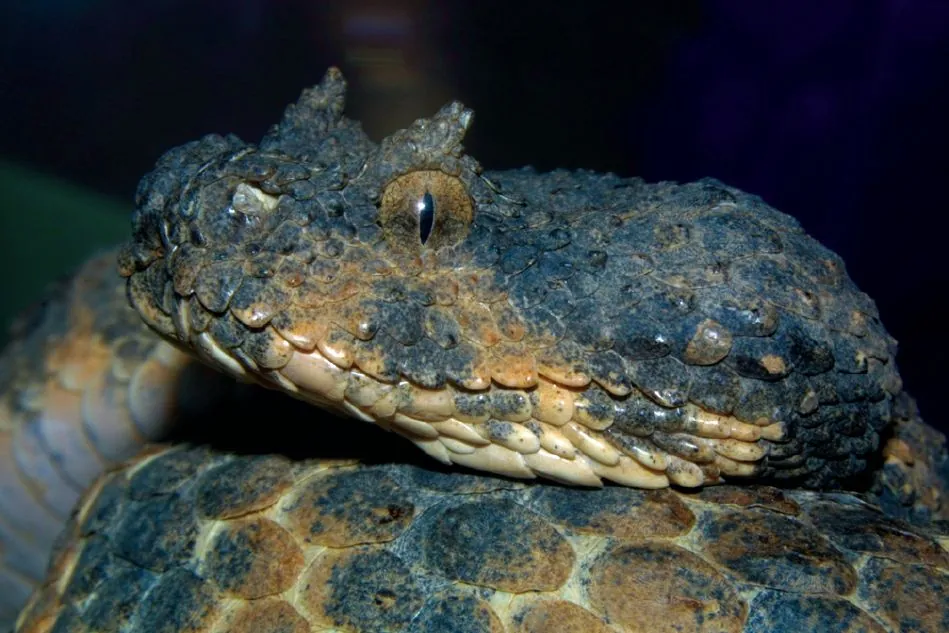
The Persian horned viper is a venomous viper with horn-like scales above each eye. It lives in deserts and hill country in the Middle East and parts of Asia, and it is mostly active at night. Its venom causes strong bleeding, and no specific antivenom is available for its bites.1



 ඒක හඳුනාගන්නේ කොහොමද
- A broad, flat head that is clearly distinct from the neck1
- A horn-like structure of small scales above each eye, also present in juveniles1
- A short tail1
- Body scales with keels that often end in a bump or a point1
- Slow-moving and almost entirely nocturnal, so usually seen at night or in the early evening during colder periods1
විෂ බලය
දෂ්ට කරනකොට විෂ එළියට එන්නේ ඒකේ දළ හෝ දත් හරහා.
ඒකේ විදින විෂ කරන්නේ මොකක්ද?
Its venom has strong haemorrhagic activity, which means it causes bleeding by damaging blood vessels, as is typical of most vipers. No specific antivenom is available for its bites. A polyvalent antiserum, which is made to work against several snake species, is reported to offer some protection.1
ඒක මිනිසුන්ට කොච්චර භයානකද?
මිනිසුන්ට ඇති අනතුර: බරපතළදෂ්ට කිරීමකට වෛද්යවරයෙක් අවශ්යයි. මරණ ඉතාම කලාතුරකින්.බය වුණාම ඒක කරන්නේ මොකක්ද?
It is not particularly aggressive, but it will hiss loudly when disturbed.1
 දෂ්ට කළොත්
- පුද්ගලයාව නොසෙල්වී සහ සන්සුන්ව තියන්න, දෂ්ට කළ අත හෝ කකුල හදවතේ මට්ටමේ තියන්න, මුදු සහ තද දේවල් ගලවන්න, ඉක්මනින් රෝහලකට ගෙනියන්න.
හැම විටම මුලින්ම ඔයාගේ හදිසි අංකයට කතා කරන්න (112, 000, 911). මෙය සාමාන්ය ප්රථමාධාර මඟපෙන්වීමක් මිස වෛද්ය උපදෙස් නොවේ. මූලික ප්රථමාධාර
 ආරක්ෂිතව ඉන්න
- වන සතෙක්ව කවදාවත් ස්පර්ශ කරන්න, අල්ලන්න හෝ කරදර කරන්න එපා, ඒක පුංචි වුණත්, ඒක නිදාගෙන හෝ මැරිලා වගේ පෙනුනත්.
- ඒකට ඉඩ දෙන්න. එකක් හමු වුණොත්, සන්සුන්ව ඉඳලා, හෙමින් පස්සට යන්න, ඒකට තමන්ගේ පාරේ යන්න ඉඩ දෙන්න.
- එකක් ඔයාට දෂ්ට කළොත්: සන්සුන්ව ඉන්න, නොසෙල්වී ඉන්න, ඔයාගේ හදිසි අංකයට (112, 000, 911) කතා කරන්න, නැත්නම් ඉක්මනින් රෝහලකට යන්න. ඒක පෙනුනේ කොහොමද කියලා මතක තියාගන්න, ෆොටෝ එකක් උදව් වෙනවා.
ඒක ඔයාව අල්ලන්න එන්නේ නැහැ. ඒක විෂ පාවිච්චි කරන්නේ කෑම අල්ලගන්න හෝ තමන්ව ආරක්ෂා කරගන්න, ඒකට හැංගෙන්න තමයි වඩා කැමති. ආරක්ෂිතව ඉන්න ගැන තව
ඒක කොච්චර ලොකුද?
ඒක කොච්චර දිගද?
ඒක කොච්චර බරද?
 ගෙදර පූසන් 2ක් නාසයේ සිට වලිගය දක්වා පේළියට තිබ්බා තරම් දිගයි
 කෙසෙල් ගෙඩි 6ක් එක පිට එක තිබ්බා තරම් දිගයි
 මීටර් 100ක් තත්පර 110කින් යන්න පුළුවන් (වේගවත්ම මිනිසාට තත්පර 9.6ක් ඕන)
Persian horned viper ඔයාට සාපේක්ෂව කොච්චර ලොකුද?
ඔයාගේ බ්රවුසරයේ ගණිතය විතරයි. කිසිම දෙයක් සේව් වෙන්නේවත් කොහේවත් යවන්නේවත් නැහැ.
ඒක කොච්චර වේගවත්ද?


කරුණු
Unlike the sand-dwelling Cerastes vipers, it cannot sink into sand vertically.1
It moves by sidewinding, serpentine and rectilinear movement, depending on the situation.1
It can attain a considerable weight for its size, with some specimens exceeding 500 g.1
Its horn-like scales are present even in young snakes.1
Females are usually larger than males.1
කරුණු එන්නේ කොහෙන්ද
- Persian horned viper (Wikipedia (CC BY-SA 4.0))
- Pseudocerastes persicus (iNaturalist): නම් සහ වර්ගීකරණය.
- Venom Wiki: අනතුරු මට්ටම, සාමාන්ය ප්රමාණය සහ වේග අනුමානය අපේම ඒවා. අපි ඒවා ගණනය කරන හැටි බලන්න: අපි අනතුර ශ්රේණිගත කරන හැටි.
මේ පිටුවේ හැම කරුණකටම ඒකේ මූලාශ්රයට යොමු කරන අංකයක් තියෙනවා. අපි මොනවහරි වැරදියට කිව්වා නම්, සමාවෙන්න, අපි සත්ව ලෝලීන් මිසක් විද්යා සඟරාවක් නෙවෙයි. [email protected] වෙත අපිට කියන්න, අපි ඒක හදන්නම්.
 ගෝනුස්සාට බඩගිනියි! Venom Wiki එක පුද්ගලයෙකුගේ ව්යාපෘතියක්: නොමිලේ, දැන්වීම් නැහැ, ට්රැකර් නැහැ. පුංචි ටිප් එකක් ඒක ඔන්ලයින් තියන්න උදව් වෙනවා.ගෝනුස්සාට කන්න දෙන්න
 Indian saw-scaled viper
 Puff adder
 තිත් පොළඟා
 Common European adder
 Eastern Russell's viper
 Northeast African carpet viper
 Deathstalker
 Indian cobra
 King cobra
 Asian giant hornet
 Komodo dragon
 Spanish fly