
 අප්රිකාව
 ආසියාව
 යුරෝපය
 දකුණු ඇමෙරිකාව
 ඕස්ට්රේලියාව සහ ඕෂනියාව
 ඇන්ටාක්ටිකාව
 පැසිෆික් සාගරය
 අත්ලාන්තික් සාගරය
 ඉන්දියන් සාගරය
 ආක්ටික් සාගරය
 මධ්යධරණී මුහුද
 රතු මුහුද
 කැරිබියන් මුහුද
 කොරල් මුහුද
 දකුණු චීන මුහුද
 පිලිපීන මුහුද
 අන්දමන් මුහුද
 උතුරු මුහුද
 ටිමෝර් සහ අරෆුරා මුහුද
 බෙංගාල බොක්ක
 කැලිෆෝනියා බොක්ක
Savigny's long-spined urchin
 විෂ කටු
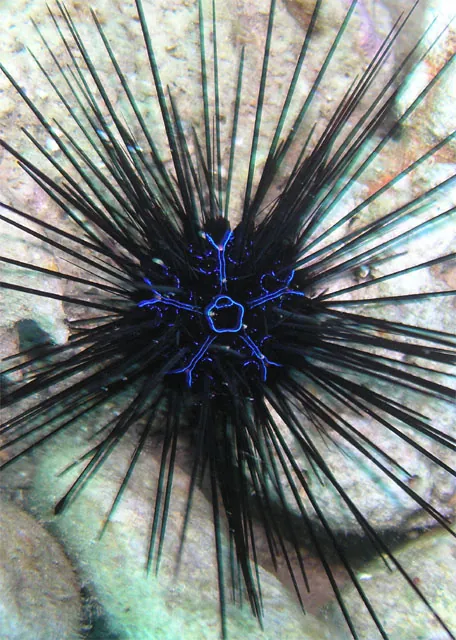
Savigny's long-spined urchin is a spiny sea animal that lives on reefs and in shallow lagoons. It has very long, thin spines that can grow up to 25 cm, and it comes out at night to graze on algae. Its spines are the part that can hurt people, so it is worth giving it plenty of room.1


 ඒක හඳුනාගන්නේ කොහොමද
- Usually black, with a rounded body (called a test) up to about 9 cm across1
- Long, thin, hollow spines that grow in tufts and can reach 25 cm; they are usually black but can be grey, dark brown or purple1
- Juveniles may have bands of lighter and darker shades, and the occasional individual is completely white1
- Iridescent green or blue lines around the interambulacral areas and around the periproct (the cone-shaped region surrounding the anus)1
බොහෝ විට පටලවා ගන්නේ: It is very similar to Diadema setosum, which shares much of its range and often lives in the same groups. Savigny's long-spined urchin lacks the thin orange ring around the periproct that Diadema setosum has.1
විෂ බලය
තියුණු කටුවල විෂ තියෙනවා. ඒක පෑගුවොත් හෝ අල්ලගත්තොත් රිදෙනවා.
ඒක මිනිසුන්ට කොච්චර භයානකද?
මිනිසුන්ට ඇති අනතුර: වේදනාකාරීඇත්තටම රිදෙන්න පුළුවන්, නමුත් බරපතළ වෙන්නේ නැති තරම්.බය වුණාම ඒක කරන්නේ මොකක්ද?
When a shadow falls on it, it angles its spines towards the possible attacker.1
 ඒකේ කටු ඔයාට ඇනුණොත්
- තුවාලය උණු වතුරේ දාන්න, පිළිස්සෙන්නේ නැතුව පුද්ගලයාට ඉවසන්න පුළුවන් තරම් උණුවට, කටු ඉවත් කරන්න වෛද්ය උදව් ගන්න. ඒවා ඔයාම හාරලා ගන්න එපා.
හැම විටම මුලින්ම ඔයාගේ හදිසි අංකයට කතා කරන්න (112, 000, 911). මෙය සාමාන්ය ප්රථමාධාර මඟපෙන්වීමක් මිස වෛද්ය උපදෙස් නොවේ. මූලික ප්රථමාධාර
 ආරක්ෂිතව ඉන්න
- වන සතෙක්ව කවදාවත් ස්පර්ශ කරන්න, අල්ලන්න හෝ කරදර කරන්න එපා, ඒක පුංචි වුණත්, ඒක නිදාගෙන හෝ මැරිලා වගේ පෙනුනත්.
- ඒකට ඉඩ දෙන්න. එකක් හමු වුණොත්, සන්සුන්ව ඉඳලා, හෙමින් පස්සට යන්න, ඒකට තමන්ගේ පාරේ යන්න ඉඩ දෙන්න.
- ඒකේ කටු ඔයාට ඇනුණොත්: සන්සුන්ව ඉන්න, නොසෙල්වී ඉන්න, ඔයාගේ හදිසි අංකයට (112, 000, 911) කතා කරන්න, නැත්නම් ඉක්මනින් රෝහලකට යන්න. ඒක පෙනුනේ කොහොමද කියලා මතක තියාගන්න, ෆොටෝ එකක් උදව් වෙනවා.
ඒක ඔයාව අල්ලන්න එන්නේ නැහැ. ඒක විෂ පාවිච්චි කරන්නේ කෑම අල්ලගන්න හෝ තමන්ව ආරක්ෂා කරගන්න, ඒකට හැංගෙන්න තමයි වඩා කැමති. ආරක්ෂිතව ඉන්න ගැන තව
ලෝකයේ කොහෙද?
ඒක කොච්චර ලොකුද?
ඒක කොච්චර දිගද?
 සෙල්ලම් බිල්ඩිං බ්ලොක් 3ක් පේළියට තිබ්බා තරම් දිගයි
 වත්තේ ගොළුබෙල්ලෙකුටත් වඩා හෙමින්
Savigny's long-spined urchin ඔයාට සාපේක්ෂව කොච්චර ලොකුද?
ඔයාගේ බ්රවුසරයේ ගණිතය විතරයි. කිසිම දෙයක් සේව් වෙන්නේවත් කොහේවත් යවන්නේවත් නැහැ.
ඒක කොච්චර වේගවත්ද?


කරුණු
Its spines are brittle, thin and hollow, and grow in tufts that can be as long as 25 cm.1
Small fish such as cardinal fish, flatworms and shrimps sometimes shelter among its long spines.1
It spawns just after the full moon, while its close relative Diadema setosum mostly spawns around days eight to ten of the lunar cycle, which keeps the two species from interbreeding.1
Its grazing helps control algae, which might otherwise smother corals.1
It is nocturnal, hiding in crevices or under boulders by day, though several individuals sometimes huddle together in the open.1
Its predators include pufferfish, porcupinefish, lobsters and snails.1
විෂ විශේෂඥයන් සඳහා
- විද්යාත්මක නාමය
- Diadema savignyi
- කාණ්ඩය
- ඉත්තෑවෝ, තරු මාළුවෝ සහ පණුවෝ
- පවුල
- Diadematidae2
- පිළිවෙළ
- Diadematoida
- මහාද්වීප
- ඉන්දියන් සාගරය, පැසිෆික් සාගරය, රතු මුහුද, අරාබි මුහුද සහ පර්සියානු බොක්ක, ටිමෝර් සහ අරෆුරා මුහුද, බෙංගාල බොක්ක, සාගර
- බබාලා
- It does not have live young. Instead it releases eggs and sperm into the water (spawning), mainly during the north-east monsoon period, peaking in May, and timed to the lunar cycle.1
- මිනිසුන්ට ඇති අනතුර
- 2 / 5: වේදනාකාරී3
කරුණු එන්නේ කොහෙන්ද
- Diadema savignyi (Wikipedia (CC BY-SA 4.0))
- Diadema savignyi (iNaturalist): නම් සහ වර්ගීකරණය.
- Venom Wiki: අනතුරු මට්ටම, සාමාන්ය ප්රමාණය සහ වේග අනුමානය අපේම ඒවා. අපි ඒවා ගණනය කරන හැටි බලන්න: අපි අනතුර ශ්රේණිගත කරන හැටි.
මේ පිටුවේ හැම කරුණකටම ඒකේ මූලාශ්රයට යොමු කරන අංකයක් තියෙනවා. අපි මොනවහරි වැරදියට කිව්වා නම්, සමාවෙන්න, අපි සත්ව ලෝලීන් මිසක් විද්යා සඟරාවක් නෙවෙයි. [email protected] වෙත අපිට කියන්න, අපි ඒක හදන්නම්.
 ගෝනුස්සාට බඩගිනියි! Venom Wiki එක පුද්ගලයෙකුගේ ව්යාපෘතියක්: නොමිලේ, දැන්වීම් නැහැ, ට්රැකර් නැහැ. පුංචි ටිප් එකක් ඒක ඔන්ලයින් තියන්න උදව් වෙනවා.ගෝනුස්සාට කන්න දෙන්න
එම කාණ්ඩයෙන් තව: ඉත්තෑවෝ, තරු මාළුවෝ සහ පණුවෝ
 Crown-of-thorns starfishඉත්තෑවෝ, තරු මාළුවෝ සහ පණුවෝදොස්තර කෙනෙක් ඕනෑඅල්ලන්න එපා
 Flower urchinඉත්තෑවෝ, තරු මාළුවෝ සහ පණුවෝමරන්න පුළුවන්
 Fire urchinඉත්තෑවෝ, තරු මාළුවෝ සහ පණුවෝදොස්තර කෙනෙක් ඕනෑඅල්ලන්න එපා
 Bearded firewormඉත්තෑවෝ, තරු මාළුවෝ සහ පණුවෝරිදෙනවා විතරයිඅල්ලන්න එපා
 Black long-spined urchinඉත්තෑවෝ, තරු මාළුවෝ සහ පණුවෝරිදෙනවා විතරයිඅල්ලන්න එපා
 Bloodwormඉත්තෑවෝ, තරු මාළුවෝ සහ පණුවෝරිදෙනවා විතරයි
ජීවත් වන වෙනත් තැන්: ඉන්දියන් සාගරය
 Australian box jellyfishජෙලිෆිෂ් සහ මුහුදු ඇනුම් සතුන්මාරාන්තිකඅල්ලන්න එපා
 Geography coneකේතු ගොළුබෙල්ලෝ සහ බූවල්ලෝමාරාන්තික
 Greater blue-ringed octopusකේතු ගොළුබෙල්ලෝ සහ බූවල්ලෝමාරාන්තික
 Southern blue-ringed octopusකේතු ගොළුබෙල්ලෝ සහ බූවල්ලෝමාරාන්තික
 Hawksbill sea turtleවෙනත් විෂ සහිත සතුන්මරන්න පුළුවන්
 Irukandji jellyfishජෙලිෆිෂ් සහ මුහුදු ඇනුම් සතුන්මරන්න පුළුවන්අල්ලන්න එපා