
 අප්රිකාව
 ආසියාව
 යුරෝපය
 දකුණු ඇමෙරිකාව
 ඕස්ට්රේලියාව සහ ඕෂනියාව
 ඇන්ටාක්ටිකාව
 පැසිෆික් සාගරය
 අත්ලාන්තික් සාගරය
 ඉන්දියන් සාගරය
 ආක්ටික් සාගරය
 මධ්යධරණී මුහුද
 රතු මුහුද
 කැරිබියන් මුහුද
 කොරල් මුහුද
 දකුණු චීන මුහුද
 පිලිපීන මුහුද
 අන්දමන් මුහුද
 උතුරු මුහුද
 ටිමෝර් සහ අරෆුරා මුහුද
 බෙංගාල බොක්ක
 කැලිෆෝනියා බොක්ක
Snakelocks anemone
 ඇනුම් ස්පර්ශක
The snakelocks anemone is a sea anemone, a soft animal that looks like a flower and sticks to rocks under the water. It lives in the eastern Atlantic Ocean and the Mediterranean Sea, and it is most often found in sunny pools. Its tentacles are venomous, so it is best looked at and never touched.1
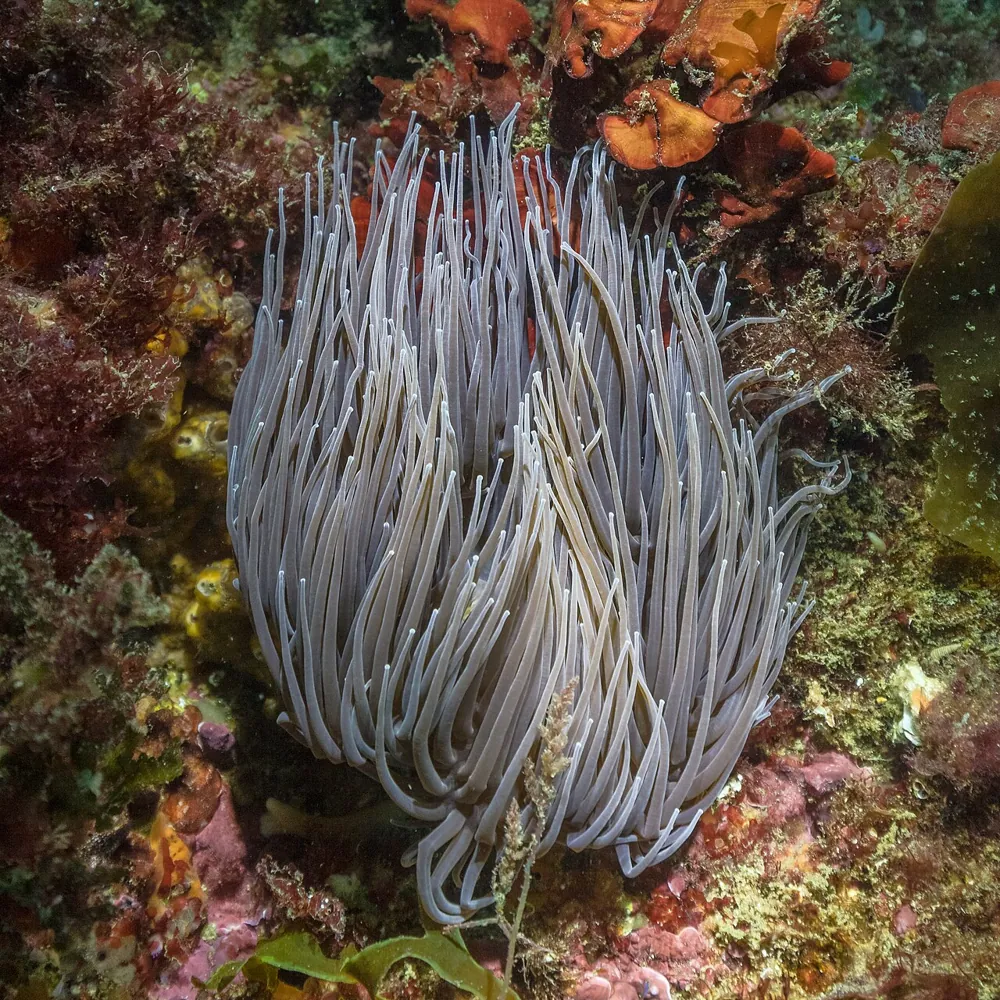
 ඒක හඳුනාගන්නේ කොහොමද
විෂ බලය
යමක් ස්පර්ශ වූ විට පුංචි ඇනුම් සෛල දහස් ගණනක් විදිනවා.
ඒකේ විදින විෂ කරන්නේ මොකක්ද?
Its tentacles are venomous. It has urticant properties, meaning it can cause a stinging, nettle-like reaction.1
ඒක මිනිසුන්ට කොච්චර භයානකද?
මිනිසුන්ට ඇති අනතුර: වේදනාකාරීඇත්තටම රිදෙන්න පුළුවන්, නමුත් බරපතළ වෙන්නේ නැති තරම්. ඇන්නොත්
- වතුරෙන් එළියට ඇවිත් ඇලී ඇති ස්පර්ශක (අත්වැසුම් හෝ රෙද්දක් පාවිච්චි කරලා) ගලවා දමන්න.
- නිවර්තන බොක්ස් ජෙලිෆිෂ් සඳහා: ඇනුම් මත අවම වශයෙන් තත්පර 30ක් විනාකිරි වත් කරන්න, උදව් ඉල්ලන්න, CPR (හෘද පෙනහළු පුනර්ජීවනය) කරන්න සූදානම්ව ඉන්න. බ්ලූබොටල් සහ අනිත් බොහෝ ඒවා සඳහා: මුහුදු වතුරෙන් සෝදලා, ඊට පස්සේ වේදනාවට උණු වතුර දාන්න.
හැම විටම මුලින්ම ඔයාගේ හදිසි අංකයට කතා කරන්න (112, 000, 911). මෙය සාමාන්ය ප්රථමාධාර මඟපෙන්වීමක් මිස වෛද්ය උපදෙස් නොවේ. මූලික ප්රථමාධාර
 ආරක්ෂිතව ඉන්න
- වන සතෙක්ව කවදාවත් ස්පර්ශ කරන්න, අල්ලන්න හෝ කරදර කරන්න එපා, ඒක පුංචි වුණත්, ඒක නිදාගෙන හෝ මැරිලා වගේ පෙනුනත්.
- ඒකට ඉඩ දෙන්න. එකක් හමු වුණොත්, සන්සුන්ව ඉඳලා, හෙමින් පස්සට යන්න, ඒකට තමන්ගේ පාරේ යන්න ඉඩ දෙන්න.
- එකක් ඔයාට ඇන්නොත්: සන්සුන්ව ඉන්න, නොසෙල්වී ඉන්න, ඔයාගේ හදිසි අංකයට (112, 000, 911) කතා කරන්න, නැත්නම් ඉක්මනින් රෝහලකට යන්න. ඒක පෙනුනේ කොහොමද කියලා මතක තියාගන්න, ෆොටෝ එකක් උදව් වෙනවා.
ඒක ඔයාව අල්ලන්න එන්නේ නැහැ. ඒක විෂ පාවිච්චි කරන්නේ කෑම අල්ලගන්න හෝ තමන්ව ආරක්ෂා කරගන්න, ඒකට හැංගෙන්න තමයි වඩා කැමති. ආරක්ෂිතව ඉන්න ගැන තව
ලෝකයේ කොහෙද?
ඒක කොච්චර ලොකුද?
ඒක කොච්චර දිගද?
 සෙල්ලම් බිල්ඩිං බ්ලොක් 5ක් පේළියට තිබ්බා තරම් දිගයි
 වත්තේ ගොළුබෙල්ලෙකුටත් වඩා හෙමින්
Snakelocks anemone ඔයාට සාපේක්ෂව කොච්චර ලොකුද?
ඔයාගේ බ්රවුසරයේ ගණිතය විතරයි. කිසිම දෙයක් සේව් වෙන්නේවත් කොහේවත් යවන්නේවත් නැහැ.
ඒක කොච්චර වේගවත්ද?

,_Parque_natural_de_la_Arr%C3%A1bida,_Portugal,_2020-07-21,_DD_07.jpg)
කරුණු
In southwestern Spain it is eaten as ortiguillas de mar, meaning 'little sea nettles'. The whole animal is marinated in vinegar, battered and deep-fried.1
Its green colour comes from green fluorescent protein, a protein also found in corals and other sea anemones.1
Small animals live among its venomous tentacles because the tentacles give them protection from predators.1
Its tissue contains algae called zooxanthellae, which it needs for long-term survival.1
Unlike jellyfish, it never has a free-swimming medusa stage in its life cycle.1
In Sardinia it is also deep-fried and eaten, where it is known as triads.1
මිථ්යා බිඳින්නා
මිථ්යාව: Its green colour comes from algae living in its tentacles.
ඇත්ත: Algae are present, but the green colour is the result of green fluorescent protein.1
විෂ විශේෂඥයන් සඳහා
- විද්යාත්මක නාමය
- Anemonia viridis
- කාණ්ඩය
- ජෙලිෆිෂ් සහ මුහුදු ඇනුම් සතුන්
- පවුල
- Actiniidae2
- පිළිවෙළ
- Actiniaria
- මහාද්වීප
- මධ්යධරණී මුහුද, අත්ලාන්තික් සාගරය, සාගර
- බබාලා
- It produces eggs and sperm from its polyp body. A fertilised egg develops into a larva called a planula, which grows directly into a new polyp, with no free-swimming jellyfish stage.1
- මිනිසුන්ට ඇති අනතුර
- 2 / 5: වේදනාකාරී3
කරුණු එන්නේ කොහෙන්ද
- Snakelocks anemone (Wikipedia (CC BY-SA 4.0))
- Anemonia viridis (iNaturalist): නම් සහ වර්ගීකරණය.
- Venom Wiki: අනතුරු මට්ටම, සාමාන්ය ප්රමාණය සහ වේග අනුමානය අපේම ඒවා. අපි ඒවා ගණනය කරන හැටි බලන්න: අපි අනතුර ශ්රේණිගත කරන හැටි.
මේ පිටුවේ හැම කරුණකටම ඒකේ මූලාශ්රයට යොමු කරන අංකයක් තියෙනවා. අපි මොනවහරි වැරදියට කිව්වා නම්, සමාවෙන්න, අපි සත්ව ලෝලීන් මිසක් විද්යා සඟරාවක් නෙවෙයි. [email protected] වෙත අපිට කියන්න, අපි ඒක හදන්නම්.
 ගෝනුස්සාට බඩගිනියි! Venom Wiki එක පුද්ගලයෙකුගේ ව්යාපෘතියක්: නොමිලේ, දැන්වීම් නැහැ, ට්රැකර් නැහැ. පුංචි ටිප් එකක් ඒක ඔන්ලයින් තියන්න උදව් වෙනවා.ගෝනුස්සාට කන්න දෙන්න
එම කාණ්ඩයෙන් තව: ජෙලිෆිෂ් සහ මුහුදු ඇනුම් සතුන්
 Australian box jellyfishජෙලිෆිෂ් සහ මුහුදු ඇනුම් සතුන්මාරාන්තිකඅල්ලන්න එපා
 Irukandji jellyfishජෙලිෆිෂ් සහ මුහුදු ඇනුම් සතුන්මරන්න පුළුවන්අල්ලන්න එපා
 Portuguese man o' warජෙලිෆිෂ් සහ මුහුදු ඇනුම් සතුන්දොස්තර කෙනෙක් ඕනෑඅල්ලන්න එපා
 Lion's mane jellyfishජෙලිෆිෂ් සහ මුහුදු ඇනුම් සතුන්රිදෙනවා විතරයිඅල්ලන්න එපා
 Moon jellyfishජෙලිෆිෂ් සහ මුහුදු ඇනුම් සතුන්හානියක් නැති
 Common kingslayerජෙලිෆිෂ් සහ මුහුදු ඇනුම් සතුන්මරන්න පුළුවන්අල්ලන්න එපා
ජීවත් වන වෙනත් තැන්: මධ්යධරණී මුහුද
 Common octopusකේතු ගොළුබෙල්ලෝ සහ බූවල්ලෝහානියක් නැති
 Silver-cheeked toadfishවෙනත් විෂ සහිත සතුන්මාරාන්තික
 Common stingrayවිෂ විදින මාළුවන්දොස්තර කෙනෙක් ඕනෑ
 Greater weeverවිෂ විදින මාළුවන්දොස්තර කෙනෙක් ඕනෑඅල්ලන්න එපා
 Lesser weeverවිෂ විදින මාළුවන්දොස්තර කෙනෙක් ඕනෑඅල්ලන්න එපා
 Red scorpionfishවිෂ විදින මාළුවන්දොස්තර කෙනෙක් ඕනෑඅල්ලන්න එපා