
 Afrika
 Ázia
Ázia Európa
 Južná Amerika
 Austrália a Oceánia
 Antarktída
 Tichý oceán
 Atlantický oceán
 Indický oceán
 Severný ľadový oceán
 Stredozemné more
 Červené more
 Karibské more
 Koralové more
 Juhočínske more
 Filipínske more
 Andamanské more
 Severné more
 Timorské a Arafurské more
 Bengálsky záliv
 Kalifornský záliv
Bald-faced hornet
 Bodnutia
The bald-faced hornet is a wasp with a striking black and white body and a white face. It builds large, hanging paper nests in trees and bushes across North America. Its workers will defend the nest by stinging repeatedly, so it is important to keep well away from its nests.1



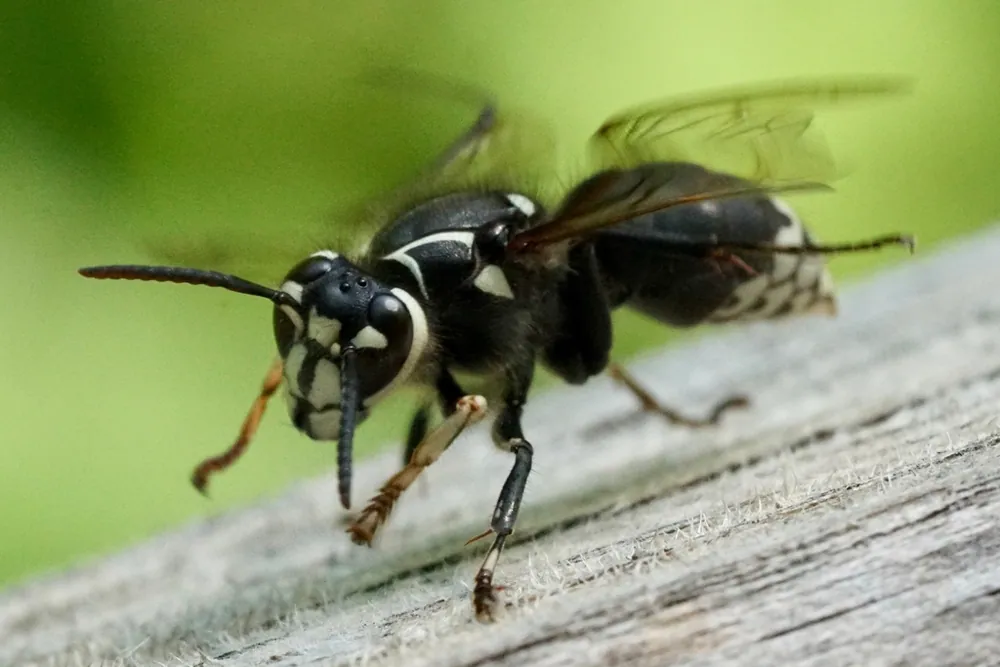
 Ako ho spoznať
- Black and white colouring, unlike other yellowjackets of its genus, which are mostly black and yellow1
- A white or "bald" face1
- Three white stripes at the end of the body1
- Adults average about 19 mm long, larger than other Dolichovespula species1
- A large, egg-shaped, grey paper nest that hangs from trees or bushes, up to 58 cm long1
Často sa zamieňa s: Other Dolichovespula wasps are mostly black and yellow. The bald-faced hornet's black and white colouring and white face set it apart. It is not one of the true hornets, which belong to the genus Vespa.1
Sila jedu
Jed vychádza cez žihadlo.
Čo robí jeho jed?
Workers can squirt venom from the stinger into the eyes of animals that intrude on the nest. The venom makes the eyes water immediately and causes temporary blindness.1
Aké nebezpečné je pre ľudí?
Nebezpečenstvo pre ľudí: BolestivéMôže to poriadne bolieť, ale skoro nikdy to nie je vážne.It is aggressive when defending its nest. Workers sting repeatedly, and colonies can have 400 to 700 workers. The risk is highest when people walk too close to a nest or when a nest is built near homes.1
Čo robí, keď sa bojí?
Workers defend the nest by stinging repeatedly and can squirt venom into the eyes of intruders.1
 Ak bodne
- Vyškrab včelie žihadlo a schlaď to miesto.
- Ak má postihnutý problémy s dýchaním, opuchnutú tvár alebo hrdlo, alebo sa cíti na odpadnutie, ide o alergickú núdzovú situáciu: zavolaj na tiesňovú linku a použi jeho adrenalínový autoinjektor, ak ho má.
Vždy najprv zavolaj na tiesňovú linku (112, 000, 911). Toto sú všeobecné rady prvej pomoci, nie lekárska rada. Základy prvej pomoci
 Buď v bezpečí
- Nikdy sa nedotýkaj divého zvieraťa, nechytaj ho ani ho nedráždi, aj keď je malé a aj keď vyzerá, že spí alebo je mŕtve.
- Nechaj mu priestor. Ak nejaké stretneš, zostaň pokojný, pomaly cúvni a nechaj ho ísť svojou cestou.
- Ak ťa bodne: zostaň pokojný, nehýb sa, zavolaj na tiesňovú linku (112, 000, 911) alebo sa rýchlo dostaň do nemocnice. Zapamätaj si, ako vyzeralo, fotka pomôže.
Nejde po tebe. Jed používa na chytanie potravy alebo na obranu a oveľa radšej sa schová. Viac o tom, ako zostať v bezpečí
Aké je veľké?
Aké je dlhé?
 kratšie ako tvoj malíček
 by preletelo celé futbalové ihrisko za 15 sekúnd
Aký veľký je Bald-faced hornet v porovnaní s TEBOU?
Iba matematika v tvojom prehliadači. Nič sa neukladá ani nikam neposiela.
Aké je rýchle?


Fakty
It can spray venom from its stinger into the eyes of nest intruders, causing temporary blindness.1
Its colony can have 400 to 700 workers, the largest recorded colony size in its genus, Dolichovespula.1
Female bee moths can lay eggs in its nests, and the hatched larvae feed on the eggs, larvae and pupae inside, sometimes destroying large parts of the nest.1
Its nests are made from chewed wood fibres mixed with saliva, which dries into a papery structure.1
A colony lasts about 4 months in Washington, from mid-May to mid-September. Colonies in lower latitudes last longer.1
Lovec mýtov
Mýtus: It is a true hornet.
Pravda: It is a yellowjacket wasp. True hornets belong to the genus Vespa.1
Pre znalcov jedov
- Vedecký názov
- Dolichovespula maculata
- Skupina
- Včely, osy a sršne
- Rodina
- Vespidae2
- Rad
- Hymenoptera
- Kontinenty
- Severná Amerika
- Mláďatá
- A single queen starts each new nest in spring, laying eggs that hatch into workers, and later lays eggs that become males and new queens.1
- Nebezpečenstvo pre ľudí
- 2 / 5: Bolestivé3
Odkiaľ sú fakty
- Dolichovespula maculata (Wikipedia (CC BY-SA 4.0))
- Dolichovespula maculata (iNaturalist): mená a klasifikácia.
- Venom Wiki: úroveň nebezpečenstva, typická veľkosť a odhad rýchlosti sú naše vlastné. Pozri, ako ich určujeme: Ako hodnotíme nebezpečenstvo.
Každý fakt na tejto stránke má číslo, ktoré ukazuje na jeho zdroj. Ak sme sa v niečom pomýlili, prepáč, sme fanúšikovia zvierat, nie vedecký časopis. Napíš nám na [email protected] a opravíme to.
 Škorpión je hladný! Venom Wiki je projekt jedného človeka: zadarmo, bez reklám a bez sledovania. Malý príspevok pomôže udržať ho online.Nakŕm škorpióna
 Tarantula hawk
 Executioner wasp
 Warrior wasp
 Cow killer velvet ant
 Eastern cicada killer
 Aerial yellowjacket
 Kopijovec drsný
 Eastern coral snake
 Eastern diamondback rattlesnake
 Eyelash viper
 Timber rattlesnake
 Western diamondback rattlesnake