
 Afrika
 Ázia
Ázia Európa
 Južná Amerika
 Austrália a Oceánia
 Antarktída
 Tichý oceán
 Atlantický oceán
 Indický oceán
 Severný ľadový oceán
 Stredozemné more
 Červené more
 Karibské more
 Koralové more
 Juhočínske more
 Filipínske more
 Andamanské more
 Severné more
 Timorské a Arafurské more
 Bengálsky záliv
 Kalifornský záliv
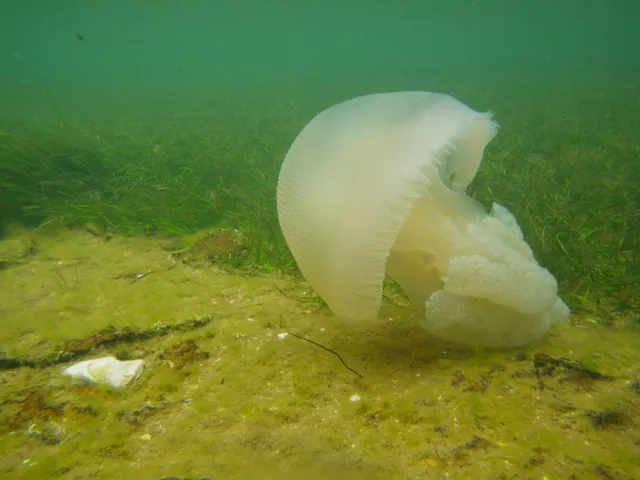
Blue blubber jellyfish
 Pŕhlivé chápadlá
The blue blubber jellyfish is a large, rounded jellyfish that lives along the coast of Eastern Australia. It is blue to purple and pulses slowly as it swims. Its arms carry stings, and it can form huge blooms in estuaries and shallow bays.1


 Ako ho spoznať
- Colour ranges from light blue to dark blue or purple.1
- Large, rounded bell, about 25 to 30 cm across.1
- The bell pulses in a rapid, staccato rhythm.1
- Found along the Eastern Australian coast, often in large numbers.1
Často sa zamieňa s: Two forms are recognised on the Eastern Australian coast. Catostylus mosaicus mosaicus, found in New South Wales and southern Queensland, has small or no papillae (small projections) and a larger bell. Catostylus mosaicus conservitus, found in the Bass Strait, has clear papillae, is blue or white, and has a smaller bell.1
Sila jedu
Tisíce malinkých pŕhlivých buniek vystrelia, keď sa ich niečo dotkne.
Čo robí jeho jed?
Its arms carry stinging cells and can produce a mild but irritating sting. The sting is described as mild, and no further effects on the body are described.1
Aké nebezpečné je pre ľudí?
Nebezpečenstvo pre ľudí: BolestivéMôže to poriadne bolieť, ale skoro nikdy to nie je vážne.Its sting is described as mild but irritating. The main problem is the large blooms, which can interrupt recreation in coastal areas.1
Čo robí, keď sa bojí?
Its stinging cells on the arms are used to defend it from threats.1
 Ak bodne
- Vylez z vody a odstráň zvyšné chápadlá (v rukaviciach alebo cez látku).
- Pri tropických štvorhrankách: polievaj zasiahnuté miesta octom aspoň 30 sekúnd, zavolaj pomoc a buď pripravený na oživovanie (KPR). Pri portugalských vojnových lodiach a väčšine ostatných: opláchni morskou vodou a potom daj na bolesť horúcu vodu.
Vždy najprv zavolaj na tiesňovú linku (112, 000, 911). Toto sú všeobecné rady prvej pomoci, nie lekárska rada. Základy prvej pomoci
 Buď v bezpečí
- Nikdy sa nedotýkaj divého zvieraťa, nechytaj ho ani ho nedráždi, aj keď je malé a aj keď vyzerá, že spí alebo je mŕtve.
- Nechaj mu priestor. Ak nejaké stretneš, zostaň pokojný, pomaly cúvni a nechaj ho ísť svojou cestou.
- Ak ťa bodne: zostaň pokojný, nehýb sa, zavolaj na tiesňovú linku (112, 000, 911) alebo sa rýchlo dostaň do nemocnice. Zapamätaj si, ako vyzeralo, fotka pomôže.
Nejde po tebe. Jed používa na chytanie potravy alebo na obranu a oveľa radšej sa schová. Viac o tom, ako zostať v bezpečí
Kde na svete?
Aké je veľké?
Aké je dlhé?
 dlhé ako 9 kociek stavebnice v rade
Aký veľký je Blue blubber jellyfish v porovnaní s TEBOU?
Iba matematika v tvojom prehliadači. Nič sa neukladá ani nikam neposiela.
Aké je rýchle?


Fakty
Its stinging venom is being studied for possible anticancer effects against lung cancer cells in laboratory research.1
It is harvested for food and is considered a delicacy in some countries, including China and Japan.1
A small copepod lives on its oral arms and is thought to feed on mucus the jellyfish produces.1
Blooms can be very dense, and they can take food away from other animals such as fish.1
Sea turtles and jellyfish-eating fish, including tuna, butterfish, sunfish and spiny dogfish, prey on it.1
It has a partnership with photosynthetic algae, though it has less of these algae than many other jellyfish.1
Pre znalcov jedov
- Vedecký názov
- Catostylus mosaicus
- Skupina
- Medúzy a morskí pŕhlivci
- Rodina
- Catostylidae2
- Rad
- Rhizostomeae
- Kontinenty
- Indický oceán, Tichý oceán, Koralové more, Oceány
- Mláďatá
- Fertilised eggs develop into free-swimming planula larvae, which settle on the seabed and grow into a polyp stage. The polyp then produces young jellyfish (ephyrae), which mature into the free-swimming medusa.1
- Nebezpečenstvo pre ľudí
- 2 / 5: Bolestivé3
Odkiaľ sú fakty
- Jelly blubber (Wikipedia (CC BY-SA 4.0))
- Catostylus mosaicus (iNaturalist): mená a klasifikácia.
- Venom Wiki: úroveň nebezpečenstva, typická veľkosť a odhad rýchlosti sú naše vlastné. Pozri, ako ich určujeme: Ako hodnotíme nebezpečenstvo.
Každý fakt na tejto stránke má číslo, ktoré ukazuje na jeho zdroj. Ak sme sa v niečom pomýlili, prepáč, sme fanúšikovia zvierat, nie vedecký časopis. Napíš nám na [email protected] a opravíme to.
 Škorpión je hladný! Venom Wiki je projekt jedného človeka: zadarmo, bez reklám a bez sledovania. Malý príspevok pomôže udržať ho online.Nakŕm škorpióna
Viac z tej istej skupiny: Medúzy a morskí pŕhlivci
 Štvorhranka FleckerovaMedúzy a morskí pŕhlivciSmrteľne nebezpečnéNedotýkaj sa
 Irukandji jellyfishMedúzy a morskí pŕhlivciMôže zabiťNedotýkaj sa
 Portuguese man o' warMedúzy a morskí pŕhlivciTreba lekáraNedotýkaj sa
 Lion's mane jellyfishMedúzy a morskí pŕhlivciLen to bolíNedotýkaj sa
 Moon jellyfishMedúzy a morskí pŕhlivciNeškodné
 Common kingslayerMedúzy a morskí pŕhlivciMôže zabiťNedotýkaj sa
Žije aj v: Indický oceán
 Kužeľovka geografickáKužeľovky a chobotniceSmrteľne nebezpečné
 Chobotnica modrokrúžkovaná veľkáKužeľovky a chobotniceSmrteľne nebezpečné
 Chobotnica modrokrúžkovaná južnáKužeľovky a chobotniceSmrteľne nebezpečné
 Hawksbill sea turtleĎalšie toxické zvieratáMôže zabiť
 Reef stonefishJedovaté rybyMôže zabiťNedotýkaj sa
 Crown-of-thorns starfishJežovky, hviezdice a červyTreba lekáraNedotýkaj sa