
 Afrika
 Ázia
Ázia Európa
 Južná Amerika
 Austrália a Oceánia
 Antarktída
 Tichý oceán
 Atlantický oceán
 Indický oceán
 Severný ľadový oceán
 Stredozemné more
 Červené more
 Karibské more
 Koralové more
 Juhočínske more
 Filipínske more
 Andamanské more
 Severné more
 Timorské a Arafurské more
 Bengálsky záliv
 Kalifornský záliv
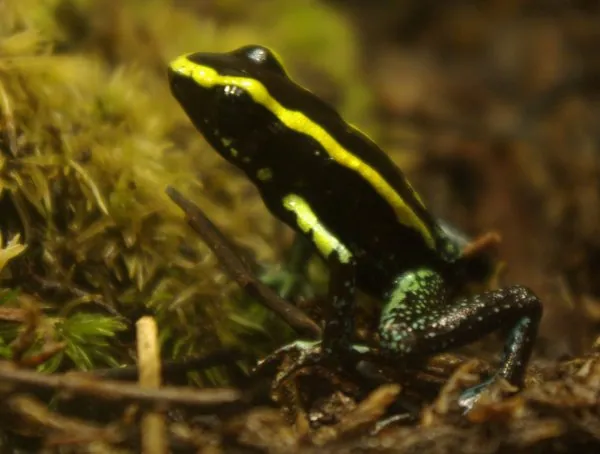
Kokoe poison frog
 Toxín v koži
The Kokoe poison frog is a small, brightly striped frog that lives on the forest floor of western Colombia. It is one of the most poisonous frogs in the world. Its skin holds a toxin that can be deadly, so it should never be handled.1



 Ako ho spoznať
- Black back, sometimes with orange patches.1
- Green, yellow, orange or brownish gold stripes along each side of the body.1
- Black belly with blue or green dots.1
- The smallest of the poison dart frogs in its genus, Phyllobates.1
- Two forms exist: a smaller form with large stripes and a larger form with small stripes.1
Sila toxínu
Jeho koža je toxická. Je nebezpečné dotknúť sa ho, olízať ho alebo ho zjesť.
Čo robí jeho toxín?
This frog is poisonous rather than venomous, because its toxin is held in its skin and does not come from a bite or sting. The toxin, batrachotoxin, is a steroidal alkaloid. It keeps the sodium channels in nerve and muscle cells permanently open, which stops the cells from resetting. The result is paralysis, and often death, as affected muscles stay locked in a contracted state.1
Aké nebezpečné je pre ľudí?
Nebezpečenstvo pre ľudí: Veľmi nebezpečnéČloveka, ktorý nedostane liečbu, môže zabiť.Wild frogs are extremely deadly to humans, and the toxin can be fatal in doses as small as 100 μg. Frogs raised in captivity are generally non-toxic.1
Čo robí, keď sa bojí?
It releases its toxin from skin glands only when under stress.1
 Ak sa ho niekto dotkol alebo ho zjedol
- Ak sa ho niekto dotkol: dôkladne umy ruky a nedotýkaj sa očí ani úst. Ak ho dieťa alebo domáce zviera olízalo alebo zjedlo: volaj toxikologické centrum alebo tiesňovú linku.
Vždy najprv zavolaj na tiesňovú linku (112, 000, 911). Toto sú všeobecné rady prvej pomoci, nie lekárska rada. Základy prvej pomoci
 Buď v bezpečí
- Nikdy sa nedotýkaj divého zvieraťa, nechytaj ho ani ho nedráždi, aj keď je malé a aj keď vyzerá, že spí alebo je mŕtve.
- Nechaj mu priestor. Ak nejaké stretneš, zostaň pokojný, pomaly cúvni a nechaj ho ísť svojou cestou.
- Ak si sa ho dotkol alebo si ho zjedol: nešúchaj si oči ani ústa, umy si ruky a vyhľadaj lekársku pomoc.
Nejde po tebe. Jeho toxín je tam len na to, aby ho nikto nezjedol. Viac o tom, ako zostať v bezpečí
Aké je veľké?
Aké je dlhé?
 asi tak dlhé ako kancelárska spinka
 by prebehlo 100 metrov za 100 sekúnd (najrýchlejší človek potrebuje 9,6)
Aký veľký je Kokoe poison frog v porovnaní s TEBOU?
Iba matematika v tvojom prehliadači. Nič sa neukladá ani nikam neposiela.
Aké je rýchle?


Fakty
It is known as the third most poisonous frog in the world.1
Indigenous peoples of Colombia have used its poison on hunting darts.1
Unlike many other dart frogs, males do not wrestle. Rivals face off and call loudly until one backs down.1
Its mating calls are a loud, bird-like whirring twitter, which can last up to 45 seconds.1
Unlike other Phyllobates species, it does not breed in coconut shells. It lays its eggs in narrow tubes on the ground instead.1
Lovec mýtov
Mýtus: All poison frogs make their own poison.
Pravda: These frogs probably do not make batrachotoxin themselves. They take it in from their diet of beetles, millipedes and flies, and from the leaf litter. That is why captive frogs are generally non-toxic.1
Pre znalcov jedov
- Vedecký názov
- Phyllobates aurotaenia
- Skupina
- Pralesničky, ropuchy a mloky
- Rodina
- Dendrobatidae2
- Rad
- Anura
- Kontinenty
- Južná Amerika
- Mláďatá
- The female lays a clutch of eggs in leaf litter, averaging 15 to 20. After the eggs hatch, the male carries the tadpoles to slow-flowing water.1
- Ako sa mu darí v prírode
- Least Concern (IUCN), although its numbers and range are declining, mainly due to habitat loss1
- Nebezpečenstvo pre ľudí
- 4 / 5: Veľmi nebezpečné3
Odkiaľ sú fakty
- Phyllobates aurotaenia (Wikipedia (CC BY-SA 4.0))
- Phyllobates aurotaenia (iNaturalist): mená a klasifikácia.
- Venom Wiki: úroveň nebezpečenstva, typická veľkosť a odhad rýchlosti sú naše vlastné. Pozri, ako ich určujeme: Ako hodnotíme nebezpečenstvo.
Každý fakt na tejto stránke má číslo, ktoré ukazuje na jeho zdroj. Ak sme sa v niečom pomýlili, prepáč, sme fanúšikovia zvierat, nie vedecký časopis. Napíš nám na [email protected] a opravíme to.
 Škorpión je hladný! Venom Wiki je projekt jedného človeka: zadarmo, bez reklám a bez sledovania. Malý príspevok pomôže udržať ho online.Nakŕm škorpióna
Viac z tej istej skupiny: Pralesničky, ropuchy a mloky
 Pralesnička strašnáPralesničky, ropuchy a mlokySmrteľne nebezpečnéNedotýkaj sa
 Cane toadPralesničky, ropuchy a mlokyTreba lekáraNedotýkaj sa
 Dyeing poison dart frogPralesničky, ropuchy a mlokyLen to bolíNedotýkaj sa
 Black-legged poison frogPralesničky, ropuchy a mlokyMôže zabiťNedotýkaj sa
 Bruno's casque-headed frogPralesničky, ropuchy a mlokyTreba lekáraNedotýkaj sa
 Harlequin poison frogPralesničky, ropuchy a mlokyTreba lekáraNedotýkaj sa
 Kopijovec drsný
 Brazilian wandering spider
 Eyelash viper
 Golden lancehead
 South American bushmaster
 Peruvian giant centipede