
 Afrika
 Azija
Azija Evropa
 Južna Amerika
 Avstralija in Oceanija
 Antarktika
 Tihi ocean
 Atlantski ocean
 Indijski ocean
 Arktični ocean
 Sredozemsko morje
 Rdeče morje
 Karibsko morje
 Koralno morje
 Južnokitajsko morje
 Filipinsko morje
 Andamansko morje
 Severno morje
 Timorsko in Arafursko morje
 Bengalski zaliv
 Kalifornijski zaliv
Katipo
 Ugrizi
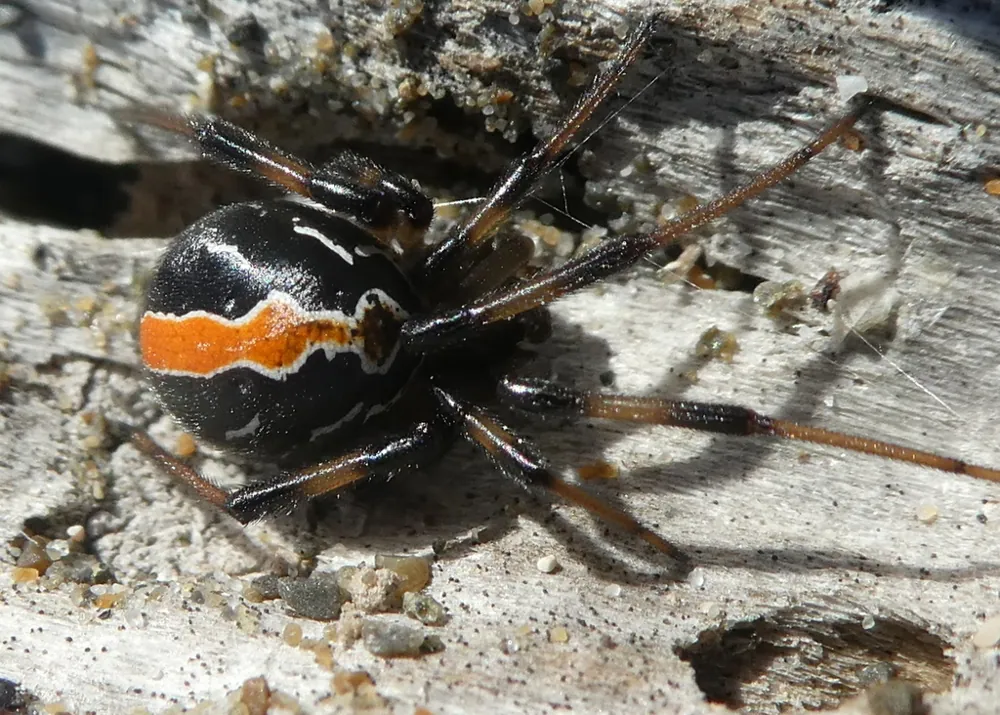
The katipō is a cobweb spider found only in New Zealand, where it lives in coastal sand dunes. It is closely related to the Australian redback spider. Its bite is venomous to people, but bites are rare.1
 Kako jo prepoznaš
- Adult females have a body length of 8–10 mm (about 0.3–0.4 in).1
- The red katipō, found in the South Island and lower North Island, has a large black, shiny abdomen with a white-bordered orange or red stripe on top, and a red hourglass-shaped marking underneath.1
- The black katipō, found in the upper North Island, has no upper red or orange stripe and is somewhat lighter in colour.1
- Males are 4–5 mm long, white with black stripes and red hourglass-shaped markings.1
Pogosto zamenjujejo z: Steatoda species, which share the same habitat, are very similar and are called "false katipō" in New Zealand. The katipō has a less shiny, more tapered abdomen, and its side eyes are further apart. It is also similar to the redback, but the katipō has only short hair-like spines on its abdomen, while the redback has a mix of long and short ones.1
Moč strupa
Strup pride ven skozi strupnike ali zobe, ko ugrizne.
Kaj naredi njen strup, ko ugrizne ali piči?
The bite can cause latrodectism, a toxic syndrome that affects the nerves and body. Symptoms include extreme pain and, potentially, high blood pressure (hypertension) or seizures.1
Kako nevarna je za ljudi?
Nevarnost za ljudi: ResnoPo ugrizu je potreben zdravnik. Smrtni primeri so zelo redki.Katipō are venomous to humans, but bites are described as rare. Serious symptoms are possible, including extreme pain, high blood pressure and seizures.1
 Dobra novica: zdravniki imajo za to zdravilo (protistrup) ali zdravljenje.1
 Če ugrizne
- Ugriz umij in nanj daj ledeni obkladek proti bolečini. Poišči zdravniško pomoč, če je bolečina močna, se širi ali se poškodovanec slabo počuti.
Vedno najprej pokliči številko za klic v sili (112, 000, 911). To so splošna navodila za prvo pomoč, ne zdravniški nasvet. Osnove prve pomoči
 Ostani varen
- Nikoli se ne dotikaj divje živali, je ne lovi in je ne draži, tudi če je majhna in tudi če je videti, kot da spi ali je mrtva.
- Pusti ji prostor. Če jo srečaš, ostani miren, počasi stopi nazaj in jo pusti, da gre svojo pot.
- Če te ugrizne: ostani miren, ne premikaj se, pokliči številko za klic v sili (112, 000, 911) ali hitro pojdi v bolnišnico. Zapomni si, kako je izgledala, fotografija pomaga.
Ne preži nate. Strup uporablja, da ulovi hrano ali se zaščiti, in se veliko raje skrije. Več o varnosti
Kako velika je?
Kako dolga je?
 tako majhna, da bi sedela na tvojem nohtu
Kakšne velikosti je Katipo v primerjavi s TABO?
Samo matematika v tvojem brskalniku. Nič se ne shrani in nič se nikamor ne pošlje.
Kako hitra je?


Dejstva
In one 24-hour study of young spiders, 28% left the web by ballooning, carried by air currents.1
Katipō is one of the few Māori words that refers to a specific species of spider.1
The female does not usually eat the male after mating, unlike some other widow spiders.1
Females cover their egg sacs with silk and sand, which partly hides them in the web.1
The katipō is found only in New Zealand.1
Razbijalec mitov
Mit: The katipō is just a form of the redback spider.
Resnica: The katipō is genetically and physically distinct from the redback, even though the two are closely related. It was once thought to be a subspecies of the redback.1
Za strokovnjake za strupe
- Znanstveno ime
- Latrodectus katipo
- Skupina
- Pajki
- Družina
- Theridiidae2
- Red
- Araneae
- Celine
- Avstralija in Oceanija
- Mladiči
- The female lays five or six egg sacs in November or December, with about 70 to 90 eggs in each. The young hatch after 20–25 days and leave the egg sac in January and February.1
- Kako ji gre v naravi
- In serious decline (New Zealand Threat Classification System)1
- Nevarnost za ljudi
- 3 / 5: Resno3
Od kod so dejstva
- Katipō (Wikipedia (CC BY-SA 4.0))
- Latrodectus katipo (iNaturalist): imena in razvrstitev.
- Venom Wiki: stopnja nevarnosti, tipična velikost in ocena hitrosti so naše lastne. Poglej, kako jih določimo: Kako ocenjujemo nevarnost.
Vsako dejstvo na tej strani ima številko, ki kaže na njegov vir. Če smo se kje zmotili, oprosti, smo ljubitelji živali, ne znanstvena revija. Sporoči nam na [email protected] in bomo popravili.
 Škorpijon je lačen! Venom Wiki je projekt enega človeka: brezplačen, brez oglasov in brez sledilnikov. Majhna napitnina pomaga, da ostane na spletu.Nahrani škorpijona
 Redback spider
 White-tailed spider
 Peacock spider
 Badge huntsman spider
 Black house spider
 Eastern white-tailed spider
 Coastal taipan
 Common death adder
 Eastern brown snake
 Notranjski tajpan
 Sydney funnel-web spider
 Tigrasta kača