
 Afrika
 Azia
Azia Evropa
 Amerika e Jugut
 Australia dhe Oqeania
 Antarktida
 Oqeani Paqësor
 Oqeani Atlantik
 Oqeani Indian
 Oqeani Arktik
 Deti Mesdhe
 Deti i Kuq
 Deti i Karaibeve
 Deti Koral
 Deti i Kinës Jugore
 Deti i Filipineve
 Deti Andaman
 Deti i Veriut
 Deti i Timorit dhe Deti Arafura
 Gjiri i Bengalit
 Gjiri i Kalifornisë
Black-legged poison frog
 Helm në lëkurë
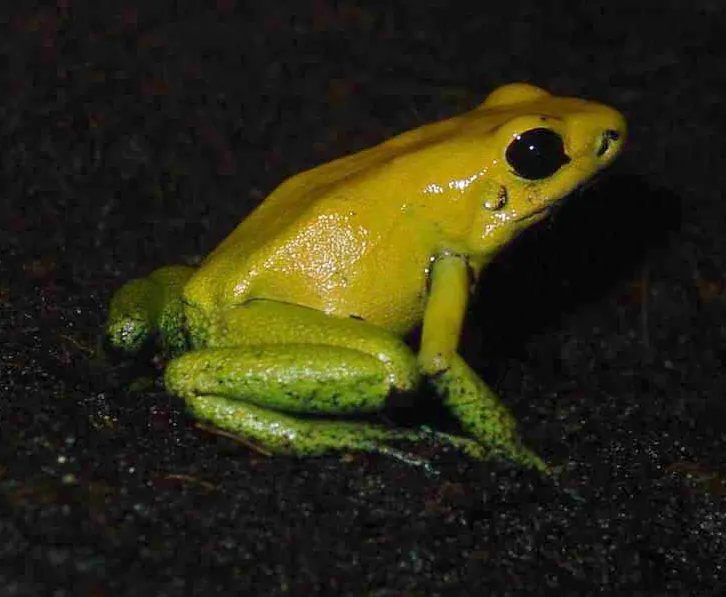
The black-legged poison frog is a small, brightly coloured frog from the rainforests of Colombia. It is one of the most toxic dart frogs in the world, and its skin can kill a person. It is also an endangered species, so it matters for conservation.1


 Si ta njohësh
- The body is earthy orange to pure yellow.1
- The forelimbs and hindlegs are black or dark blue.1
- It is one of the largest poison dart frogs, but it is smaller and more slender than the golden poison frog.1
- Juveniles are brown or black and become more vibrant as they mature.1
- It is active in the daytime and moves across the forest floor in quick hops.1
Shpesh ngatërrohet me: It is often mistaken for the golden poison frog (Phyllobates terribilis), which looks similar. The black-legged poison frog is smaller, more slender and less poisonous. Juvenile golden poison frogs can also look like it. It also resembles the 'netted' colour form of D. leucomelas.1
Fuqia toksike
Lëkura e saj është toksike. Është e rrezikshme ta prekësh, ta lëpish ose ta hash.
Çfarë bën toksina e saj?
This frog is poisonous rather than venomous, because its toxin comes out through its skin. The toxin is batrachotoxin, a neurotoxin that attacks the nerves. It stops nerve signals from getting through, which causes paralysis, heart failure and breathing failure. There are no known treatments or antidotes for it.1
Sa e rrezikshme është për njerëzit?
Rreziku për njerëzit: Shumë i rrezikshëmMund të vrasë një njeri që nuk merr mjekim.It is one of the few frogs confirmed to have killed humans. Between 2 and 200 micrograms of its toxin is enough to kill a person. Its toxin is weaker than that of the golden poison frog.1
Çfarë bën kur ka frikë?
Its bright colours warn predators that it is poisonous, and its skin releases toxins through pores.1
 Nëse dikush e preku ose e hëngri
- Nëse dikush ka prekur një të tillë: laji mirë duart dhe mos prek sytë ose gojën. Nëse një fëmijë ose një kafshë shtëpiake ka lëpirë ose ka ngrënë një të tillë: telefono qendrën e helmimeve ose numrin e emergjencës.
Gjithmonë telefono së pari numrin e emergjencës (112, 000, 911). Ky është udhëzim i përgjithshëm për ndihmën e parë, jo këshillë mjekësore. Bazat e ndihmës së parë
 Rri i sigurt
- Mos prek, mos kap dhe mos ngacmo kurrë një kafshë të egër, edhe të vogël, edhe nëse duket në gjumë ose e ngordhur.
- Lëri hapësirë. Nëse takon një të tillë, qëndro i qetë, tërhiqu ngadalë dhe lëre të shkojë në rrugën e vet.
- Nëse e ke prekur ose e ke ngrënë: mos fërko sytë ose gojën, laji duart dhe kërko ndihmë mjekësore.
Nuk ka qëllim të të sulmojë. Helmi i saj është aty vetëm që të mos e hajë askush. Më shumë për sigurinë
Sa i madh është?
Sa i gjatë është?
 më i shkurtër se gishti yt i vogël
 mund të përshkonte 100 metra për 95 sekonda (njeriu më i shpejtë ka nevojë për 9,6)
Sa i madh është Black-legged poison frog krahasuar me TY?
Vetëm matematikë në shfletuesin tënd. Asgjë nuk ruhet dhe nuk dërgohet askund.
Sa i shpejtë është?


Fakte
Some Chocó people in Colombia use the poison from these frogs to tip hunting darts for blowguns.1
The male carries the tadpoles on his back. Some of the toxin rubs off onto them, so a predator that eats one would be poisoned.1
The frog cannot make its own toxin. It gets the chemicals it needs from its diet and its surroundings.1
Unlike most frogs, which are active at night, this frog is active during the daytime. Its bright colours are easier to see then, which helps warn predators.1
The male's high-pitched trill attracts females. Brighter males are more attractive, and their colour can help them win mates.1
Rrëzuesi i miteve
Miti: That it is the most toxic dart frog in the world.
E vërteta: It is the second most toxic dart frog. The golden poison frog is more toxic.1
Për ekspertët e helmeve
- Emri shkencor
- Phyllobates bicolor
- Grupi
- Bretkosat toksike, zhabat dhe tritonët
- Familja
- Dendrobatidae2
- Renditja
- Anura
- Kontinentet
- Amerika e Jugut
- Foshnjat
- The eggs are fertilised outside the body, and a parent protects them until they hatch. The male then carries the tadpoles on his back to water.1
- Si po ia del në natyrë
- Endangered1
- Rreziku për njerëzit
- 4 / 5: Shumë i rrezikshëm3
Nga vijnë faktet
- Phyllobates bicolor (Wikipedia (CC BY-SA 4.0))
- Phyllobates bicolor (iNaturalist): emrat dhe klasifikimi.
- Venom Wiki: niveli i rrezikut, madhësia tipike dhe shpejtësia e hamendësuar janë tonat. Shiko si i llogarisim: Si e vlerësojmë rrezikun.
Çdo fakt në këtë faqe ka një numër që të çon te burimi i tij. Nëse kemi gabuar diçka, na fal, ne jemi adhurues kafshësh, jo revistë shkencore. Na shkruaj në [email protected] dhe do ta rregullojmë.
 Akrepi është i uritur! Venom Wiki është projekt i një njeriu të vetëm: falas, pa reklama dhe pa gjurmues. Një bakshish i vogël ndihmon ta mbajë online.Ushqe akrepin
Më shumë nga i njëjti grup: Bretkosat toksike, zhabat dhe tritonët
 Golden poison frogBretkosat toksike, zhabat dhe tritonëtVdekjeprurësMos e prek
 Cane toadBretkosat toksike, zhabat dhe tritonëtKa nevojë për mjekMos e prek
 Dyeing poison dart frogBretkosat toksike, zhabat dhe tritonëtVetëm dhembMos e prek
 Bruno's casque-headed frogBretkosat toksike, zhabat dhe tritonëtKa nevojë për mjekMos e prek
 Harlequin poison frogBretkosat toksike, zhabat dhe tritonëtKa nevojë për mjekMos e prek
 Giant leaf frogBretkosat toksike, zhabat dhe tritonëtVetëm dhembMos e prek
 Terciopelo
 Brazilian wandering spider
 Eyelash viper
 Golden lancehead
 South American bushmaster
 Peruvian giant centipede