
 Afrika
 Azia
Azia Evropa
 Amerika e Jugut
 Australia dhe Oqeania
 Antarktida
 Oqeani Paqësor
 Oqeani Atlantik
 Oqeani Indian
 Oqeani Arktik
 Deti Mesdhe
 Deti i Kuq
 Deti i Karaibeve
 Deti Koral
 Deti i Kinës Jugore
 Deti i Filipineve
 Deti Andaman
 Deti i Veriut
 Deti i Timorit dhe Deti Arafura
 Gjiri i Bengalit
 Gjiri i Kalifornisë
Mexican fireleg tarantula
 Kafshimet
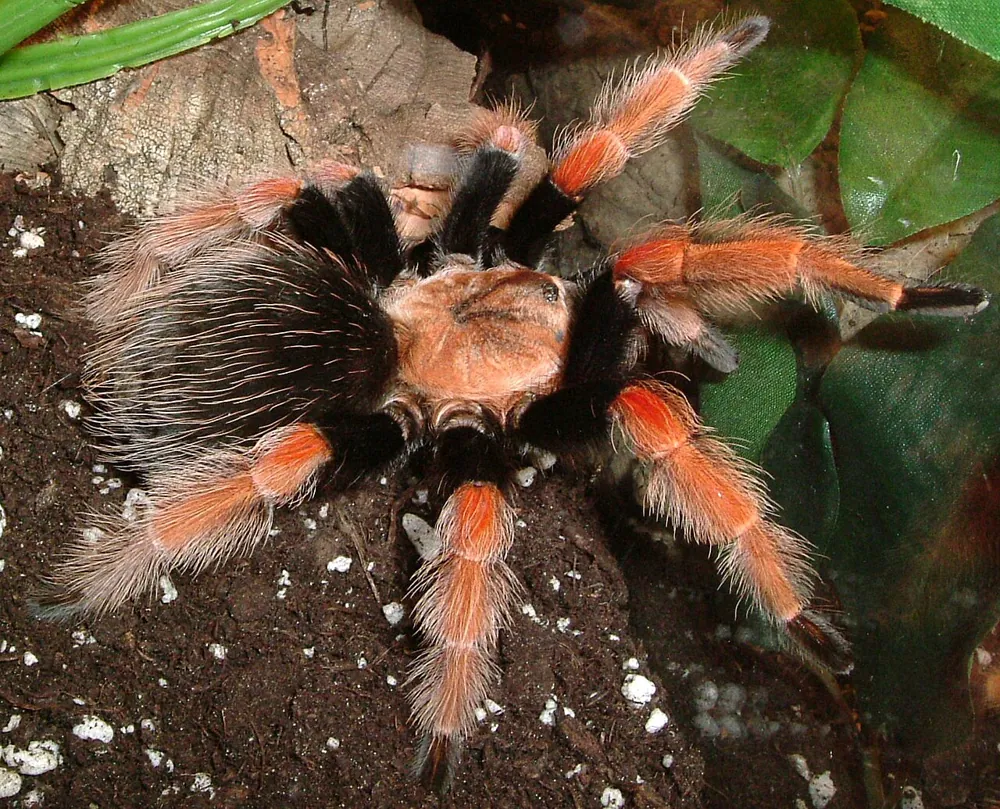
The Mexican fireleg tarantula is a large, long-lived spider with bright orange and black colouring. It lives in dry scrubland in western Guerrero state, Mexico, where it hides in burrows. It is popular in the pet trade, which has put pressure on wild numbers.1



 Si ta njohësh
- Dramatic orange and black colouring.1
- Orange carapace (the upper body shell) with a dark black band on the upper legs (femora).1
- Bright, fiery red knees (patellae) that fade to a paler orange further down the leg.1
- Black tips on the feet (tarsi).1
- Adults are 12.7 to 15.2 cm across, converted from 5 to 6 inches.1
Shpesh ngatërrohet me: It resembles the Mexican redknee tarantula (Brachypelma hamorii). The main difference is the legs: the knees of the Mexican fireleg are bright red, while the joints of the redknee are orange.1
Fuqia e helmit
Helmi del përmes dhëmbëve helmues ose dhëmbëve kur kafshon.
Sa e rrezikshme është për njerëzit?
Rreziku për njerëzit: I lehtëSi thumbim blete ose më pak. Pothuajse i padëmshëm për njerëzit.The spider is not particularly defensive. Its main defence is its urticating hairs, which it can flick when threatened. Some individuals may have a nervous temperament.1
Çfarë bën kur ka frikë?
When it feels threatened, it flicks urticating hairs at the attacker.1
 Nëse kafshon
- Laje kafshimin dhe ftohe. Kërko ndihmë mjekësore nëse dhimbja është e fortë ose personi ndihet keq.
Gjithmonë telefono së pari numrin e emergjencës (112, 000, 911). Ky është udhëzim i përgjithshëm për ndihmën e parë, jo këshillë mjekësore. Bazat e ndihmës së parë
 Rri i sigurt
- Mos prek, mos kap dhe mos ngacmo kurrë një kafshë të egër, edhe të vogël, edhe nëse duket në gjumë ose e ngordhur.
- Lëri hapësirë. Nëse takon një të tillë, qëndro i qetë, tërhiqu ngadalë dhe lëre të shkojë në rrugën e vet.
- Nëse të kafshon një e tillë: qëndro i qetë, mos lëviz, telefono numrin e emergjencës (112, 000, 911) ose shko shpejt në spital. Mbaj mend si dukej, një foto ndihmon.
Nuk ka qëllim të të sulmojë. E përdor helmin për të kapur ushqim ose për t'u mbrojtur, dhe preferon shumë më tepër të fshihet. Më shumë për sigurinë
Sa i madh është?
Sa i gjatë është?
 aq i gjatë sa 5 tulla lodrash ndërtimi në rresht
 mund të përshkonte 100 metra për 210 sekonda (njeriu më i shpejtë ka nevojë për 9,6)
Sa i madh është Mexican fireleg tarantula krahasuar me TY?
Vetëm matematikë në shfletuesin tënd. Asgjë nuk ruhet dhe nuk dërgohet askund.
Sa i shpejtë është?


Fakte
Tarantulas of this genus are long-lived. Females may live about ten years after reaching maturity, while males usually live only up to a year after their final moult.1
It is commonly kept as a pet and is regarded as suitable for beginners, which has led to heavy collection from the wild.1
It is mostly active after dark, but can sometimes be active during the day, especially in the morning and evening.1
Adults moult at the end of the dry season, between November and June. Males then begin searching for mates.1
Për ekspertët e helmeve
- Emri shkencor
- Brachypelma boehmei
- Grupi
- Tarantulat dhe merimangat me rrjetë hinkë
- Familja
- Theraphosidae2
- Renditja
- Araneae
- Kontinentet
- Amerika e Veriut
- Foshnjat
- Mated females produce an egg sac. If it succeeds, the eggs generally hatch three to four weeks before the rainy season begins.1
- Si po ia del në natyrë
- Listed on CITES Appendix II, which regulates international trade. Ongoing habitat destruction, illegal pet trade and high mortality before maturity are a considerable concern for its future.1
- Rreziku për njerëzit
- 1 / 5: I lehtë3
Nga vijnë faktet
- Brachypelma boehmei (Wikipedia (CC BY-SA 4.0))
- Brachypelma boehmei (iNaturalist): emrat dhe klasifikimi.
- Venom Wiki: niveli i rrezikut, madhësia tipike dhe shpejtësia e hamendësuar janë tonat. Shiko si i llogarisim: Si e vlerësojmë rrezikun.
Çdo fakt në këtë faqe ka një numër që të çon te burimi i tij. Nëse kemi gabuar diçka, na fal, ne jemi adhurues kafshësh, jo revistë shkencore. Na shkruaj në [email protected] dhe do ta rregullojmë.
 Akrepi është i uritur! Venom Wiki është projekt i një njeriu të vetëm: falas, pa reklama dhe pa gjurmues. Një bakshish i vogël ndihmon ta mbajë online.Ushqe akrepin
Më shumë nga i njëjti grup: Tarantulat dhe merimangat me rrjetë hinkë
 Mexican redknee tarantulaTarantulat dhe merimangat me rrjetë hinkëI padëmshëm
 Arizona blond tarantulaTarantulat dhe merimangat me rrjetë hinkëI padëmshëm
 Ravine trapdoor spiderTarantulat dhe merimangat me rrjetë hinkëI padëmshëm
 Trinidad chevron tarantulaTarantulat dhe merimangat me rrjetë hinkëVetëm dhemb
 Antilles pinktoe tarantulaTarantulat dhe merimangat me rrjetë hinkëI padëmshëm
 California trapdoor spiderTarantulat dhe merimangat me rrjetë hinkëI padëmshëm
Jeton edhe në: Amerika e Veriut
 TerciopeloNepërkat me gropëzaVdekjeprurës
 Eastern coral snakeGjarpërinjtë koralMund të vrasë
 Eastern diamondback rattlesnakeGjarpërinjtë me zileMund të vrasë
 Eyelash viperNepërkat me gropëzaMund të vrasë
 Timber rattlesnakeGjarpërinjtë me zileMund të vrasë
 Western diamondback rattlesnakeGjarpërinjtë me zileMund të vrasë