
 Африка
 Азија
Азија Европа
 Јужна Америка
 Аустралија и Океанија
 Антарктик
 Тихи океан
 Атлантски океан
 Индијски океан
 Северни ледени океан
 Средоземно море
 Црвено море
 Карипско море
 Корално море
 Јужнокинеско море
 Филипинско море
 Андаманско море
 Северно море
 Тиморско и Арафурско море
 Бенгалски залив
 Калифорнијски залив
Fire salamander
 Отров у кожиЈеде: ИнсектиОтровна на додир или за јело, али не уједа и не боде отровом
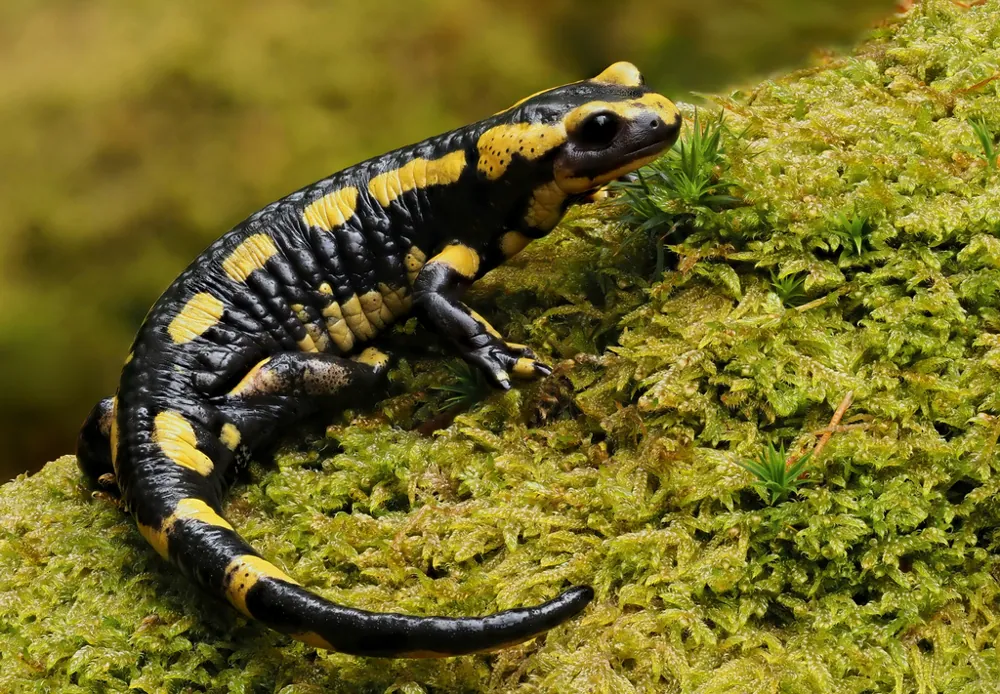
The fire salamander is a black amphibian with bright yellow, and sometimes red or orange, markings. It lives in forests across most of southern and central Europe. Its bright colours warn predators that its skin is poisonous.1
 Како да је препознаш
- Black with yellow spots or stripes; the amount of yellow varies, and some are almost completely black1
- Shades of red or orange may appear, replacing or mixing with the yellow, depending on the subspecies1
- Grows to 15 to 25 cm long, making it one of Europe's largest salamanders1
- Males and females look very similar, except in the breeding season, when the male has a swollen gland near his vent1
Моћ отрова у кожи
Њена кожа је отровна. Опасно ју је додиривати, лизати или јести.
Шта ради њен отров ако је додирнеш или поједеш?
The fire salamander is poisonous rather than venomous, so it does not inject venom with a bite. Its skin secretions contain alkaloid toxins, mainly samandarin, which cause strong muscle convulsions and high blood pressure, combined with fast breathing, in all vertebrates. Another alkaloid, samandarone, has also been found in its skin secretions. The poison comes from glands concentrated around the head and along the back.1
Колико је опасна за људе?
Опасност за људе: БолноМоже баш да боли, али скоро никад није озбиљно.Some compounds in its skin secretions are potentially dangerous to human life. Touching the animal or handling its skin can expose people to the poison.1
Шта ради кад се уплаши?
Its bright yellow, red or orange colours warn predators that it is poisonous, and it releases toxins from its skin glands.1
 Ако ју је неко додирнуо или појео
- Ако ју је неко додирнуо: добро опери руке и не дирај очи или уста. Ако ју је дете или кућни љубимац лизнуо или појео: позови центар за контролу тровања или број за хитне случајеве.
Увек прво позови број за хитне случајеве (112, 000, 911). Ово су општа упутства за прву помоћ, а не медицински савет. Основе прве помоћи
 Буди безбедан
- Никад не дирај, не хватај и не задиркуј дивљу животињу, чак ни малу, и чак ни ако изгледа као да спава или је мртва.
- Држи се на одстојању. Ако је сретнеш, остани миран, полако се повуци и пусти је да оде својим путем.
- Ако си је додирнуо или појео: не трљај очи или уста, опери руке и потражи медицинску помоћ.
Она не јури тебе. Њен отров постоји само да је нико не би појео. Још о безбедности
Колико је велика?
Колико је дугачка?
Колико је тешка?

 дугачко као 8 коцкица за слагање поређаних у низу
Fire salamander и ТИ: ко је већи?
Само математика у твом прегледачу. Ништа се не чува и никуд не шаље.
Колико је брза?


Чињенице
One fire salamander lived for more than 50 years in Museum Koenig, a natural history museum in Germany.1
Larvae do not make the poison. It develops as the salamander matures, in the ovaries, liver and testes.1
Its skin poison may also help protect it against bacterial and fungal infections of the skin.1
Its bright colours are a warning signal. Scientists call this aposematism, meaning the animal advertises that it is poisonous.1
Some subspecies give birth to live young, while others release larvae into water. Only two subspecies, fastuosa and bernadezi, give birth to fully formed young.1
In captivity, females can store sperm for a long time and use it to produce another clutch of eggs. This has not been seen in the wild.1
За стручњаке за отрове
- Научни назив
- Salamandra salamandra
- Група
- Отровне жабе, крастаче и мрмољци
- Породица
- Salamandridae2
- Редослед
- Caudata
- Континенти
- Европа
- Младунци
- Eggs develop inside the female, and she puts the larvae into water as they hatch. In some subspecies, the young develop inside the female until she gives birth to fully formed young.1
- Животни век
- око 50 година1
- Како јој иде у дивљини
- Vulnerable (IUCN Red List, 2023)1
- Опасност за људе
- 2 / 5: Болно3
Одакле потичу чињенице
- Fire salamander (Wikipedia (CC BY-SA 4.0))
- Salamandra salamandra (iNaturalist): имена и класификација.
- Venom Wiki: ниво опасности, типична величина и процена брзине су наши. Погледај како их рачунамо: Како оцењујемо опасност.
Свака чињеница на овој страници има број који води до њеног извора. Ако смо нешто погрешили, извини, ми смо љубитељи животиња, а не научни часопис. Јави нам на [email protected] и исправићемо.
 Шкорпион је гладан! Venom Wiki је пројекат једног човека: бесплатан, без реклама и без трекера. Мала напојница помаже да остане на мрежи.Нахрани шкорпиона
Још из исте групе: Отровне жабе, крастаче и мрмољци
 Common toadОтровне жабе, крастаче и мрмољциСамо болиНе дирај
 European fire-bellied toadОтровне жабе, крастаче и мрмољциБезопасно
 Iberian ribbed newtОтровне жабе, крастаче и мрмољциБезопасно
 Natterjack toadОтровне жабе, крастаче и мрмољциБезопасно
 Alpine salamanderОтровне жабе, крастаче и мрмољциБезопасно
 European green toadОтровне жабе, крастаче и мрмољциБезопасно
 Common European adder
 Spanish fly
 Common wasp
 European hornet
 Western honey bee
 Blunt-nosed viper