
 Африка
 Азија
Азија Европа
 Јужна Америка
 Аустралија и Океанија
 Антарктик
 Тихи океан
 Атлантски океан
 Индијски океан
 Северни ледени океан
 Средоземно море
 Црвено море
 Карипско море
 Корално море
 Јужнокинеско море
 Филипинско море
 Андаманско море
 Северно море
 Тиморско и Арафурско море
 Бенгалски залив
 Калифорнијски залив
Katipo
 Уједи
УједиThe katipō is a cobweb spider found only in New Zealand, where it lives in coastal sand dunes. It is closely related to the Australian redback spider. Its bite is venomous to people, but bites are rare.1
 Како да је препознаш
- Adult females have a body length of 8–10 mm (about 0.3–0.4 in).1
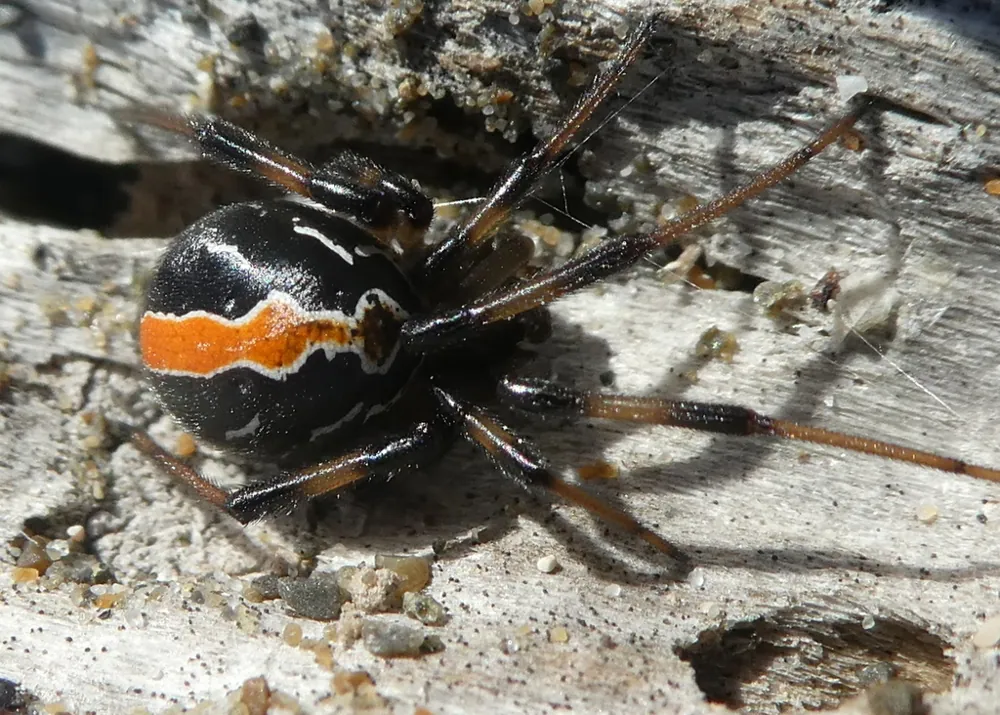
- The red katipō, found in the South Island and lower North Island, has a large black, shiny abdomen with a white-bordered orange or red stripe on top, and a red hourglass-shaped marking underneath.1
- The black katipō, found in the upper North Island, has no upper red or orange stripe and is somewhat lighter in colour.1
- Males are 4–5 mm long, white with black stripes and red hourglass-shaped markings.1
Често је мешају са: Steatoda species, which share the same habitat, are very similar and are called "false katipō" in New Zealand. The katipō has a less shiny, more tapered abdomen, and its side eyes are further apart. It is also similar to the redback, but the katipō has only short hair-like spines on its abdomen, while the redback has a mix of long and short ones.1
Моћ отрова
Отров излази кроз очњаке или зубе када уједа.
Шта ради њен отров кад угризе или убоде?
The bite can cause latrodectism, a toxic syndrome that affects the nerves and body. Symptoms include extreme pain and, potentially, high blood pressure (hypertension) or seizures.1
Колико је опасна за људе?
Опасност за људе: ОзбиљноУјед захтева лекара. Смртни случајеви су веома ретки.Katipō are venomous to humans, but bites are described as rare. Serious symptoms are possible, including extreme pain, high blood pressure and seizures.1
 Добре вести: лекари имају лек (серум против отрова) или лечење за ово.1
 Ако уједа
- Опери ујед и стави кесу леда на њега против бола. Потражи медицинску помоћ ако је бол јак, ако се шири или ако се особа не осећа добро.
Увек прво позови број за хитне случајеве (112, 000, 911). Ово су општа упутства за прву помоћ, а не медицински савет. Основе прве помоћи
 Буди безбедан
- Никад не дирај, не хватај и не задиркуј дивљу животињу, чак ни малу, и чак ни ако изгледа као да спава или је мртва.
- Држи се на одстојању. Ако је сретнеш, остани миран, полако се повуци и пусти је да оде својим путем.
- Ако те таква животиња угризе: остани миран, не мрдај, позови број за хитне случајеве (112, 000, 911) или брзо стигни до болнице. Запамти како је изгледала, слика помаже.
Она не јури тебе. Отров користи да ухвати храну или да се заштити, и много радије би се сакрила. Још о безбедности
Колико је велика?
Колико је дугачка?
 толико мало да може да стане на твој нокат
Katipo и ТИ: ко је већи?
Само математика у твом прегледачу. Ништа се не чува и никуд не шаље.
Колико је брза?


Чињенице
In one 24-hour study of young spiders, 28% left the web by ballooning, carried by air currents.1
Katipō is one of the few Māori words that refers to a specific species of spider.1
The female does not usually eat the male after mating, unlike some other widow spiders.1
Females cover their egg sacs with silk and sand, which partly hides them in the web.1
The katipō is found only in New Zealand.1
Рушилац митова
Мит: The katipō is just a form of the redback spider.
Истина: The katipō is genetically and physically distinct from the redback, even though the two are closely related. It was once thought to be a subspecies of the redback.1
За стручњаке за отрове
- Научни назив
- Latrodectus katipo
- Група
- Пауци
- Породица
- Theridiidae2
- Редослед
- Araneae
- Континенти
- Аустралија и Океанија
- Младунци
- The female lays five or six egg sacs in November or December, with about 70 to 90 eggs in each. The young hatch after 20–25 days and leave the egg sac in January and February.1
- Како јој иде у дивљини
- In serious decline (New Zealand Threat Classification System)1
- Опасност за људе
- 3 / 5: Озбиљно3
Одакле потичу чињенице
- Katipō (Wikipedia (CC BY-SA 4.0))
- Latrodectus katipo (iNaturalist): имена и класификација.
- Venom Wiki: ниво опасности, типична величина и процена брзине су наши. Погледај како их рачунамо: Како оцењујемо опасност.
Свака чињеница на овој страници има број који води до њеног извора. Ако смо нешто погрешили, извини, ми смо љубитељи животиња, а не научни часопис. Јави нам на [email protected] и исправићемо.
 Шкорпион је гладан! Venom Wiki је пројекат једног човека: бесплатан, без реклама и без трекера. Мала напојница помаже да остане на мрежи.Нахрани шкорпиона
 Redback spider
 White-tailed spider
 Peacock spider
 Badge huntsman spider
 Black house spider
 Eastern white-tailed spider
 Coastal taipan
 Common death adder
 Eastern brown snake
 Kopneni tajpan
 Sydney funnel-web spider
 Tigrasta zmija