
 Африка
 Азија
Азија Европа
 Јужна Америка
 Аустралија и Океанија
 Антарктик
 Тихи океан
 Атлантски океан
 Индијски океан
 Северни ледени океан
 Средоземно море
 Црвено море
 Карипско море
 Корално море
 Јужнокинеско море
 Филипинско море
 Андаманско море
 Северно море
 Тиморско и Арафурско море
 Бенгалски залив
 Калифорнијски залив
Oriental fire-bellied toad
 Отров у кожиЈеде: ИнсектиОтровна на додир или за јело, али не уједа и не боде отровом
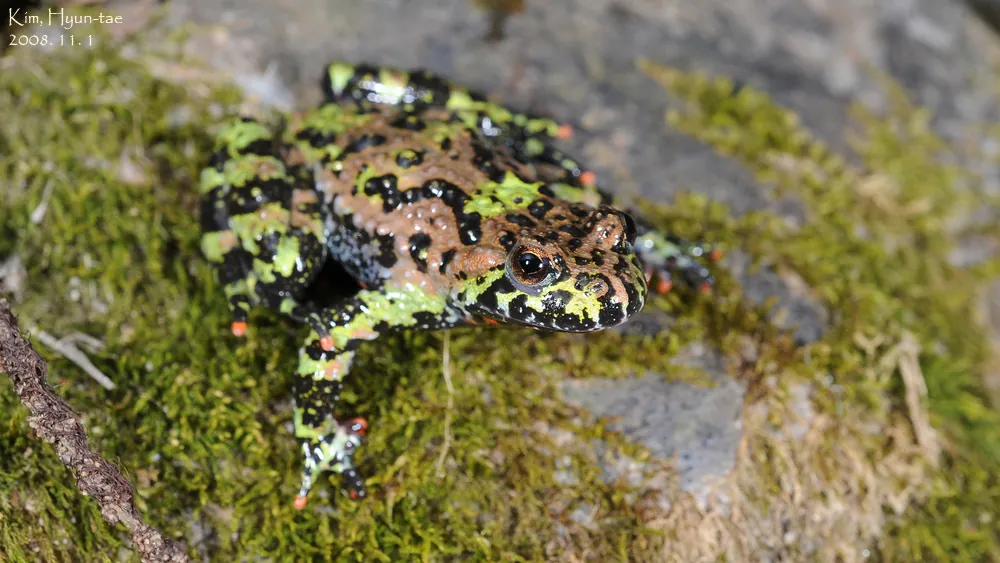
The Oriental fire-bellied toad is a small frog that lives in northeastern Asia, mostly near slow streams, ponds and forests. Its bright belly is a warning: when it is disturbed, it gives off a mild toxin through its skin. It is common across much of its range.1



 Како да је препознаш
- Bright grey, brownish or green upper skin with black mottling.1
- Bright yellow, red or orange-red belly, mottled with dark spots.1
- Red finger and toe tips are usually present.1
- Skin on the upper side is covered in small bumps called tubercles, which give it a toad-like look.1
- Adults are about 3.8 to 5.1 cm long.1
Често је мешају са: It is often mistaken for a toad, but it is not a true toad. Compared with other Bombina frogs, it has no gular sacs (throat pouches), its belly is usually more red than yellow, and it has bright finger tips.1
Моћ отрова у кожи
Њена кожа је отровна. Опасно ју је додиривати, лизати или јести.
Шта ради њен отров ако је додирнеш или поједеш?
The toad's skin releases a milky, mildly toxic substance when it is disturbed or frightened, mostly from the hind legs and sometimes the belly. Its toxins are described as mild, and the toxin does not pose a significant threat to human health. Captive toads are generally less toxic than wild ones, because their diet in the wild adds to their toxicity.1
Колико је опасна за људе?
Опасност за људе: БлагоКао убод пчеле или слабије. Скоро безопасно за људе.The toxin does not pose a significant threat to human health, but its skin mucus can cause discomfort to the mouth and eyes if the toad is handled.1
Шта ради кад се уплаши?
When threatened, it releases toxin from its skin, lies on its back to show its brightly coloured belly, and arches its head and holds up its limbs as a warning.1
 Ако ју је неко додирнуо или појео
- Ако ју је неко додирнуо: добро опери руке и не дирај очи или уста. Ако ју је дете или кућни љубимац лизнуо или појео: позови центар за контролу тровања или број за хитне случајеве.
Увек прво позови број за хитне случајеве (112, 000, 911). Ово су општа упутства за прву помоћ, а не медицински савет. Основе прве помоћи
 Буди безбедан
- Никад не дирај, не хватај и не задиркуј дивљу животињу, чак ни малу, и чак ни ако изгледа као да спава или је мртва.
- Држи се на одстојању. Ако је сретнеш, остани миран, полако се повуци и пусти је да оде својим путем.
- Ако си је додирнуо или појео: не трљај очи или уста, опери руке и потражи медицинску помоћ.
Она не јури тебе. Њен отров постоји само да је нико не би појео. Још о безбедности
Колико је велика?
Колико је дугачка?
Колико је тешка?
 краће од твог малог прста
 могла би да претрчи 100 метара за 180 секунди (најбржем човеку треба 9,6)
Oriental fire-bellied toad и ТИ: ко је већи?
Само математика у твом прегледачу. Ништа се не чува и никуд не шаље.
Колико је брза?


Чињенице
Unusually for a frog, this species has no eardrum or resonator, and it makes its calls by inhaling.1
In experiments, these toads learned to solve mazes using water as a reward, which other frog types did not manage.1
Its skin contains bombesin, a peptide that affects stomach function in mammals. It was first found in its relative, the European fire-bellied toad.1
Males call to females with a light sound that is compared to a musical triangle.1
Grass snakes and other water-dwelling snakes are known to eat these toads without any ill effect.1
In captivity they often live for around 12 years, and some have lived up to 30 years.1
Рушилац митова
Мит: It is a true toad.
Истина: It is not a true toad, although its bumpy skin gives it a toad-like appearance.1
За стручњаке за отрове
Одакле потичу чињенице
- Oriental fire-bellied toad (Wikipedia (CC BY-SA 4.0))
- Bombina orientalis (iNaturalist): имена и класификација.
- Venom Wiki: ниво опасности, типична величина и процена брзине су наши. Погледај како их рачунамо: Како оцењујемо опасност.
Свака чињеница на овој страници има број који води до њеног извора. Ако смо нешто погрешили, извини, ми смо љубитељи животиња, а не научни часопис. Јави нам на [email protected] и исправићемо.
 Шкорпион је гладан! Venom Wiki је пројекат једног човека: бесплатан, без реклама и без трекера. Мала напојница помаже да остане на мрежи.Нахрани шкорпиона
Још из исте групе: Отровне жабе, крастаче и мрмољци
 Japanese fire-bellied newtОтровне жабе, крастаче и мрмољциТреба лекарНе дирај
 Common toadОтровне жабе, крастаче и мрмољциСамо болиНе дирај
 Asian common toadОтровне жабе, крастаче и мрмољциТреба лекарНе дирај
 Asiatic toadОтровне жабе, крастаче и мрмољциСамо болиНе дирај
 Emperor newtОтровне жабе, крастаче и мрмољциСамо болиНе дирај
 Himalayan newtОтровне жабе, крастаче и мрмољциСамо болиНе дирај
 Deathstalker
 Indian cobra
 Indian saw-scaled viper
 King cobra
 Puff adder
 Raselova vipera