
 Afrika
 Asien
Asien Europa
 Sydamerika
 Australien och Oceanien
 Antarktis
 Stilla havet
 Atlanten
 Indiska oceanen
 Norra ishavet
 Medelhavet
 Röda havet
 Karibiska havet
 Korallhavet
 Sydkinesiska havet
 Filippinska havet
 Andamansjön
 Nordsjön
 Timorhavet och Arafurasjön
 Bengaliska viken
 Kaliforniska viken
Black-legged poison frog
 Gift i hudenÄter: KöttPassivt giftig, inte aktivt giftig
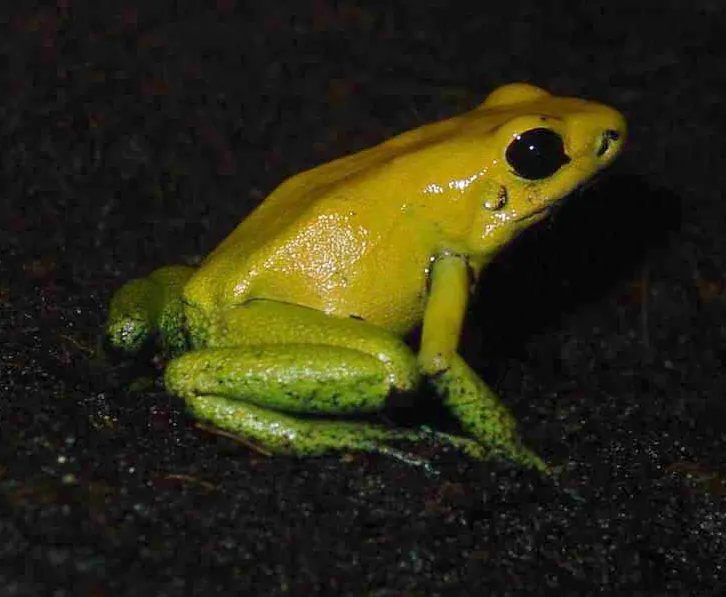
The black-legged poison frog is a small, brightly coloured frog from the rainforests of Colombia. It is one of the most toxic dart frogs in the world, and its skin can kill a person. It is also an endangered species, so it matters for conservation.1


 Så känner du igen den
- The body is earthy orange to pure yellow.1
- The forelimbs and hindlegs are black or dark blue.1
- It is one of the largest poison dart frogs, but it is smaller and more slender than the golden poison frog.1
- Juveniles are brown or black and become more vibrant as they mature.1
- It is active in the daytime and moves across the forest floor in quick hops.1
Förväxlas ofta med: It is often mistaken for the golden poison frog (Phyllobates terribilis), which looks similar. The black-legged poison frog is smaller, more slender and less poisonous. Juvenile golden poison frogs can also look like it. It also resembles the 'netted' colour form of D. leucomelas.1
Giftkraft
Huden är giftig. Den är farlig att röra vid, slicka på eller äta.
Vad gör giftet om man rör vid eller äter den?
This frog is poisonous rather than venomous, because its toxin comes out through its skin. The toxin is batrachotoxin, a neurotoxin that attacks the nerves. It stops nerve signals from getting through, which causes paralysis, heart failure and breathing failure. There are no known treatments or antidotes for it.1
Hur farlig är den för människor?
Fara för människor: Mycket farligDen kan döda en person som inte får behandling.It is one of the few frogs confirmed to have killed humans. Between 2 and 200 micrograms of its toxin is enough to kill a person. Its toxin is weaker than that of the golden poison frog.1
Vad gör den när den är rädd?
Its bright colours warn predators that it is poisonous, and its skin releases toxins through pores.1
 Om någon har rört vid eller ätit den
- Om någon har rört vid en: tvätta händerna noga och rör inte ögonen eller munnen. Om ett barn eller husdjur har slickat på eller ätit en: ring Giftinformationscentralen eller ditt larmnummer.
Ring alltid ditt larmnummer först (112, 000, 911). Det här är allmänna råd om första hjälpen, inte medicinsk rådgivning. Första hjälpen, grunderna
 Håll dig säker
- Rör aldrig, fånga aldrig och reta aldrig ett vilt djur, inte ens ett litet, och inte ens om det ser ut att sova eller vara dött.
- Håll avstånd. Om du möter en, var lugn, backa långsamt och låt den gå sin väg.
- Om du har rört vid eller ätit den: gnugga inte ögonen eller munnen, tvätta händerna och sök vård.
Den är inte ute efter dig. Giftet finns bara där för att ingen ska äta upp den. Mer om hur du håller dig säker
Hur stor är den?
Hur lång är den?
 kortare än ditt lillfinger
 skulle kunna springa 100 meter på 95 sekunder (den snabbaste människan behöver 9,6)
Hur stor är Black-legged poison frog jämfört med DIG?
Bara matematik i din webbläsare. Inget sparas eller skickas någonstans.
Hur snabb är den?


Fakta
Some Chocó people in Colombia use the poison from these frogs to tip hunting darts for blowguns.1
The male carries the tadpoles on his back. Some of the toxin rubs off onto them, so a predator that eats one would be poisoned.1
The frog cannot make its own toxin. It gets the chemicals it needs from its diet and its surroundings.1
Unlike most frogs, which are active at night, this frog is active during the daytime. Its bright colours are easier to see then, which helps warn predators.1
The male's high-pitched trill attracts females. Brighter males are more attractive, and their colour can help them win mates.1
Myt eller sanning
Myt: That it is the most toxic dart frog in the world.
Sanning: It is the second most toxic dart frog. The golden poison frog is more toxic.1
För giftexperter
- Vetenskapligt namn
- Phyllobates bicolor
- Grupp
- Pilgiftsgrodor, paddor och vattensalamandrar
- Familj
- Dendrobatidae2
- Ordning
- Anura
- Kontinenter
- Sydamerika
- Bebisar
- The eggs are fertilised outside the body, and a parent protects them until they hatch. The male then carries the tadpoles on his back to water.1
- Hur det går för den i naturen
- Endangered1
- Fara för människor
- 4 / 5: Mycket farlig3
Var fakta kommer ifrån
- Phyllobates bicolor (Wikipedia (CC BY-SA 4.0))
- Phyllobates bicolor (iNaturalist): namn och klassificering.
- Venom Wiki: farlighetsnivån, den typiska storleken och den gissade hastigheten är våra egna. Se hur vi räknar fram dem: Så bedömer vi faran.
Alla fakta på den här sidan har en siffra som visar var de kommer ifrån. Om vi har fått något fel, förlåt, vi är djurfans, inte en vetenskaplig tidskrift. Berätta för oss på [email protected] så rättar vi det.
 Skorpionen är hungrig! Venom Wiki är ett enmansprojekt: gratis, utan reklam och utan spårning. En liten dricks hjälper till att hålla den online.Mata skorpionen
Mer från samma grupp: Pilgiftsgrodor, paddor och vattensalamandrar
 Gyllene pilgiftsgrodaPilgiftsgrodor, paddor och vattensalamandrarDödligRör inte
 Cane toadPilgiftsgrodor, paddor och vattensalamandrarBehöver läkareRör inte
 Dyeing poison dart frogPilgiftsgrodor, paddor och vattensalamandrarGör bara ontRör inte
 Bruno's casque-headed frogPilgiftsgrodor, paddor och vattensalamandrarBehöver läkareRör inte
 Harlequin poison frogPilgiftsgrodor, paddor och vattensalamandrarBehöver läkareRör inte
 Giant leaf frogPilgiftsgrodor, paddor och vattensalamandrarGör bara ontRör inte
 Terciopelo
 Brazilian wandering spider
 Eyelash viper
 Golden lancehead
 South American bushmaster
 Peruvian giant centipede