
 ஆப்பிரிக்கா
 ஆசியா
ஆசியா ஐரோப்பா
 தென் அமெரிக்கா
 ஆஸ்திரேலியா மற்றும் ஓசியானியா
 அண்டார்டிகா
 பசிபிக் பெருங்கடல்
 அட்லாண்டிக் பெருங்கடல்
 இந்தியப் பெருங்கடல்
 ஆர்க்டிக் பெருங்கடல்
 மத்தியதரைக் கடல்
 செங்கடல்
 கரீபியன் கடல்
 பவளக் கடல்
 தென் சீனக் கடல்
 பிலிப்பைன்ஸ் கடல்
 அந்தமான் கடல்
 வட கடல்
 திமோர் மற்றும் அரபுரா கடல்
 வங்காள விரிகுடா
 கலிபோர்னியா வளைகுடா
Filament-finned stinger
 நஞ்சு முட்கள்
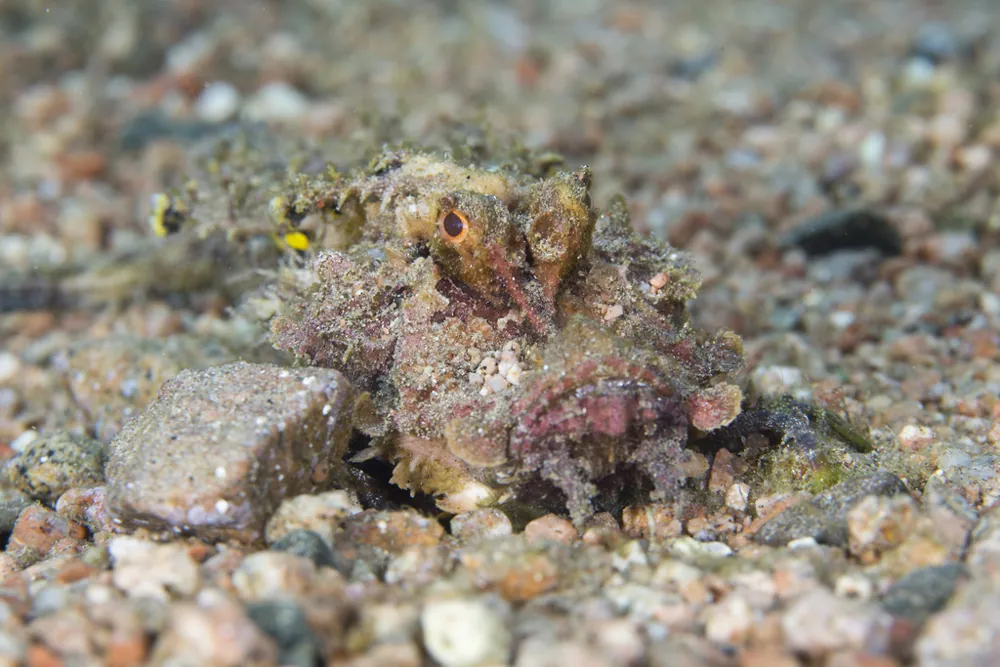
The filament-finned stinger is a well-camouflaged fish with venomous spines on its skin. It lives on sandy and silty seabeds in warm coastal waters, from the Red Sea and East Africa to the Maldives. It is easy to step on or touch by accident, so it is worth knowing what it looks like.1

 இதை எப்படி அடையாளம் காண்பது
- Body colour is dull yellow, grey, brown or rust, with light blotches that match the seabed1
- Skin has no scales along most of the body, but is covered in venomous spines and wart-like glands, giving a knobby look1
- Flattened, concave head, with the eyes, mouth and nostrils projecting upwards and outwards1
- Caudal (tail) fin has dark bands at its base and near its tip1
- Two pectoral fin rays are detached and angled downwards, and are used like legs1
அடிக்கடி இதனுடன் குழப்பப்படுகிறது: It is often confused with Inimicus sinensis, which is nearly identical. The key difference is on the underside of the pectoral fins: the black bands of this species are faint, while those of I. sinensis have yellow spots.1
நஞ்சு சக்தி
கூர்மையான முட்கள் நஞ்சைக் கொண்டுள்ளன. அதை மிதித்தாலோ பிடித்தாலோ வலிக்கும்.
மனிதர்களுக்கு இது எவ்வளவு ஆபத்தானது?
மனிதர்களுக்கு ஆபத்து: தீவிரம்இதன் முட்கள் உன்னைக் குத்தினால், மருத்துவரைப் பார். இறப்புகள் மிகவும் அரிது.பயப்படும்போது இது என்ன செய்யும்?
When disturbed by a diver or a possible predator, it fans out its brightly coloured pectoral and tail fins as a warning, and it is very reluctant to leave its hiding place once dug in.1
 முட்கள் குத்தினால்
- காயத்தைச் சூடான நீரில் வை, அந்த நபர் சுடாமல் தாங்கும் அளவுக்குச் சூடாக (முதலில் உன் கையால் சோதி), 30 முதல் 90 நிமிடங்கள். மருத்துவ உதவி பெறு, குறிப்பாகக் கல்மீன், திருக்கைக்கு.
எப்போதும் முதலில் உன் அவசர எண்ணை (112, 000, 911) அழை. இது பொதுவான முதலுதவி வழிகாட்டல், மருத்துவ ஆலோசனை அல்ல. முதலுதவி அடிப்படைகள்
 பாதுகாப்பாக இரு
- காட்டு விலங்கை ஒருபோதும் தொடாதே, பிடிக்காதே, சீண்டாதே, அது சிறியதாக இருந்தாலும், தூங்குவது போல அல்லது இறந்தது போலத் தெரிந்தாலும்.
- அதற்கு இடம் கொடு. சந்தித்தால், அமைதியாக இரு, மெதுவாகப் பின்வாங்கு, அதை அதன் வழியில் போக விடு.
- இதன் முட்கள் உன்னைக் குத்தினால்: அமைதியாக இரு, அசையாதே, உன் அவசர எண்ணை (112, 000, 911) அழை அல்லது விரைவாக மருத்துவமனைக்குச் செல். அது எப்படி இருந்தது என்று நினைவில் வை, புகைப்படம் உதவும்.
இது உன்னைத் தேடி வரவில்லை. உணவைப் பிடிக்கவோ தன்னைக் காத்துக்கொள்ளவோ நஞ்சைப் பயன்படுத்துகிறது, ஒளிந்துகொள்வதையே அதிகம் விரும்புகிறது. பாதுகாப்பாக இருப்பது பற்றி மேலும்
உலகில் எங்கே?
இது எவ்வளவு பெரியது?
இது எவ்வளவு நீளமானது?
இது எவ்வளவு கனமானது?

 வரிசையாக வைத்த 8 பொம்மைக் கட்டடச் செங்கற்களின் நீளம்
 ஒரு பெரிய நீச்சல் குளத்தின் நீளத்தை (50 மீ) 36 வினாடிகளில் நீந்தும்
உன்னுடன் ஒப்பிடும்போது Filament-finned stinger எவ்வளவு பெரியது?
உன் உலாவியில் சிறிய கணக்கு மட்டும். எதுவும் சேமிக்கப்படுவதில்லை, எங்கும் அனுப்பப்படுவதில்லை.
இது எவ்வளவு வேகமானது?
உண்மைகள்
It walks slowly along the seabed, using the two lower pectoral fin rays on each side as legs.1
Its pectoral fins can be brightly coloured, which it shows as a warning when threatened.1
It has no known natural predators.1
During the day it covers itself with sand and debris, which hides it further.1
It is nocturnal, so it hunts mainly at night.1
உண்மைகள் எங்கிருந்து வருகின்றன
- Inimicus filamentosus (Wikipedia (CC BY-SA 4.0))
- Inimicus filamentosus (iNaturalist): பெயர்களும் வகைப்பாடும்.
- Venom Wiki: ஆபத்து நிலை, வழக்கமான அளவு, வேக ஊகம் எங்களுடையவை. நாங்கள் எப்படிக் கணக்கிடுகிறோம் என்று பார்: நாங்கள் ஆபத்தை எப்படி மதிப்பிடுகிறோம்.
இந்தப் பக்கத்தில் உள்ள ஒவ்வொரு உண்மைக்கும் அதன் ஆதாரத்தைக் காட்டும் ஒரு எண் உண்டு. நாங்கள் ஏதாவது தவறு செய்திருந்தால் மன்னிக்கவும், நாங்கள் விலங்கு ரசிகர்கள், அறிவியல் இதழ் அல்ல. [email protected]-இல் எங்களுக்குச் சொல், நாங்கள் சரிசெய்வோம்.
 தேளுக்குப் பசிக்கிறது! Venom Wiki ஒரே ஒருவரின் திட்டம்: இலவசம், விளம்பரமில்லை, கண்காணிப்பு இல்லை. ஒரு சிறிய உதவி அதை இணையத்தில் வைத்திருக்க உதவும்.தேளுக்கு உணவளி
அதே குழுவிலிருந்து மேலும்: நஞ்சுள்ள மீன்கள்
 Reef stonefishநஞ்சுள்ள மீன்கள்கொல்லக்கூடும்தொடாதே
 Red lionfishநஞ்சுள்ள மீன்கள்மருத்துவர் தேவைதொடாதே
 Estuarine stonefishநஞ்சுள்ள மீன்கள்கொல்லக்கூடும்தொடாதே
 Short-tail stingrayநஞ்சுள்ள மீன்கள்கொல்லக்கூடும்
 Striped eel catfishநஞ்சுள்ள மீன்கள்கொல்லக்கூடும்தொடாதே
 Bluespotted ribbontail rayநஞ்சுள்ள மீன்கள்மருத்துவர் தேவை
இங்கும் வாழ்கிறது: இந்தியப் பெருங்கடல்
 Australian box jellyfishஜெல்லிமீன்களும் கடல் கொட்டிகளும்உயிர்க்கொல்லிதொடாதே
 Geography coneகூம்பு நத்தைகளும் ஆக்டோபஸ்களும்உயிர்க்கொல்லி
 Greater blue-ringed octopusகூம்பு நத்தைகளும் ஆக்டோபஸ்களும்உயிர்க்கொல்லி
 Southern blue-ringed octopusகூம்பு நத்தைகளும் ஆக்டோபஸ்களும்உயிர்க்கொல்லி
 Hawksbill sea turtleமற்ற நச்சுள்ள விலங்குகள்கொல்லக்கூடும்
 Irukandji jellyfishஜெல்லிமீன்களும் கடல் கொட்டிகளும்கொல்லக்கூடும்தொடாதே