
 ஆப்பிரிக்கா
 ஆசியா
ஆசியா ஐரோப்பா
 தென் அமெரிக்கா
 ஆஸ்திரேலியா மற்றும் ஓசியானியா
 அண்டார்டிகா
 பசிபிக் பெருங்கடல்
 அட்லாண்டிக் பெருங்கடல்
 இந்தியப் பெருங்கடல்
 ஆர்க்டிக் பெருங்கடல்
 மத்தியதரைக் கடல்
 செங்கடல்
 கரீபியன் கடல்
 பவளக் கடல்
 தென் சீனக் கடல்
 பிலிப்பைன்ஸ் கடல்
 அந்தமான் கடல்
 வட கடல்
 திமோர் மற்றும் அரபுரா கடல்
 வங்காள விரிகுடா
 கலிபோர்னியா வளைகுடா
Skeleton tarantula
 கடிகள்
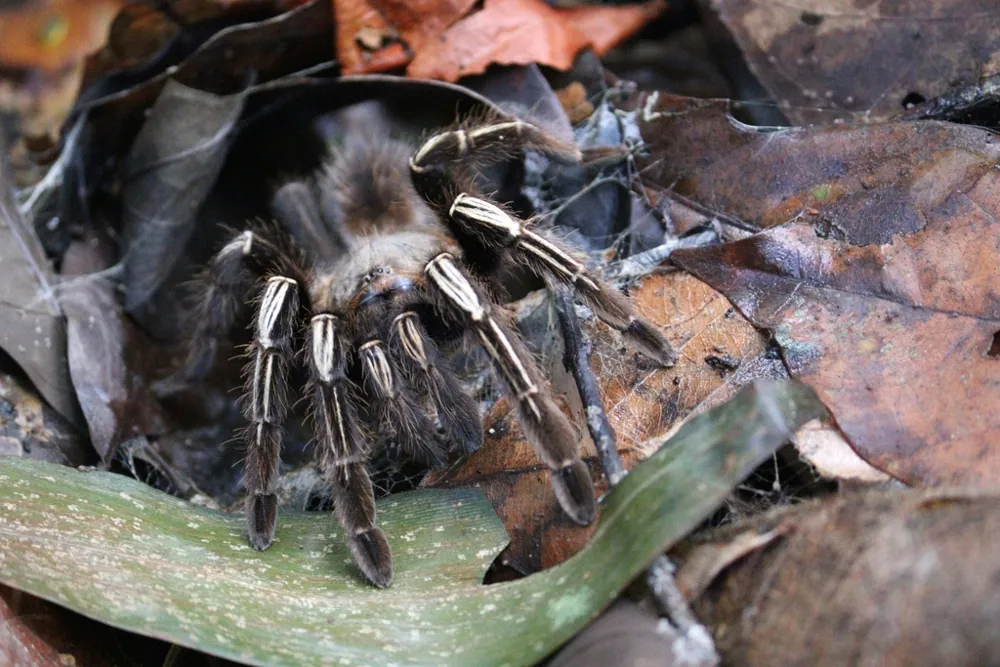
The skeleton tarantula is a large, hairy spider from South America. It lives mostly on the forest floor in the lowland forests of northern Brazil, French Guiana and Suriname. It is known for its skeleton-like leg markings and for being fast and ready to defend itself.1
 இதை எப்படி அடையாளம் காண்பது
- Black legs with yellowish, skeleton-like striping1
- Small, brown abdomen1
- Coffee-coloured or golden carapace (the hard shell covering the front of the body)1
- Leg span of about 11 to 12 cm, though females can reach 15 cm1
அடிக்கடி இதனுடன் குழப்பப்படுகிறது: Aphonopelma seemani has leg striping similar to this spider's. The skeleton tarantula's striping is more yellowish.1
நஞ்சு சக்தி
கடிக்கும்போது நஞ்சு அதன் நச்சுப் பற்கள் அல்லது பற்கள் வழியாக வெளியேறும்.
மனிதர்களுக்கு இது எவ்வளவு ஆபத்தானது?
மனிதர்களுக்கு ஆபத்து: லேசானதுதேனீக் கொட்டு போல அல்லது அதைவிடக் குறைவு. மனிதர்களுக்குக் கிட்டத்தட்டத் தீங்கில்லாதது.பயப்படும்போது இது என்ன செய்யும்?
When threatened, it brushes urticating hairs off its palps (the small leg-like organs near the mouth) by rubbing them against its chelicerae (jaw parts). It will also rise up and show its fangs.1
 கடித்தால்
- கடித்த இடத்தைக் கழுவி குளிர்வி. வலி கடுமையாக இருந்தாலோ அந்த நபருக்கு உடல்நலம் சரியில்லை என்றாலோ மருத்துவ உதவி பெறு.
எப்போதும் முதலில் உன் அவசர எண்ணை (112, 000, 911) அழை. இது பொதுவான முதலுதவி வழிகாட்டல், மருத்துவ ஆலோசனை அல்ல. முதலுதவி அடிப்படைகள்
 பாதுகாப்பாக இரு
- காட்டு விலங்கை ஒருபோதும் தொடாதே, பிடிக்காதே, சீண்டாதே, அது சிறியதாக இருந்தாலும், தூங்குவது போல அல்லது இறந்தது போலத் தெரிந்தாலும்.
- அதற்கு இடம் கொடு. சந்தித்தால், அமைதியாக இரு, மெதுவாகப் பின்வாங்கு, அதை அதன் வழியில் போக விடு.
- இது உன்னைக் கடித்தால்: அமைதியாக இரு, அசையாதே, உன் அவசர எண்ணை (112, 000, 911) அழை அல்லது விரைவாக மருத்துவமனைக்குச் செல். அது எப்படி இருந்தது என்று நினைவில் வை, புகைப்படம் உதவும்.
இது உன்னைத் தேடி வரவில்லை. உணவைப் பிடிக்கவோ தன்னைக் காத்துக்கொள்ளவோ நஞ்சைப் பயன்படுத்துகிறது, ஒளிந்துகொள்வதையே அதிகம் விரும்புகிறது. பாதுகாப்பாக இருப்பது பற்றி மேலும்
இது எவ்வளவு பெரியது?
இது எவ்வளவு நீளமானது?
 வரிசையாக வைத்த 5 பொம்மைக் கட்டடச் செங்கற்களின் நீளம்
 100 மீட்டரை 220 வினாடிகளில் கடக்கும் (மிக வேகமான மனிதனுக்கு 9.6 ஆகும்)
உன்னுடன் ஒப்பிடும்போது Skeleton tarantula எவ்வளவு பெரியது?
உன் உலாவியில் சிறிய கணக்கு மட்டும். எதுவும் சேமிக்கப்படுவதில்லை, எங்கும் அனுப்பப்படுவதில்லை.
இது எவ்வளவு வேகமானது?


உண்மைகள்
Its urticating hairs grow on its palps, not on its abdomen as they do in most New World tarantulas.1
It is a fast and aggressive species that will readily rise up and present its fangs to a predator.1
It builds a heavily webbed burrow under the topsoil, or among branches, rocks and other forest floor debris.1
Most members of its subfamily live in trees, but this species lives mainly on or near the forest floor.1
உண்மைகள் எங்கிருந்து வருகின்றன
- Skeleton tarantula (Wikipedia (CC BY-SA 4.0))
- Ephebopus murinus (iNaturalist): பெயர்களும் வகைப்பாடும்.
- Venom Wiki: ஆபத்து நிலை, வழக்கமான அளவு, வேக ஊகம் எங்களுடையவை. நாங்கள் எப்படிக் கணக்கிடுகிறோம் என்று பார்: நாங்கள் ஆபத்தை எப்படி மதிப்பிடுகிறோம்.
இந்தப் பக்கத்தில் உள்ள ஒவ்வொரு உண்மைக்கும் அதன் ஆதாரத்தைக் காட்டும் ஒரு எண் உண்டு. நாங்கள் ஏதாவது தவறு செய்திருந்தால் மன்னிக்கவும், நாங்கள் விலங்கு ரசிகர்கள், அறிவியல் இதழ் அல்ல. [email protected]-இல் எங்களுக்குச் சொல், நாங்கள் சரிசெய்வோம்.
 தேளுக்குப் பசிக்கிறது! Venom Wiki ஒரே ஒருவரின் திட்டம்: இலவசம், விளம்பரமில்லை, கண்காணிப்பு இல்லை. ஒரு சிறிய உதவி அதை இணையத்தில் வைத்திருக்க உதவும்.தேளுக்கு உணவளி
அதே குழுவிலிருந்து மேலும்: டரான்டுலாக்களும் புனல்-வலை சிலந்திகளும்
 Goliath birdeaterடரான்டுலாக்களும் புனல்-வலை சிலந்திகளும்வலிக்கும் மட்டும்
 Brazilian salmon pink birdeaterடரான்டுலாக்களும் புனல்-வலை சிலந்திகளும்தீங்கில்லாதது
 Chilean rose tarantulaடரான்டுலாக்களும் புனல்-வலை சிலந்திகளும்தீங்கில்லாதது
 Greenbottle blue tarantulaடரான்டுலாக்களும் புனல்-வலை சிலந்திகளும்தீங்கில்லாதது
 Pinktoe tarantulaடரான்டுலாக்களும் புனல்-வலை சிலந்திகளும்தீங்கில்லாதது
 Brazilian funnel-web spiderடரான்டுலாக்களும் புனல்-வலை சிலந்திகளும்மருத்துவர் தேவை
 Golden poison frog
 Terciopelo
 Brazilian wandering spider
 Eyelash viper
 Golden lancehead
 South American bushmaster