
 ஆப்பிரிக்கா
 ஆசியா
ஆசியா ஐரோப்பா
 தென் அமெரிக்கா
 ஆஸ்திரேலியா மற்றும் ஓசியானியா
 அண்டார்டிகா
 பசிபிக் பெருங்கடல்
 அட்லாண்டிக் பெருங்கடல்
 இந்தியப் பெருங்கடல்
 ஆர்க்டிக் பெருங்கடல்
 மத்தியதரைக் கடல்
 செங்கடல்
 கரீபியன் கடல்
 பவளக் கடல்
 தென் சீனக் கடல்
 பிலிப்பைன்ஸ் கடல்
 அந்தமான் கடல்
 வட கடல்
 திமோர் மற்றும் அரபுரா கடல்
 வங்காள விரிகுடா
 கலிபோர்னியா வளைகுடா
Toxic zoanthid
 தோலில் நச்சு
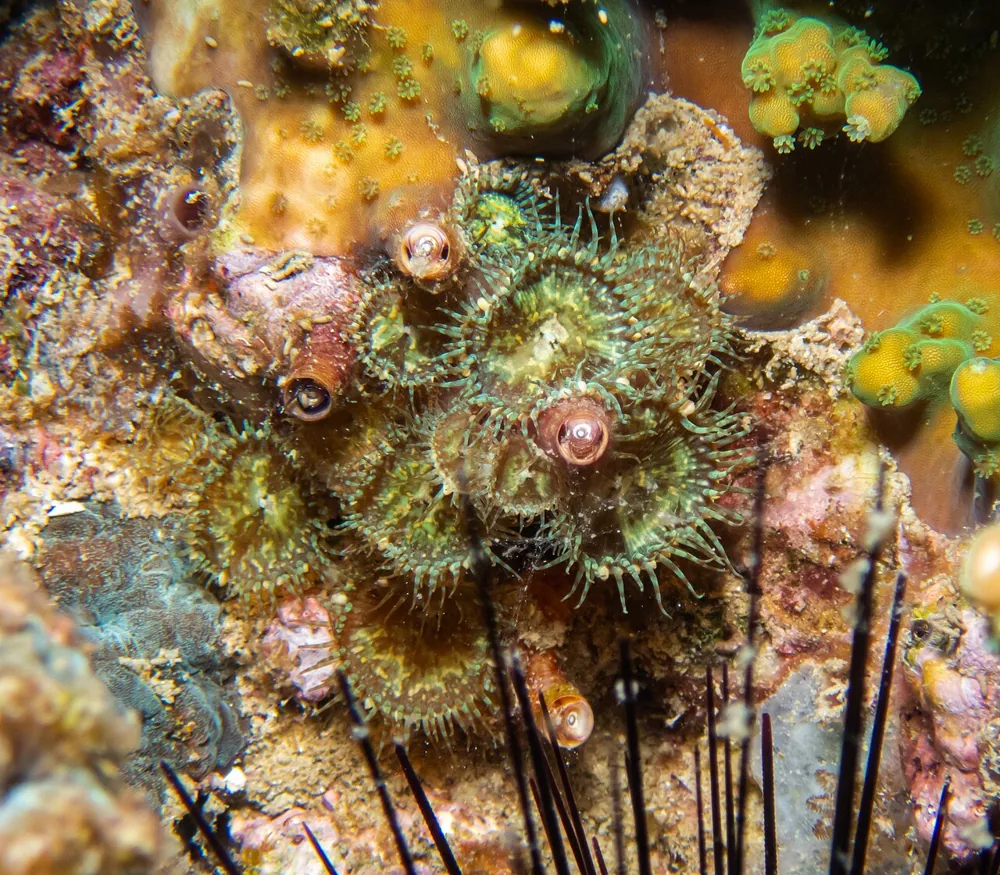
Palythoa toxica is a small, crust-like sea animal, called a zoanthid, that grows on rocks. It lives in Hawaii and is special because it is the species from which the very poisonous substance palytoxin was first discovered and isolated.1
 இதை எப்படி அடையாளம் காண்பது
- It grows as a flat, encrusting layer over rock.1
- It has a firm, tough outer covering.1
- Its polyps are partly sunk into a cushiony mat that spreads across the rock and contains sand grains and bits of debris.1
- Each polyp has a broad mouth disc with a fringe of tentacles.1
- Its colour varies but is usually cream, grey or pale brown.1
நச்சு சக்தி
இதன் தோல் நச்சுடையது. தொடுவதும் நக்குவதும் சாப்பிடுவதும் ஆபத்தானது.
இதன் நச்சு என்ன செய்யும்?
It is not venomous in the sense of injecting venom with a bite or sting. It contains palytoxin, one of the most poisonous substances known.1
மனிதர்களுக்கு இது எவ்வளவு ஆபத்தானது?
மனிதர்களுக்கு ஆபத்து: மிக ஆபத்தானதுசிகிச்சை பெறாத ஒருவரை இது கொல்லக்கூடும்.Palytoxin is one of the most poisonous substances known, and people have been poisoned by handling this animal in reef aquariums.1
 யாராவது இதைத் தொட்டால் அல்லது சாப்பிட்டால்
- யாராவது இதைச் சாப்பிட்டாலோ சாப்பிட்ட பிறகு அறிகுறிகள் வந்தாலோ: உடனே உன் அவசர எண்ணை அல்லது நச்சு கட்டுப்பாட்டு மையத்தை அழை.
எப்போதும் முதலில் உன் அவசர எண்ணை (112, 000, 911) அழை. இது பொதுவான முதலுதவி வழிகாட்டல், மருத்துவ ஆலோசனை அல்ல. முதலுதவி அடிப்படைகள்
 பாதுகாப்பாக இரு
- காட்டு விலங்கை ஒருபோதும் தொடாதே, பிடிக்காதே, சீண்டாதே, அது சிறியதாக இருந்தாலும், தூங்குவது போல அல்லது இறந்தது போலத் தெரிந்தாலும்.
- அதற்கு இடம் கொடு. சந்தித்தால், அமைதியாக இரு, மெதுவாகப் பின்வாங்கு, அதை அதன் வழியில் போக விடு.
- நீ இதைத் தொட்டாலோ சாப்பிட்டாலோ: கண்களையோ வாயையோ தேய்க்காதே, கைகளைக் கழுவு, மருத்துவ உதவி பெறு.
இது உன்னைத் தேடி வரவில்லை. யாரும் இதைச் சாப்பிடாமல் இருப்பதற்காக மட்டுமே இதன் நச்சு இருக்கிறது. பாதுகாப்பாக இருப்பது பற்றி மேலும்
உலகில் எங்கே?
இது எவ்வளவு பெரியது?
இது எவ்வளவு நீளமானது?
 உன் சுண்டுவிரலைவிடச் சிறியது
உன்னுடன் ஒப்பிடும்போது Toxic zoanthid எவ்வளவு பெரியது?
உன் உலாவியில் சிறிய கணக்கு மட்டும். எதுவும் சேமிக்கப்படுவதில்லை, எங்கும் அனுப்பப்படுவதில்லை.
இது எவ்வளவு வேகமானது?


உண்மைகள்
Early Hawaiians used this animal to poison the tips of their weapons, and a legend says warriors could break a taboo and dip their spear tips into its pool when under severe threat.1
In 1961 researchers took specimens from the pool despite local advice, and the laboratories of the Hawaiian Institute of Marine Biology on Coconut Island were destroyed by fire on that same day.1
Palythoa toxica is the species in which palytoxin was first discovered and first isolated.1
Unlike a related species, P. toxica is equally toxic all year round rather than changing with the seasons.1
Palytoxin has also been found in other Palythoa species, some algae, and certain crabs and fish, and it has been suggested that a dinoflagellate in the genus Ostreopsis produces the toxin.1
உண்மைகள் எங்கிருந்து வருகின்றன
- Palythoa toxica (Wikipedia (CC BY-SA 4.0))
- Palythoa toxica (iNaturalist): பெயர்களும் வகைப்பாடும்.
- Venom Wiki: ஆபத்து நிலை, வழக்கமான அளவு, வேக ஊகம் எங்களுடையவை. நாங்கள் எப்படிக் கணக்கிடுகிறோம் என்று பார்: நாங்கள் ஆபத்தை எப்படி மதிப்பிடுகிறோம்.
இந்தப் பக்கத்தில் உள்ள ஒவ்வொரு உண்மைக்கும் அதன் ஆதாரத்தைக் காட்டும் ஒரு எண் உண்டு. நாங்கள் ஏதாவது தவறு செய்திருந்தால் மன்னிக்கவும், நாங்கள் விலங்கு ரசிகர்கள், அறிவியல் இதழ் அல்ல. [email protected]-இல் எங்களுக்குச் சொல், நாங்கள் சரிசெய்வோம்.
 தேளுக்குப் பசிக்கிறது! Venom Wiki ஒரே ஒருவரின் திட்டம்: இலவசம், விளம்பரமில்லை, கண்காணிப்பு இல்லை. ஒரு சிறிய உதவி அதை இணையத்தில் வைத்திருக்க உதவும்.தேளுக்கு உணவளி
அதே குழுவிலிருந்து மேலும்: மற்ற நச்சுள்ள விலங்குகள்
 Japanese pufferfishமற்ற நச்சுள்ள விலங்குகள்உயிர்க்கொல்லி
 Hawksbill sea turtleமற்ற நச்சுள்ள விலங்குகள்கொல்லக்கூடும்
 Greenland sharkமற்ற நச்சுள்ள விலங்குகள்வலிக்கும் மட்டும்
 Silver-cheeked toadfishமற்ற நச்சுள்ள விலங்குகள்உயிர்க்கொல்லி
 Blackspotted pufferமற்ற நச்சுள்ள விலங்குகள்கொல்லக்கூடும்
 White-spotted pufferமற்ற நச்சுள்ள விலங்குகள்கொல்லக்கூடும்
இங்கும் வாழ்கிறது: பசிபிக் பெருங்கடல்
 Australian box jellyfishஜெல்லிமீன்களும் கடல் கொட்டிகளும்உயிர்க்கொல்லிதொடாதே
 Geography coneகூம்பு நத்தைகளும் ஆக்டோபஸ்களும்உயிர்க்கொல்லி
 Greater blue-ringed octopusகூம்பு நத்தைகளும் ஆக்டோபஸ்களும்உயிர்க்கொல்லி
 Southern blue-ringed octopusகூம்பு நத்தைகளும் ஆக்டோபஸ்களும்உயிர்க்கொல்லி
 Irukandji jellyfishஜெல்லிமீன்களும் கடல் கொட்டிகளும்கொல்லக்கூடும்தொடாதே
 Reef stonefishநஞ்சுள்ள மீன்கள்கொல்லக்கூடும்தொடாதே