
 Aprika
 Asya
Asya Europa
 Timog Amerika
 Australia at Oceania
 Antarctica
 Karagatang Pasipiko
 Karagatang Atlantiko
 Karagatang Indiyano
 Karagatang Artiko
 Dagat Mediteraneo
 Dagat Pula
 Dagat Caribe
 Dagat Coral
 Dagat Timog Tsina
 Dagat Pilipinas
 Dagat Andaman
 Dagat Hilaga
 Dagat Timor at Arafura
 Look ng Bengal
 Golpo ng California
Asian needle ant
 Mga tusok
The Asian needle ant is a small stinging ant that is native to Japan and mainland Asia. It has spread to the United States, where it is now common across much of the American South and along the East Coast. It matters because its sting can cause serious allergic reactions in some people, and it crowds out native ants.1

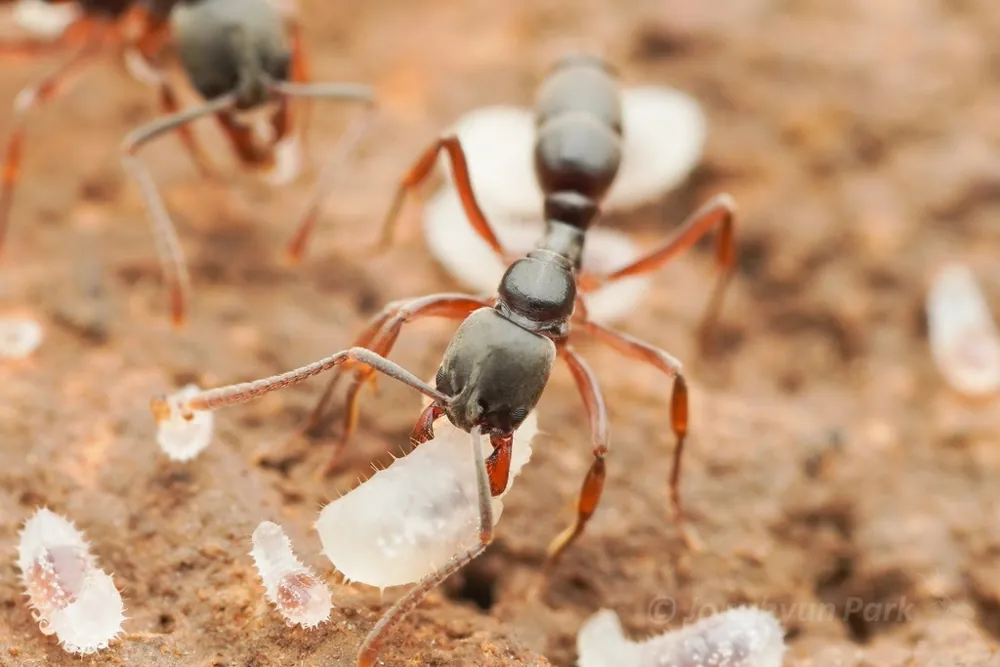
 Paano ito makikilala
- A stinging ant from the ponerine group1
- Often nests near termite colonies, which are a reliable food source1
- Looks very similar to Brachyponera luteipes, B. nigrita and B. obscurans, so it is often mistaken for them1
Madalas mapagkamalang: It is commonly mistaken for Brachyponera luteipes, Brachyponera nigrita and Brachyponera obscurans because they look similar. Misidentification can mean people do not realise the seriousness of the sting.1
Lakas ng kamandag
Lumalabas ang kamandag sa pamamagitan ng pantusok.
Ano ang epekto ng kamandag nito?
Its venom contains proteins that can trigger allergic reactions. The sting is painful and can leave people in distress. In some cases, allergic reactions cause anaphylaxis, a severe whole-body reaction, or urticaria, which is hives.1
Gaano ito kapanganib sa tao?
Panganib sa tao: MasakitTalagang masakit, pero halos hindi kailanman malala.The ant is not aggressive but will sting when disturbed. Its sting can cause anaphylaxis in some people. As it spreads into more urban areas, encounters with people are likely to increase.1
Ano ang ginagawa nito kapag natatakot?
Although not aggressive, it will sting when it is disturbed.1
 Kung tumusok ito
- Hugasan at palamigin ang mga tusok.
- Kung nahihirapang huminga ang tao, namamaga ang mukha o lalamunan, o parang hihimatayin, ito ay emergency sa allergy: tawagan ang numero pang-emergency.
Laging tawagan muna ang numero pang-emergency (112, 000, 911). Ito ay pangkalahatang gabay sa pangunang lunas, hindi payong medikal. Mga batayan ng pangunang lunas
 Mag-ingat
- Huwag kailanman hawakan, hulihin o asarin ang ligaw na hayop, kahit maliit, at kahit mukha itong tulog o patay.
- Bigyan ito ng espasyo. Kung makasalubong ka ng isa, manatiling kalmado, dahan-dahang umatras at hayaan itong umalis.
- Kung tusukin ka ng isa: manatiling kalmado, huwag gumalaw, tawagan ang numero pang-emergency (112, 000, 911) o pumunta agad sa ospital. Tandaan ang itsura nito, makakatulong ang litrato.
Hindi ka nito hinahabol. Ginagamit nito ang kamandag para manghuli ng pagkain o ipagtanggol ang sarili, at mas gusto pa nitong magtago. Higit pa tungkol sa pag-iingat
Gaano ito kalaki?
Gaano ito kahaba?
 sapat na maliit para umupo sa kuko mo
Gaano kalaki si Asian needle ant kumpara sa IYO?
Math lang sa browser mo. Walang sine-save o ipinapadala kahit saan.
Gaano ito kabilis?


Mga fact
In invaded areas, the native ant Aphaenogaster rudis was reduced by 96%.1
A study in North Carolina found that the Asian needle ant outnumbered all native ant species in most sample areas.1
Workers carry nestmates from one place to another when the colony moves nests. Unlike many ant species, they likely use visual cues rather than pheromone trails to do this.1
Queen ants have a special pouch that stores sperm, so they can mate once and keep reproducing for their whole lives.1
The European Union has listed it as an invasive alien species of Union concern, so it cannot be imported, bred, transported, sold or intentionally released in any EU member state.1
Saan galing ang mga fact
- Brachyponera chinensis (Wikipedia (CC BY-SA 4.0))
- Brachyponera chinensis (iNaturalist): mga pangalan at klasipikasyon.
- Venom Wiki: sarili naming tantiya ang antas ng panganib, karaniwang laki at hula sa bilis. Tingnan kung paano namin ito kinukuwenta: Paano namin sinusukat ang panganib.
Bawat fact sa pahinang ito ay may numerong tumuturo sa pinagmulan nito. Kung may mali kami, pasensya na, mahilig lang kami sa hayop, hindi kami science journal. Sabihin sa amin sa [email protected] at aayusin namin.
 Gutom ang alakdan! Ang Venom Wiki ay proyekto ng iisang tao: libre, walang ads at walang trackers. Nakatutulong ang maliit na tip para manatili itong online.Pakainin ang alakdan
 Green weaver ant
 Red wood ant
 Arboreal bicoloured ant
 European fire ant
 Indian jumping ant
 Samsum ant
 Alakdang deathstalker
 Kobrang Indiyano
 Indian saw-scaled viper
 King cobra
 Puff adder
 Ulupong ni Russell