
 Aprika
 Asya
Asya Europa
 Timog Amerika
 Australia at Oceania
 Antarctica
 Karagatang Pasipiko
 Karagatang Atlantiko
 Karagatang Indiyano
 Karagatang Artiko
 Dagat Mediteraneo
 Dagat Pula
 Dagat Caribe
 Dagat Coral
 Dagat Timog Tsina
 Dagat Pilipinas
 Dagat Andaman
 Dagat Hilaga
 Dagat Timor at Arafura
 Look ng Bengal
 Golpo ng California
Common desert centipede
 Mga kagat
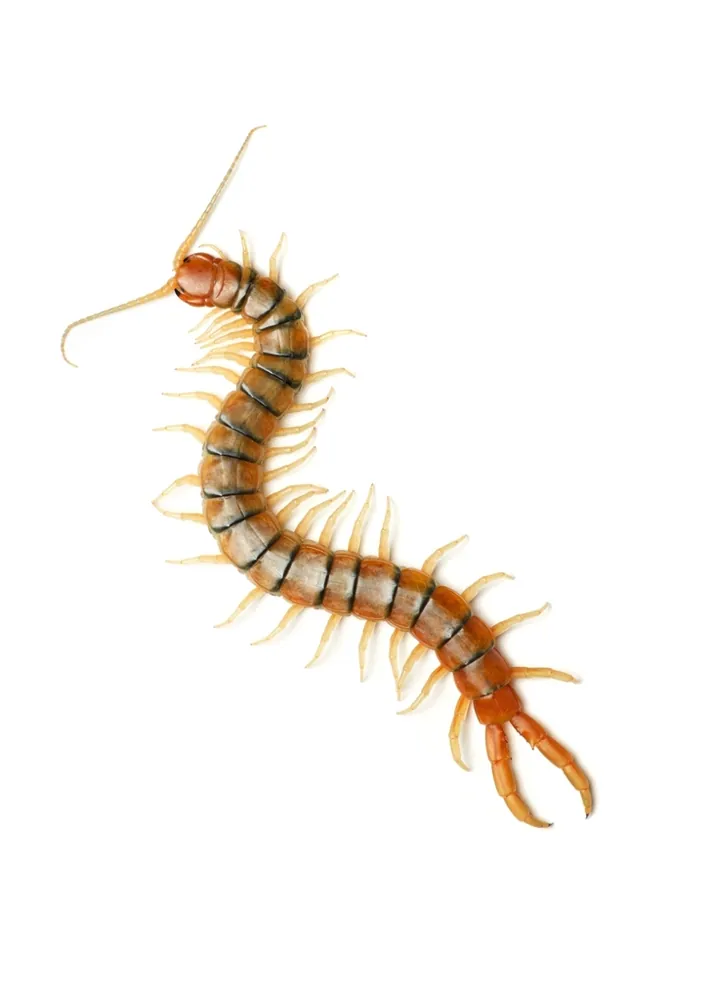
The common desert centipede is a large centipede that lives in the deserts and dry grasslands of western North America. It is known for its striped body and for its venom, which scientists are studying for possible medical uses.1
 Paano ito makikilala
- Adults usually measure 10 to 18 cm long.1
- Each body segment has one dark stripe along its side, which gives it the name tiger centipede.1
- Most have a darker brown, red or orange head, lighter brown, tan or orange body segments and yellow legs.1
- Some populations, such as those in Southern California, are entirely light blue with indigo stripes and turquoise legs.1
- Its antennae have seven or more smooth segments.1
Lakas ng kamandag
Lumalabas ang kamandag sa pangil o ngipin nito kapag nangangagat ito.
Ano ang epekto ng kamandag nito?
Its venom contains a peptide called SPC13 that kills or slows some bacteria, including Staphylococcus aureus and Pseudomonas aeruginosa. In studies on mice, the venom damaged muscle, causing tissue death and abnormal mitochondria (the parts of cells that make energy). It may also affect the respiratory complexes, the chemical systems cells use to make energy, of the animals it hunts.1
Gaano ito kapanganib sa tao?
Panganib sa tao: MasakitTalagang masakit, pero halos hindi kailanman malala.Ano ang ginagawa nito kapag natatakot?
Its venom is used to defend itself, but it cannot fully rebuild its venom within 48 hours, which limits how well it can defend itself.1
 Kung kumagat ito
- Hugasan ang kagat, palamigin ito o ibabad sa maligamgam na tubig para sa sakit, at kumuha ng tulong medikal kung lumala ito.
Laging tawagan muna ang numero pang-emergency (112, 000, 911). Ito ay pangkalahatang gabay sa pangunang lunas, hindi payong medikal. Mga batayan ng pangunang lunas
 Mag-ingat
- Huwag kailanman hawakan, hulihin o asarin ang ligaw na hayop, kahit maliit, at kahit mukha itong tulog o patay.
- Bigyan ito ng espasyo. Kung makasalubong ka ng isa, manatiling kalmado, dahan-dahang umatras at hayaan itong umalis.
- Kung kagatin ka ng isa: manatiling kalmado, huwag gumalaw, tawagan ang numero pang-emergency (112, 000, 911) o pumunta agad sa ospital. Tandaan ang itsura nito, makakatulong ang litrato.
Hindi ka nito hinahabol. Ginagamit nito ang kamandag para manghuli ng pagkain o ipagtanggol ang sarili, at mas gusto pa nitong magtago. Higit pa tungkol sa pag-iingat
Gaano ito kalaki?
Gaano ito kahaba?
 kasinghaba ng 6 laruang building brick na magkakasunod
 kayang tapusin ang 100 metro sa loob ng 220 segundo (9.6 ang kailangan ng pinakamabilis na tao)
Gaano kalaki si Common desert centipede kumpara sa IYO?
Math lang sa browser mo. Walang sine-save o ipinapadala kahit saan.
Gaano ito kabilis?


Mga fact
Its venom contains a peptide that has shown antimicrobial activity against bacteria that cause hospital infections.1
Within two days it regenerates 65 to 86% of its venom volume, but its venom levels do not return to their original amounts even after 7 months.1
The bigger the centipede, the slower its venom regenerates, so body size limits how quickly it can recover its venom.1
Its colours are so varied that its species name, polymorpha, means "many forms".1
It is most active at night during the cool winter months, or during the summer New Mexico Monsoon, when it is cooler and wetter.1
Saan galing ang mga fact
- Scolopendra polymorpha (Wikipedia (CC BY-SA 4.0))
- Scolopendra polymorpha (iNaturalist): mga pangalan at klasipikasyon.
- Venom Wiki: sarili naming tantiya ang antas ng panganib, karaniwang laki at hula sa bilis. Tingnan kung paano namin ito kinukuwenta: Paano namin sinusukat ang panganib.
Bawat fact sa pahinang ito ay may numerong tumuturo sa pinagmulan nito. Kung may mali kami, pasensya na, mahilig lang kami sa hayop, hindi kami science journal. Sabihin sa amin sa [email protected] at aayusin namin.
 Gutom ang alakdan! Ang Venom Wiki ay proyekto ng iisang tao: libre, walang ads at walang trackers. Nakatutulong ang maliit na tip para manatili itong online.Pakainin ang alakdan
 Giant desert centipede
 Green centipede
 Haitian giant centipede
 Eastern red centipede
 Florida blue centipede
 Peruvian giant centipede
 Terciopelo
 Eastern coral snake
 Eastern diamondback rattlesnake
 Eyelash viper
 Timber rattlesnake
 Western diamondback rattlesnake