
 Aprika
 Asya
Asya Europa
 Timog Amerika
 Australia at Oceania
 Antarctica
 Karagatang Pasipiko
 Karagatang Atlantiko
 Karagatang Indiyano
 Karagatang Artiko
 Dagat Mediteraneo
 Dagat Pula
 Dagat Caribe
 Dagat Coral
 Dagat Timog Tsina
 Dagat Pilipinas
 Dagat Andaman
 Dagat Hilaga
 Dagat Timor at Arafura
 Look ng Bengal
 Golpo ng California
Geography cone
 Mga tusok
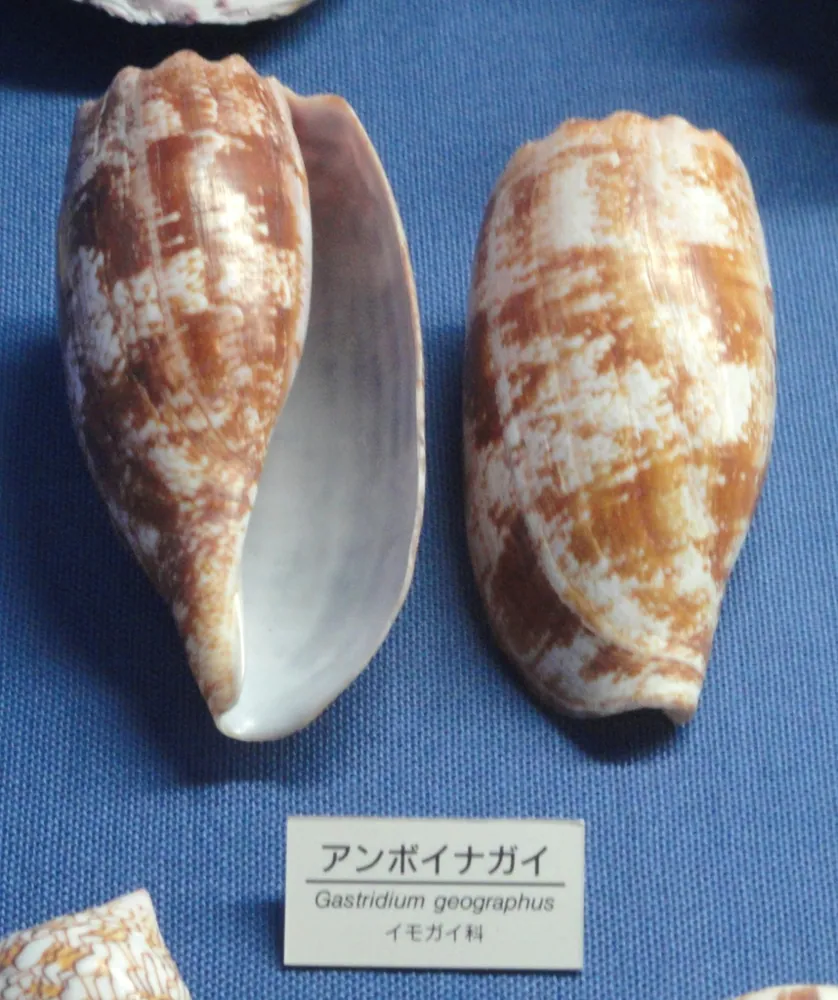
The geography cone is a predatory sea snail that lives on shallow tropical reefs in the Indo-Pacific. It hunts small fish. Its venom is strong enough to kill a person, which makes it one of the most dangerous cone snails.1


 Paano ito makikilala
- Broad, thin shell that is cylindrically inflated, usually 10 to 15 cm long1
- Ground colour is pink or violet-white, sometimes reddish1
- Mottled pattern of chestnut or chocolate brown, usually forming two irregular bands1
- Wide pink or violet-white opening and numerous shoulder ridges or spines1
Madalas mapagkamalang: Compared with other cone shells of a similar size, the geography cone has a noticeably wider, more convex middle and a flattened spire. Its walls are also thinner and lighter.1
Lakas ng kamandag
Lumalabas ang kamandag sa pamamagitan ng pantusok.
Ano ang epekto ng kamandag nito?
Its venom is a complex mix of hundreds of different toxins, delivered through the harpoon-like tooth. It has the most toxic sting known among cone snails. Even the most venomous cone snails take about one to five hours to kill a healthy adult, but medical care must still be prompt.1
Gaano ito kapanganib sa tao?
Panganib sa tao: NakamamatayIsa sa pinakamapanganib na hayop sa mundo.There are reports of about 36 human deaths over the past 300 years. Live specimens should be handled with extreme caution.1
Ano ang ginagawa nito kapag natatakot?
Most of the venom's toxic compounds are believed to be used for defence rather than feeding.1
 Kung tumusok ito
- There is no antivenom for a cone snail sting. Treatment consists of keeping the victim alive until the symptoms wear off, so prompt medical care is essential.1
- Pressure immobilisation: balutin nang mahigpit ng elastic bandage ang kagat at pataas sa buong braso o binti, lagyan ng splint, at panatilihing ganap na hindi gumagalaw ang tao hanggang dumating ang tulong.
- Ang blue-ringed octopus o cone snail ay puwedeng magpahinto sa paghinga ng tao habang gising pa siya: tumawag ng tulong at maging handang magbigay ng rescue breaths hanggang pumalit ang ambulansya.
Laging tawagan muna ang numero pang-emergency (112, 000, 911). Ito ay pangkalahatang gabay sa pangunang lunas, hindi payong medikal. Mga batayan ng pangunang lunas
 Mag-ingat
- Huwag kailanman hawakan, hulihin o asarin ang ligaw na hayop, kahit maliit, at kahit mukha itong tulog o patay.
- Bigyan ito ng espasyo. Kung makasalubong ka ng isa, manatiling kalmado, dahan-dahang umatras at hayaan itong umalis.
- Kung tusukin ka ng isa: manatiling kalmado, huwag gumalaw, tawagan ang numero pang-emergency (112, 000, 911) o pumunta agad sa ospital. Tandaan ang itsura nito, makakatulong ang litrato.
Hindi ka nito hinahabol. Ginagamit nito ang kamandag para manghuli ng pagkain o ipagtanggol ang sarili, at mas gusto pa nitong magtago. Higit pa tungkol sa pag-iingat
Saan sa mundo?
Gaano ito kalaki?
Gaano ito kahaba?
 kasinghaba ng 5 laruang building brick na magkakasunod
 mas mabagal kaysa sa suso sa hardin
Gaano kalaki si Geography cone kumpara sa IYO?
Math lang sa browser mo. Walang sine-save o ipinapadala kahit saan.
Gaano ito kabilis?

Mga fact
Its venom contains a form of insulin, which it uses to stun fish. Once the venom passes through a fish's gills, the fish goes into hypoglycaemic shock (a dangerous drop in blood sugar).1
Apart from the tulip cone snail, no other known living thing is known to use its own biological insulin as a weapon.1
Research shows that some proteins from cone snail venom can be up to 10,000 times more effective than morphine as painkillers, without morphine's addictive properties and side effects.1
Of the venom's 100 to 200 toxic peptides, only 15 to 20 are used for feeding.1
Adult geography cones can fall prey to sea turtles, rays, birds and human shell collectors.1
Myth buster
Mito: The nickname 'cigarette snail' means a sting gives you just enough time to smoke a cigarette before you die.
Totoo: This is a gallows humour exaggeration. Even the most venomous cone snails take about one to five hours to kill a healthy human.1
Para sa mga eksperto sa kamandag
Saan galing ang mga fact
- Conus geographus (Wikipedia (CC BY-SA 4.0))
- Conus geographus (iNaturalist): mga pangalan at klasipikasyon.
- Venom Wiki: sarili naming tantiya ang antas ng panganib, karaniwang laki at hula sa bilis. Tingnan kung paano namin ito kinukuwenta: Paano namin sinusukat ang panganib.
Bawat fact sa pahinang ito ay may numerong tumuturo sa pinagmulan nito. Kung may mali kami, pasensya na, mahilig lang kami sa hayop, hindi kami science journal. Sabihin sa amin sa [email protected] at aayusin namin.
 Gutom ang alakdan! Ang Venom Wiki ay proyekto ng iisang tao: libre, walang ads at walang trackers. Nakatutulong ang maliit na tip para manatili itong online.Pakainin ang alakdan
Higit pa mula sa parehong grupo: Mga cone snail at pugita
 Greater blue-ringed octopusMga cone snail at pugitaNakamamatay
 Southern blue-ringed octopusMga cone snail at pugitaNakamamatay
 Blue sea dragonMga cone snail at pugitaMasakit lang
 Common octopusMga cone snail at pugitaHindi nakapipinsala
 Giant Pacific octopusMga cone snail at pugitaHindi nakapipinsala
 Blue-lined octopusMga cone snail at pugitaNakamamatay
Nakatira rin sa: Karagatang Indiyano
 Australian box jellyfishMga dikya at nanunusok sa dagatNakamamatayHuwag hawakan
 Hawksbill sea turtleIba pang nakalalasong hayopPuwedeng pumatay
 Irukandji jellyfishMga dikya at nanunusok sa dagatPuwedeng pumatayHuwag hawakan
 Reef stonefishMga makamandag na isdaPuwedeng pumatayHuwag hawakan
 Crown-of-thorns starfishSea urchin, sea star at bulateKailangan ng doktorHuwag hawakan
 Portuguese man o' warMga dikya at nanunusok sa dagatKailangan ng doktorHuwag hawakan