
 Aprika
 Asya
Asya Europa
 Timog Amerika
 Australia at Oceania
 Antarctica
 Karagatang Pasipiko
 Karagatang Atlantiko
 Karagatang Indiyano
 Karagatang Artiko
 Dagat Mediteraneo
 Dagat Pula
 Dagat Caribe
 Dagat Coral
 Dagat Timog Tsina
 Dagat Pilipinas
 Dagat Andaman
 Dagat Hilaga
 Dagat Timor at Arafura
 Look ng Bengal
 Golpo ng California
Northern brown snake
 Mga kagat
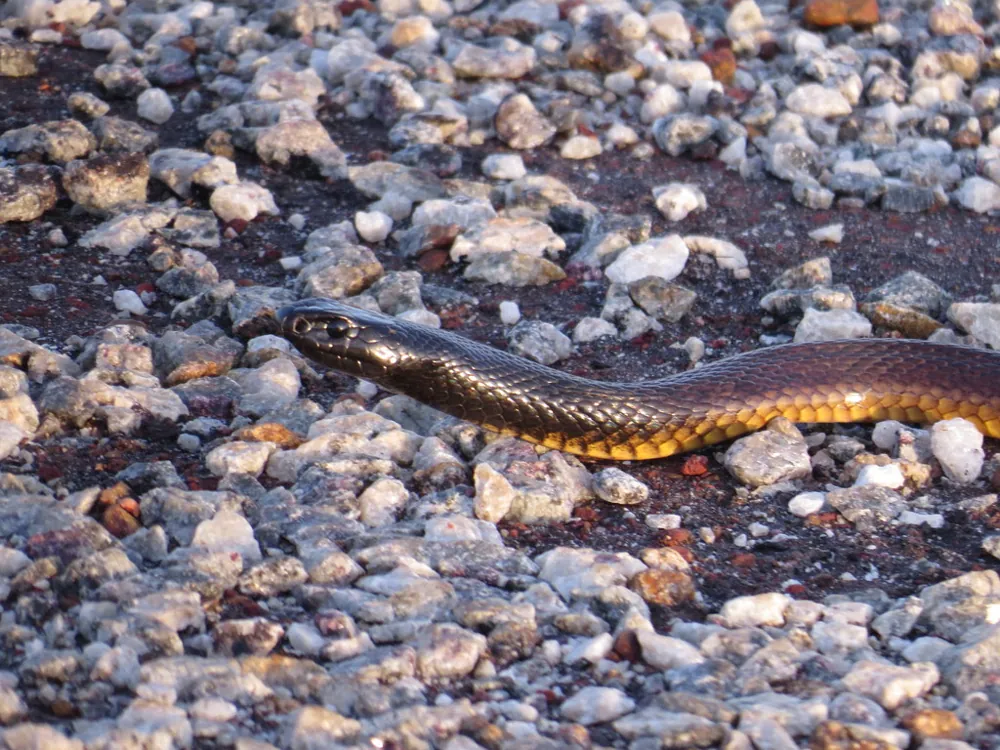
The northern brown snake is a fast, highly venomous snake found across the north of Australia. It lives in dry country, woodlands and grasslands, and sometimes near towns. It matters because its bite can be deadly, so it is important to know what it looks like and to keep your distance.1


 Paano ito makikilala
- Its back can be shades of orange-brown with flecks and bands, or it can be plain.1
- Its belly is cream to orange with pink blotches.1
- Some individuals have jet black heads.1
- Others have a black 'V' shape on the back of the neck, just below the head.1
- It grows up to 1.8 m in total length, including the tail.1
Madalas mapagkamalang: Some northern brown snakes have jet black heads, which can cause them to be confused with the black-headed python.1
Lakas ng kamandag
Lumalabas ang kamandag sa pangil o ngipin nito kapag nangangagat ito.
Ano ang epekto ng kamandag nito?
Its venom contains neurotoxins, which attack the nerves, nephrotoxins, which damage the kidneys, and a procoagulant, which affects blood clotting. Although its venom is not the most toxic in the brown snake genus, each bite can deliver a relatively large amount, so it has a high potential to cause a deadly bite. Human symptoms include headache, nausea or vomiting, abdominal pain, severe coagulopathy (serious blood clotting problems) and sometimes kidney damage.1
Gaano ito kapanganib sa tao?
Panganib sa tao: NapakapanganibKaya nitong pumatay ng taong hindi nagamot.The northern brown snake has a high potential to deliver a deadly bite. The bite is usually painless and is difficult to see because the fangs are small, so a bite can go unnoticed. In dogs and cats, paralysis is also likely to occur.1
Ano ang ginagawa nito kapag natatakot?
It usually prefers to retreat from danger, but it is very aggressive when disturbed or threatened and will defend itself if cornered.1
 Kung kumagat ito
- Pressure immobilisation: balutin nang mahigpit ng elastic bandage ang kagat at pataas sa buong braso o binti, lagyan ng splint, at panatilihing ganap na hindi gumagalaw ang tao hanggang dumating ang tulong.
- Huwag hugasan ang kagat: masusuri ng ospital ang kamandag na naiwan sa balat para mapili ang tamang antivenom.
Laging tawagan muna ang numero pang-emergency (112, 000, 911). Ito ay pangkalahatang gabay sa pangunang lunas, hindi payong medikal. Mga batayan ng pangunang lunas
 Mag-ingat
- Huwag kailanman hawakan, hulihin o asarin ang ligaw na hayop, kahit maliit, at kahit mukha itong tulog o patay.
- Bigyan ito ng espasyo. Kung makasalubong ka ng isa, manatiling kalmado, dahan-dahang umatras at hayaan itong umalis.
- Kung kagatin ka ng isa: manatiling kalmado, huwag gumalaw, tawagan ang numero pang-emergency (112, 000, 911) o pumunta agad sa ospital. Tandaan ang itsura nito, makakatulong ang litrato.
Hindi ka nito hinahabol. Ginagamit nito ang kamandag para manghuli ng pagkain o ipagtanggol ang sarili, at mas gusto pa nitong magtago. Higit pa tungkol sa pag-iingat
Gaano ito kalaki?
Gaano ito kahaba?
 kasinghaba ng 4 pusang bahay mula ilong hanggang buntot
 kasinghaba ng 10 saging na magkakadugtong
 kayang tapusin ang 100 metro sa loob ng 48 segundo (9.6 ang kailangan ng pinakamabilis na tao)
Gaano kalaki si Northern brown snake kumpara sa IYO?
Math lang sa browser mo. Walang sine-save o ipinapadala kahit saan.
Gaano ito kabilis?


Mga fact
Although it is generally shy, it has been known to practise cannibalism, though this is not common.1
It can climb small shrubs or trees, although it is not a tree-dwelling species.1
Its name, gwardar, is an Aboriginal word meaning "go the long way around".1
It may become active at night during the warmer months, but it is otherwise active during the day and enjoys sunlight.1
Myth buster
Mito: Snakes like this one always attack people.
Totoo: The northern brown snake is generally cautious and shy, and it usually retreats rather than attacks. It only defends itself strongly when it is cornered or threatened.1
Para sa mga eksperto sa kamandag
- Pangalang siyentipiko
- Pseudonaja nuchalis
- Grupo
- Mga ahas ng Australia
- Pamilya
- Elapidae2
- Ayos
- Squamata
- Mga kontinente
- Australia at Oceania
- Mga sanggol
- The mating season is roughly from September to November, and the female usually produces around 11 to 14 eggs, but may produce up to 38.1
- Panganib sa tao
- 4 / 5: Napakapanganib3
Saan galing ang mga fact
- Pseudonaja nuchalis (Wikipedia (CC BY-SA 4.0))
- Pseudonaja nuchalis (iNaturalist): mga pangalan at klasipikasyon.
- Venom Wiki: sarili naming tantiya ang antas ng panganib, karaniwang laki at hula sa bilis. Tingnan kung paano namin ito kinukuwenta: Paano namin sinusukat ang panganib.
Bawat fact sa pahinang ito ay may numerong tumuturo sa pinagmulan nito. Kung may mali kami, pasensya na, mahilig lang kami sa hayop, hindi kami science journal. Sabihin sa amin sa [email protected] at aayusin namin.
 Gutom ang alakdan! Ang Venom Wiki ay proyekto ng iisang tao: libre, walang ads at walang trackers. Nakatutulong ang maliit na tip para manatili itong online.Pakainin ang alakdan
Higit pa mula sa parehong grupo: Mga ahas ng Australia
 Taipan sa baybayinMga ahas ng AustraliaNakamamatay
 Karaniwang death adderMga ahas ng AustraliaNakamamatay
 Silangang kayumangging ahasMga ahas ng AustraliaNakamamatay
 Inland taipanMga ahas ng AustraliaNakamamatay
 Ahas-tigreMga ahas ng AustraliaNakamamatay
 Collett's snakeMga ahas ng AustraliaPuwedeng pumatay
Nakatira rin sa: Australia at Oceania
 Sydney funnel-web spiderMga tarantula at funnel-webNakamamatay
 Redback spiderMga gagambaKailangan ng doktor
 Brown tree snakeMga ahas na nasa likod ang pangilMasakit lang
 Hooded pitohuiIba pang nakalalasong hayopMasakit langHuwag hawakan
 PlatypusMga makamandag na mammalMasakit lang
 Northern tree-dwelling funnel-web spiderMga tarantula at funnel-webNakamamatay