
 Aprika
 Asya
Asya Europa
 Timog Amerika
 Australia at Oceania
 Antarctica
 Karagatang Pasipiko
 Karagatang Atlantiko
 Karagatang Indiyano
 Karagatang Artiko
 Dagat Mediteraneo
 Dagat Pula
 Dagat Caribe
 Dagat Coral
 Dagat Timog Tsina
 Dagat Pilipinas
 Dagat Andaman
 Dagat Hilaga
 Dagat Timor at Arafura
 Look ng Bengal
 Golpo ng California
Red imported fire ant
 Mga tusok
The red imported fire ant is an ant that comes from South America. It has spread to Australia, New Zealand, parts of Asia, the Caribbean, Europe and the United States, where it is seen as a serious pest. Its sting burns, and in some people it causes a dangerous allergic reaction.1



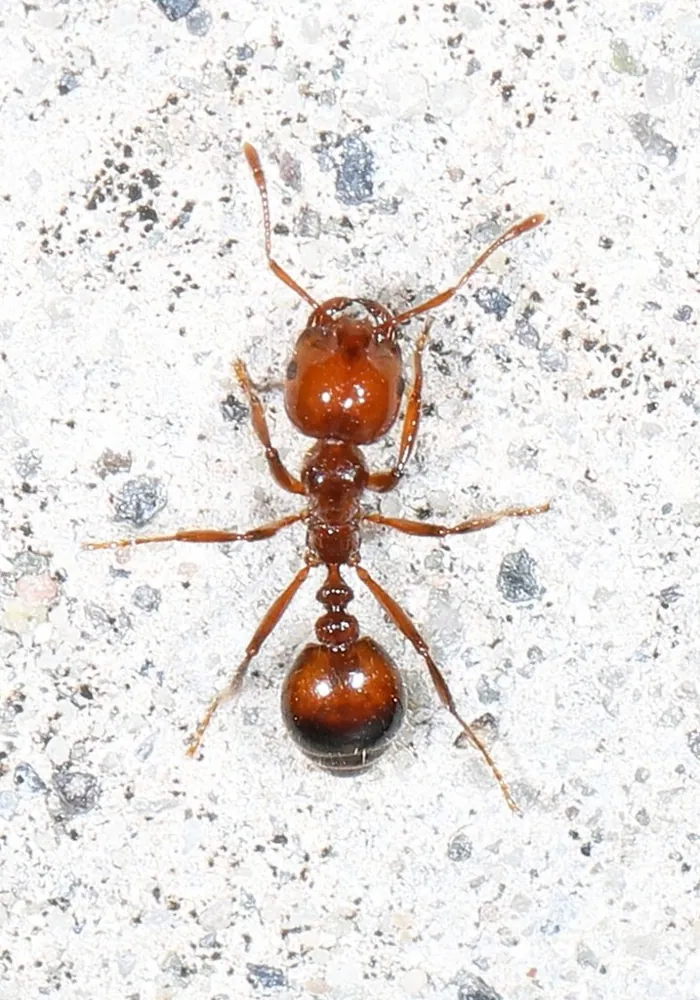
 Paano ito makikilala
Lakas ng kamandag
Lumalabas ang kamandag sa pamamagitan ng pantusok.
Ano ang epekto ng kamandag nito?
About 95% of its venom is made of water-insoluble piperidine alkaloids called solenopsins, and the rest is a mixture of toxic proteins that can be especially strong in sensitive people. Most stings cause intense burning and swelling, followed by sterile pustules (small fluid-filled bumps) that can last several days. In some people, a severe allergic reaction called anaphylaxis can occur, with dizziness, chest pain, nausea, severe sweating, low blood pressure, shortness of breath and slurred speech.1
Gaano ito kapanganib sa tao?
Panganib sa tao: MasakitTalagang masakit, pero halos hindi kailanman malala.More than 14 million people are stung by these ants each year in the United States, and many are expected to develop allergies to the venom. Between 0.6% and 6.0% of people may suffer anaphylaxis, which can be fatal if left untreated. More than 80 deaths have been recorded from attacks by this ant.1
 Magandang balita: may gamot (antivenom) o gamutan ang mga doktor para dito.1
Ano ang ginagawa nito kapag natatakot?
It uses its venom and chemical signals (pheromones) to defend itself and its nest.1
 Kung tumusok ito
- People who only have pain and pustules need no medical attention. People who develop anaphylaxis need emergency treatment with adrenaline. Whole body extract immunotherapy is used to treat people who are allergic and is regarded as highly effective.1
- Hugasan at palamigin ang mga tusok.
- Kung nahihirapang huminga ang tao, namamaga ang mukha o lalamunan, o parang hihimatayin, ito ay emergency sa allergy: tawagan ang numero pang-emergency.
Laging tawagan muna ang numero pang-emergency (112, 000, 911). Ito ay pangkalahatang gabay sa pangunang lunas, hindi payong medikal. Mga batayan ng pangunang lunas
 Mag-ingat
- Huwag kailanman hawakan, hulihin o asarin ang ligaw na hayop, kahit maliit, at kahit mukha itong tulog o patay.
- Bigyan ito ng espasyo. Kung makasalubong ka ng isa, manatiling kalmado, dahan-dahang umatras at hayaan itong umalis.
- Kung tusukin ka ng isa: manatiling kalmado, huwag gumalaw, tawagan ang numero pang-emergency (112, 000, 911) o pumunta agad sa ospital. Tandaan ang itsura nito, makakatulong ang litrato.
Hindi ka nito hinahabol. Ginagamit nito ang kamandag para manghuli ng pagkain o ipagtanggol ang sarili, at mas gusto pa nitong magtago. Higit pa tungkol sa pag-iingat
Gaano ito kalaki?
Gaano ito kahaba?
 sapat na maliit para umupo sa kuko mo
Gaano kalaki si Red imported fire ant kumpara sa IYO?
Math lang sa browser mo. Walang sine-save o ipinapadala kahit saan.
Gaano ito kabilis?


Mga fact
When water levels rise, these ants build rafts to float on.1
A single mature colony can contain between 500,000 and 2,000,000 individuals.1
Over 1,800 scientific papers have been published using its name, and it is one of the most studied insects on the planet, rivalling the western honey bee.1
Workers dispose of scraps and dead ants on refuse piles outside the nest, a behaviour called necrophoric behaviour.1
Workers can live for several months, while queens can live for years.1
Myth buster
Mito: The name "fire ant" comes from fire or burning nests.
Totoo: The name comes from the burning sensation caused by its sting.1
Para sa mga eksperto sa kamandag
- Pangalang siyentipiko
- Solenopsis invicta
- Grupo
- Mga langgam
- Pamilya
- Formicidae2
- Ayos
- Hymenoptera
- Mga kontinente
- Timog Amerika
- Mga sanggol
- Winged males and queens mate during a nuptial flight in the warm seasons. A colony can be started by a single queen or by a group of queens, which later compete for dominance once the first workers emerge.1
- Panganib sa tao
- 2 / 5: Masakit3
Saan galing ang mga fact
- Red imported fire ant (Wikipedia (CC BY-SA 4.0))
- Solenopsis invicta (iNaturalist): mga pangalan at klasipikasyon.
- Venom Wiki: sarili naming tantiya ang antas ng panganib, karaniwang laki at hula sa bilis. Tingnan kung paano namin ito kinukuwenta: Paano namin sinusukat ang panganib.
Bawat fact sa pahinang ito ay may numerong tumuturo sa pinagmulan nito. Kung may mali kami, pasensya na, mahilig lang kami sa hayop, hindi kami science journal. Sabihin sa amin sa [email protected] at aayusin namin.
 Gutom ang alakdan! Ang Venom Wiki ay proyekto ng iisang tao: libre, walang ads at walang trackers. Nakatutulong ang maliit na tip para manatili itong online.Pakainin ang alakdan
Higit pa mula sa parehong grupo: Mga langgam
 Bullet ant
 Army ant
 Giant Amazonian ant
 Trap-jaw ant
 Black imported fire ant
 Dinosaur ant of Brazil
Nakatira rin sa: Timog Amerika
 Gintong poison frogMga poison frog, palaka at newtNakamamatayHuwag hawakan
 TerciopeloMga pit viperNakamamatay
 Brazilian wandering spiderMga gagambaPuwedeng pumatay
 Eyelash viperMga pit viperPuwedeng pumatay
 Golden lanceheadMga pit viperPuwedeng pumatay
 South American bushmasterMga pit viperPuwedeng pumatay