
 Afrika
 Asya
Asya Avrupa
 Güney Amerika
 Avustralya ve Okyanusya
 Antarktika
 Pasifik Okyanusu
 Atlas Okyanusu
 Hint Okyanusu
 Arktik Okyanusu
 Akdeniz
 Kızıldeniz
 Karayip Denizi
 Mercan Denizi
 Güney Çin Denizi
 Filipin Denizi
 Andaman Denizi
 Kuzey Denizi
 Timor ve Arafura Denizi
 Bengal Körfezi
 Kaliforniya Körfezi
New Guinea small-eyed snake
 Isırır
The New Guinea small-eyed snake, Micropechis ikaheka, is a highly venomous snake that lives on New Guinea and nearby islands. It is the only species in its genus, and it is known for causing many deadly bites, especially on Karkar Island in Papua New Guinea. Its bites are a serious medical concern in the places where it lives.1



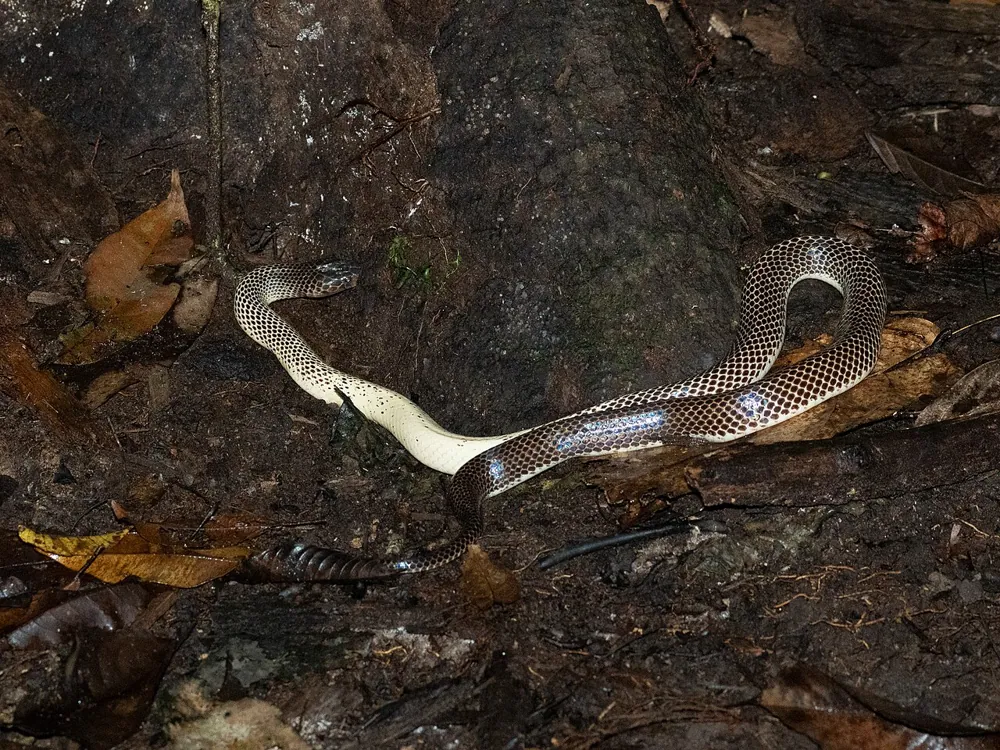
 Nasıl tanınır
Zehir gücü
Zehir, ısırdığında zehir dişlerinden ya da dişlerinden çıkar.
Zehri ne yapar?
Its venom is strong enough that it is considered a dangerous snake. Common symptoms include local muscle pain and tenderness, fever, abdominal pain, vomiting, dizziness, headache, low blood pressure and spontaneous bleeding. In severe cases, the venom also affects the nerves and muscles, causing drooping eyelids, slurred speech and jaw locking, and death can result from respiratory paralysis (when the muscles used for breathing stop working).1
İnsanlar için ne kadar tehlikeli?
İnsanlar için tehlike: Çok tehlikeliTedavi görmeyen bir insanı öldürebilir.This snake has been linked to many fatal bites. The first proven human death occurred in 1958 in Wau, Papua New Guinea, where a young man died 36 hours after being bitten on the base of the thumb while handling the snake. It causes about 40% of snake envenomations on Karkar Island, but less than 10% on the mainland, where death adders cause most snakebites. Plantation workers are most at risk, especially when moving husk piles, cutting grass, walking on plantation tracks or harvesting cocoa beans.1
 İyi haber: doktorların bunun için bir ilacı (panzehir) ya da tedavisi var.1
Korkunca ne yapar?
Although it is normally shy, it becomes highly aggressive when disturbed, for example if it is handled or stepped on, and then it strikes quickly and readily. Its bite is tenacious and chewing, and it is not easily released.1
 Isırırsa
- Basınçlı immobilizasyon: ısırılan yerin üstünden başlayarak sıkı bir elastik bandajı bütün uzvun boyunca sar, uzvu atele al ve yardım gelene kadar kişiyi tamamen hareketsiz tut.
- Isırılan yeri yıkama: hastaneler doğru panzehiri seçmek için deride kalan zehri test edebilir.
Her zaman önce acil durum numaranı ara (112, 000, 911). Bu genel bir ilk yardım rehberidir, tıbbi tavsiye değildir. İlk yardımın temelleri
 Güvende kal
- Vahşi bir hayvana asla dokunma, onu yakalama ya da kızdırma, küçük olsa bile ve uyuyor ya da ölü görünse bile.
- Ona yer aç. Biriyle karşılaşırsan sakin kal, yavaşça geri çekil ve kendi yoluna gitmesine izin ver.
- Bunlardan biri seni ısırırsa: sakin kal, kıpırdama, acil durum numaranı ara (112, 000, 911) ya da hemen hastaneye git. Neye benzediğini aklında tut, fotoğraf işe yarar.
Senin peşinde değil. Zehrini yiyecek yakalamak ya da kendini korumak için kullanır ve saklanmayı çok daha çok tercih eder. Güvende kalmak hakkında daha fazlası
Dünyanın neresinde?
Ne kadar büyük?
Ne kadar uzun?
 burundan kuyruğa dizilmiş 4 ev kedisi uzunluğunda
 uç uca dizilmiş 12 muz uzunluğunda
 100 metreyi 46 saniyede koşabilirdi (en hızlı insan için 9,6)
New Guinea small-eyed snake, SENİNLE karşılaştırınca ne kadar büyük?
Tarayıcında sadece biraz matematik. Hiçbir şey kaydedilmez ya da bir yere gönderilmez.
Ne kadar hızlı?


Bilgiler
A bite from this snake was linked to a human death in 1958, when a young man died 36 hours after being bitten on the thumb while handling it.1
It is cannibalistic, and it also hunts rodents, lizards and other snakes.1
On Karkar Island, where it is common, it is called the "white snake" because of its pale colouring.1
Its name, ikaheca, means "land eel" in a local West Papuan language.1
Efsane avcısı
Efsane: A dead snake is harmless and cannot bite.
Gerçek: A villager was bitten on the thumb by a snake he had reportedly killed, possibly because of a reflex action after death. Dead snakes can still bite, so they should be handled with care.1
Bilgiler nereden geliyor
- Micropechis (Wikipedia (CC BY-SA 4.0))
- Micropechis ikaheka (iNaturalist): isimler ve sınıflandırma.
- Venom Wiki: tehlike seviyesi, tipik boyut ve hız tahmini bize ait. Nasıl hesapladığımızı gör: Tehlikeyi nasıl puanlıyoruz.
Bu sayfadaki her bilginin, kaynağını gösteren bir numarası var. Bir şeyi yanlış yazdıysak özür dileriz, biz bilim dergisi değil, hayvan hayranıyız. [email protected] adresinden bize yaz, düzeltelim.
 Akrep acıktı! Venom Wiki tek kişilik bir proje: ücretsiz, reklamsız ve takipsiz. Küçük bir bahşiş onun yayında kalmasına yardım eder.Akrebi besle
Aynı gruptan diğerleri: Avustralya yılanları
 Kıyı taypanı
 Ölüm engereği
 Doğu kahverengi yılanı
 İç bölge taipanı
 Kaplan yılanı
 Collett's snake
Şurada da yaşar: Avustralya ve Okyanusya
 Sidney huni ağlı örümceğiTarantulalar ve huni ağlı örümceklerÖlümcül
 Redback spiderÖrümceklerDoktor gerekir
 Brown tree snakeArka dişli yılanlarSadece acıtır
 Hooded pitohuiDiğer toksik hayvanlarSadece acıtırDokunma
 PlatypusZehirli memelilerSadece acıtır
 Northern tree-dwelling funnel-web spiderTarantulalar ve huni ağlı örümceklerÖlümcül